A busy weekend at the lake

The heavy rains on 31st May – 1st June helped raise the water level in several parts of Puttenahalli Lake by upto about 16 inches. With this about 65-75% of the lake bed is under water. We’re waiting for a few more similar downpours to bring the level higher.
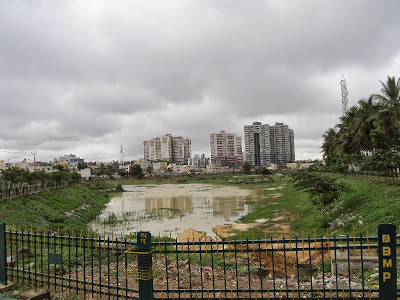
 
The Lake, 1st June 2013 (Pic: Usha Rajagopalan)

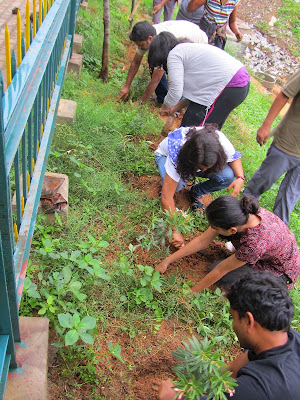
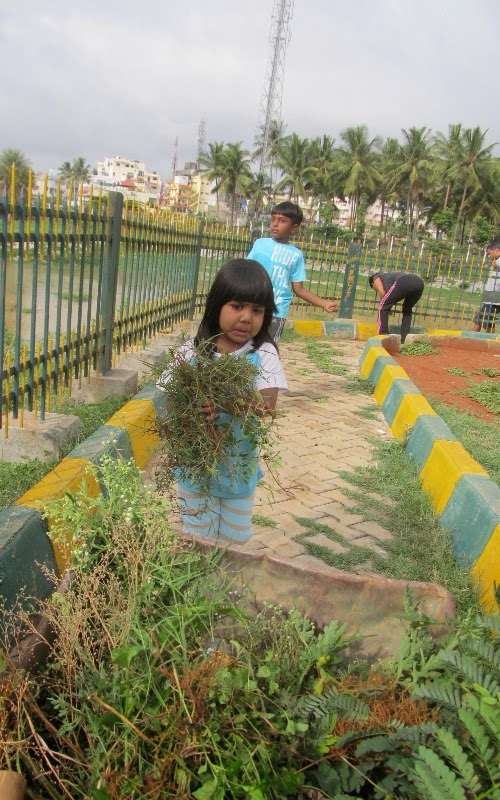
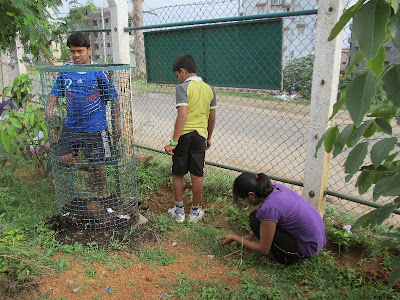
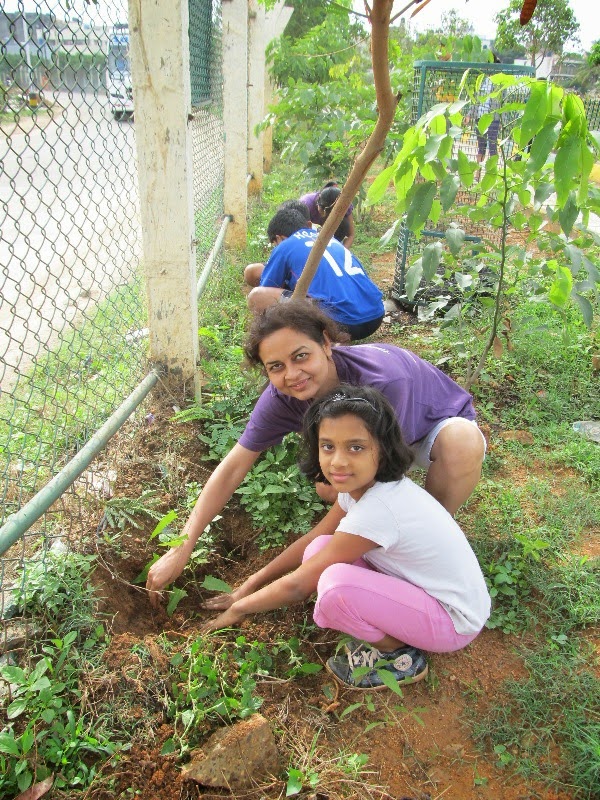
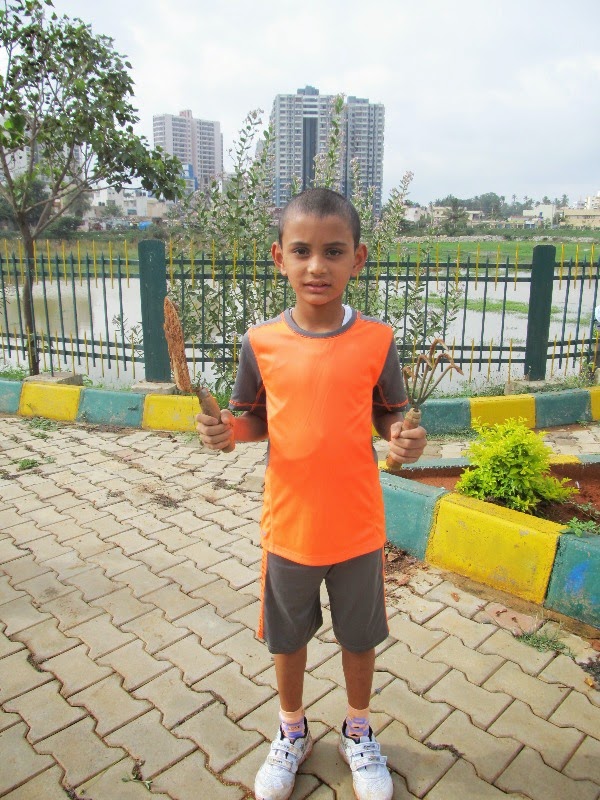
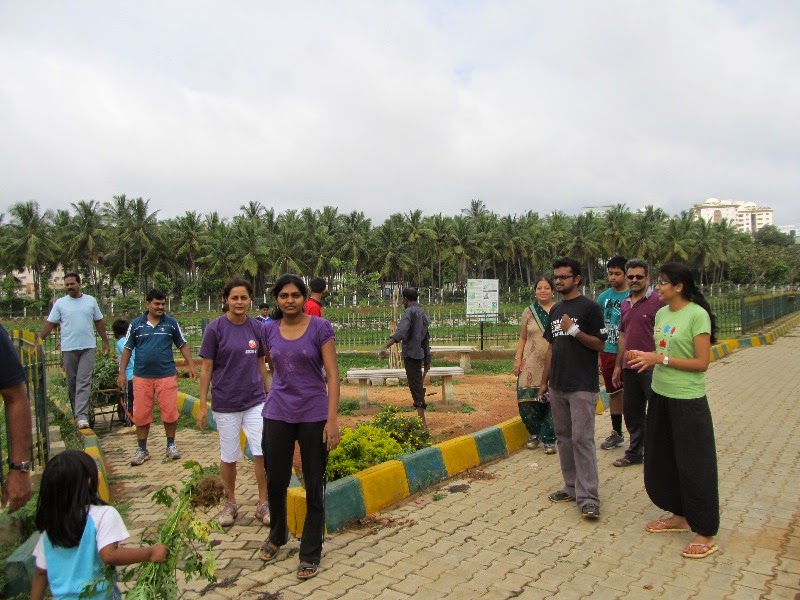
The rains also cooled the place making the gardening weekend thoroughly enjoyable for all the volunteers. Over the two mornings, starting at 7 a.m., about 50 people coming from various parts of the city, helped in digging pits, planting shrubs, cleaning (plastics and other litter) and deweeding (mostly parthenium and other weeds). Thanks to Surendran, Founder, Volunteer For a Cause (VFC), we had volunteers from as far as Kodigehalli (beyond Whitefield), Marathahalli, BTM Layout, Banasankari, JP Nagar, in addition to friends from the lake neighbourhood. Several children who came with their parents got a live lesson in nature conservation. Together they managed to plant the 300+ butterfly attracting plants such as Hamelia patens, powder puff, ixora, cup & saucer, nerium oleander, plumbago and lantana that PNLIT had procured. These shrubs, planted adjacent to the water body will be maintained to a height of about 3 feet in order to deter people from entering the water.
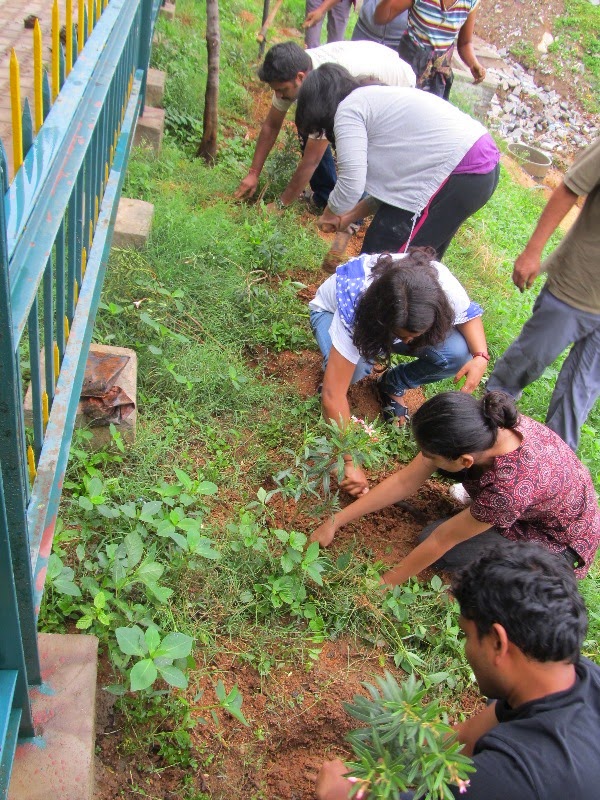
 

Volunteers at work, 1st & 2nd June 2013 (Pics: Usha Rajagopalan) 

With many of the volunteers asking for more work at the lake, we intend to have another planting session next weekend, weather permitting. Watch this space. 

Comments:

  1. markjoseph5140@gmail.com says:

    Great work

Leave a Reply

Your email address will not be published. Required fields are marked *

Similar Story

The future of Bengaluru’s lakes: How to ensure effective community-led restoration

Clear bye-laws, neighbourhood participation and NGO accountability can save the city's ecological spaces.

Citizen lake groups have historically played an important role in protecting the city’s lakes. The erstwhile Bruhat Bengaluru Mahanagara Palike (BBMP) has a long history of engaging with citizen groups. Citizen-led lake groups have long played a crucial role in acting as “watchdogs” of Bangalore’s lakes. They are often the “first responders” to problems that emerge in water bodies. They have raised alarm bells around illegal encroachments and often help coordinate between agencies to monitor rejuvenation efforts. They foster community awareness on lakes and are often able to innovate new solutions. The most recent version is the Kere Mitra (Lake‑Friend)…

Similar Story

The city and its lakes: Decoding the decline of Bengaluru’s waterbirds

Analysis of 14 Bengaluru lakes shows migratory waterbirds are disappearing faster than residents due to poor urban lake management.

Lying at an altitude of 920 metres in the rain-shadow area of the Western Ghats, Bengaluru’s geography and climate do not support a perennial natural water source. Instead, a north-south ridge divides the city into three primary valleys: Hebbal, Koramangala-Challagatta, and Vrishabhavathi. Rainwater draining down these slopes feeds a network of small streams — forming a cascading lake system that the city historically relied on for its water supply. During the Open City biodiversity datajam held in December 2025, our group examined the ecological trends around Bengaluru's lakes. Data on insects, spiders and flora on platforms like iNaturalist were insufficient…