A busy weekend at the lake

The heavy rains on 31st May – 1st June helped raise the water level in several parts of Puttenahalli Lake by upto about 16 inches. With this about 65-75% of the lake bed is under water. We’re waiting for a few more similar downpours to bring the level higher.
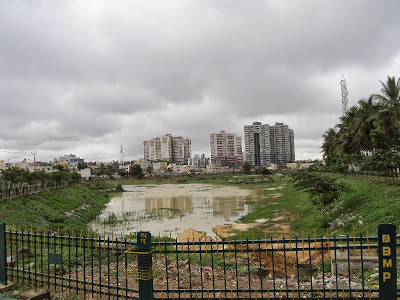
 
The Lake, 1st June 2013 (Pic: Usha Rajagopalan)

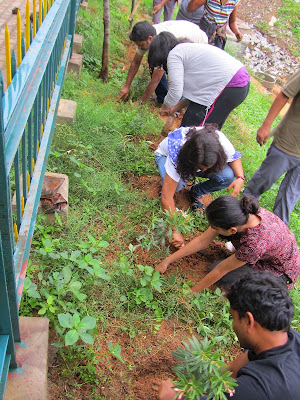
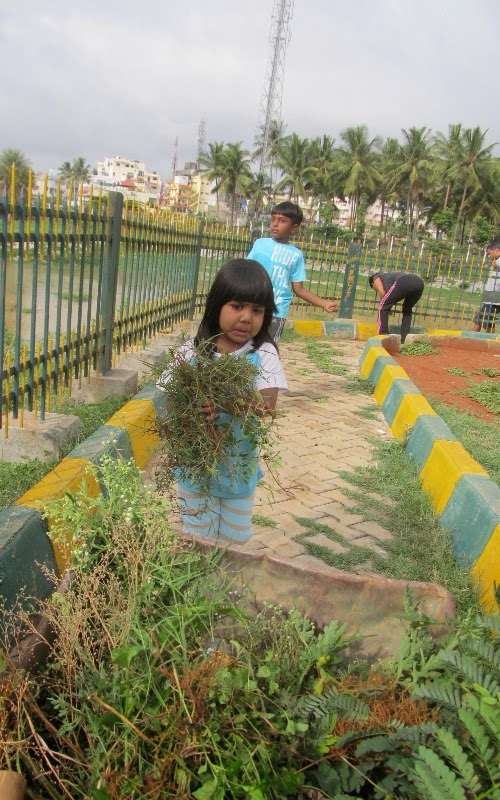
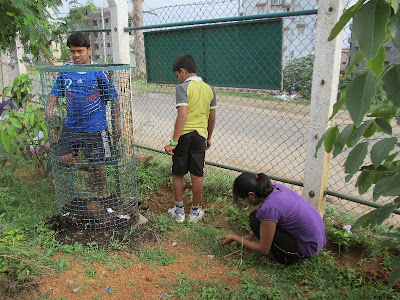
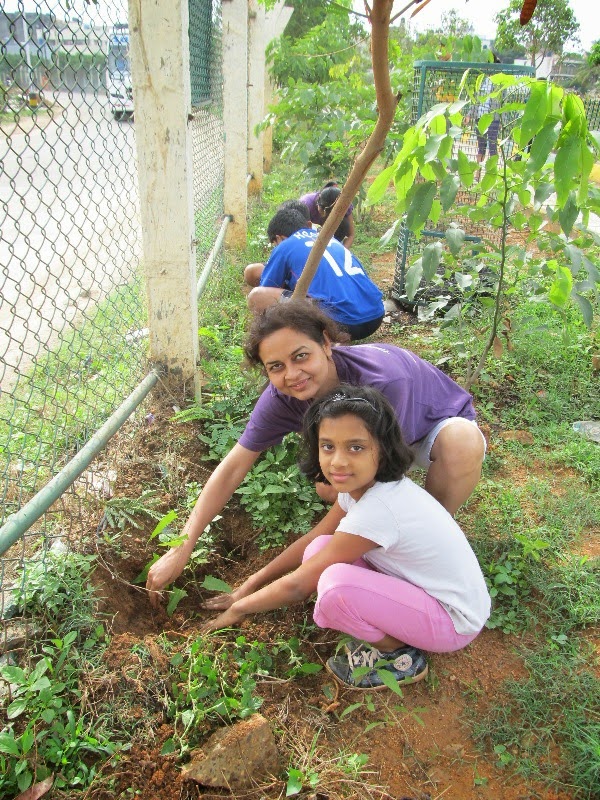
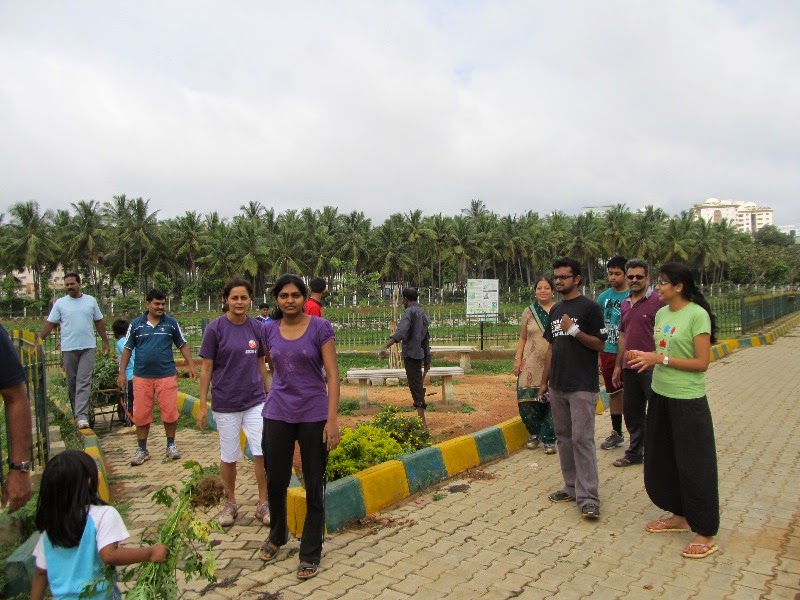
The rains also cooled the place making the gardening weekend thoroughly enjoyable for all the volunteers. Over the two mornings, starting at 7 a.m., about 50 people coming from various parts of the city, helped in digging pits, planting shrubs, cleaning (plastics and other litter) and deweeding (mostly parthenium and other weeds). Thanks to Surendran, Founder, Volunteer For a Cause (VFC), we had volunteers from as far as Kodigehalli (beyond Whitefield), Marathahalli, BTM Layout, Banasankari, JP Nagar, in addition to friends from the lake neighbourhood. Several children who came with their parents got a live lesson in nature conservation. Together they managed to plant the 300+ butterfly attracting plants such as Hamelia patens, powder puff, ixora, cup & saucer, nerium oleander, plumbago and lantana that PNLIT had procured. These shrubs, planted adjacent to the water body will be maintained to a height of about 3 feet in order to deter people from entering the water.
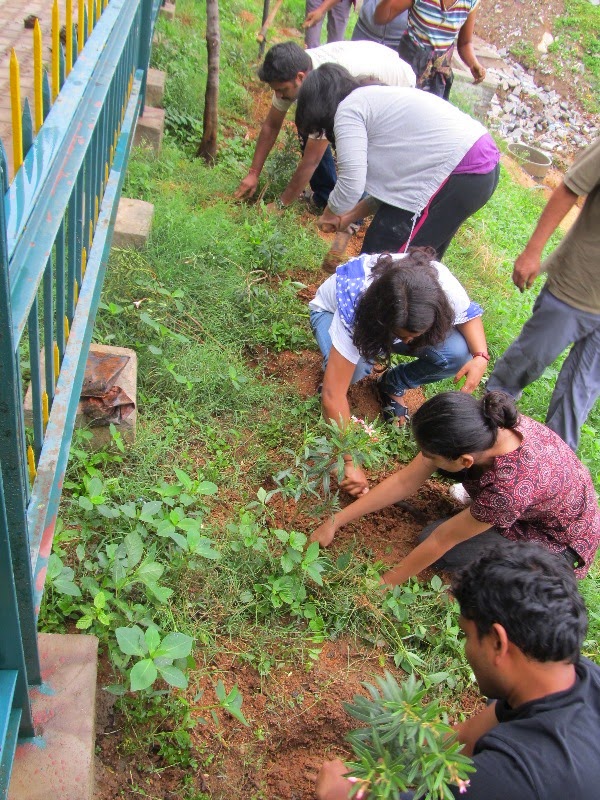
 

Volunteers at work, 1st & 2nd June 2013 (Pics: Usha Rajagopalan) 

With many of the volunteers asking for more work at the lake, we intend to have another planting session next weekend, weather permitting. Watch this space. 

Comments:

  1. markjoseph5140@gmail.com says:

    Great work

Leave a Reply

Your email address will not be published. Required fields are marked *

Similar Story

Bengaluru’s flowering Tabebuia Rosea trees: Think green, not just pink

Cities must not confuse beauty with ecology; Bengaluru’s pink weeks are lovely, but unchecked ornamental planting could make the city prettier but less alive.

Late each winter, Bengaluru briefly transforms into an Indian Kyoto, as roads blush pink, office parks turn photogenic, and social media buzzes with claims of a local “cherry blossom” season. But the star of this spectacle is not cherry at all. It is Tabebuia rosea, the pink trumpet tree, a neotropical ornamental whose native range runs from Mexico to Ecuador. What seems like a harmless aesthetic win is, ecologically, far more complex. The history Bengaluru’s pink canopy is not new. Much of it can be traced back to the 1980s under forester S G Neginhal, who drove a major greening…

Similar Story

Inside Chennai’s AQI: Why hyperlocal monitoring of air quality is crucial

Official data masks Chennai's toxic air. Citizen Matters travelled with the IITM team to map variations in air quality. Watch the video to know more.

Across cities, official Air Quality Index (AQI) readings often overlook local hotspots. Chennai has eight Continuous Ambient Air Quality Monitoring Stations (CAAQMS) that function 24/7 throughout the year. But this isn’t enough to map particulate matter. Air changes every few metres, as researchers from the Indian Institute of Technology-Madras tell us. Seasonal variation, construction, vehicular movement, and proximity to industries also change the air we breathe, In 2022, over 17 lakh people died in India due to air pollution (PM 2.5), according to a Lancet study. With better hyper-local air data and public awareness, citizens and policymakers can target pollution…