Woman’s ingenuity at Puttenahalli Lake

We at PNLIT feel blessed and privileged to get an opportunity to see the revival of a lake at such close quarters. We cherish the experience and want to share it with everybody. After all, how many people get such a fantastic opportunity to save a lake?  

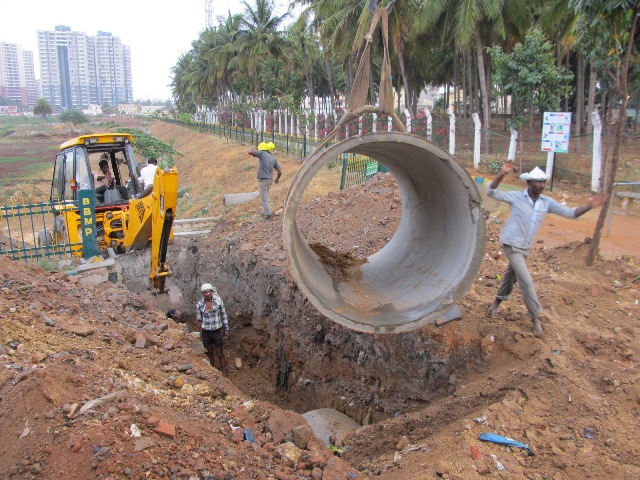
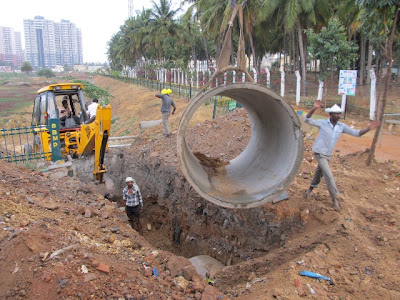
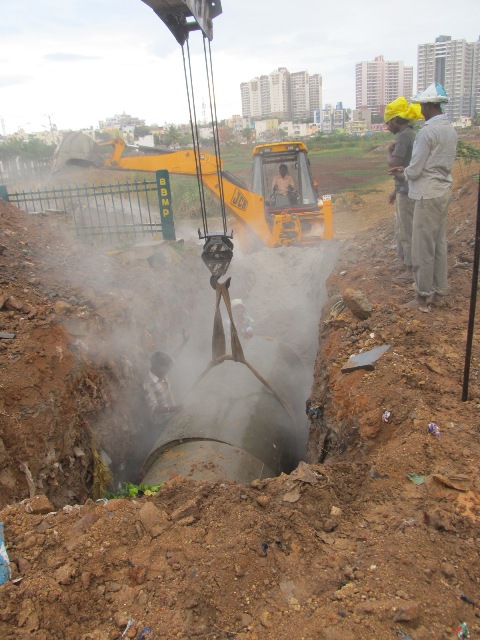
Yesterday morning the workers began laying the pipes to complete the diversion channel. Using a JCB to dig the trenches and a crane to lift the 45 in dia pipe and keep it in place in the trench was quite a sight! 

By late afternoon, the sky darkened. Out of 18 pipes only three were left. It began to rain and then eased into a drizzle. The machine operators, dry in their cabins, called out to the workers to resume but the men didn’t budge. We were worried that the work would get postponed to the next day and called the contractor. He was stuck in traffic. 

Just then a woman came briskly along the walking track. Her sari was tucked firmly at her waist and she held it up from the muddy ground. On her head was a white plastic bag keeping the rain away. Not looking at the workers or the trench, she picked her way quickly but carefully over the piles of soil, past the monster machines and went her way.  
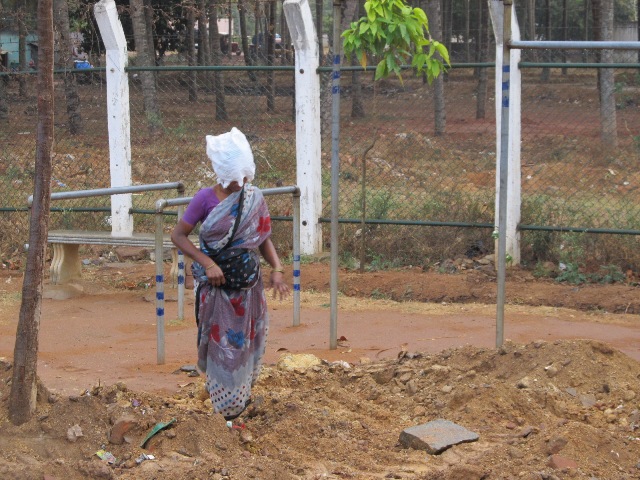
The next thing we knew, the workers, all male, asked our gardener Kumar for plastic bags which they tied around their heads and began to work once again!
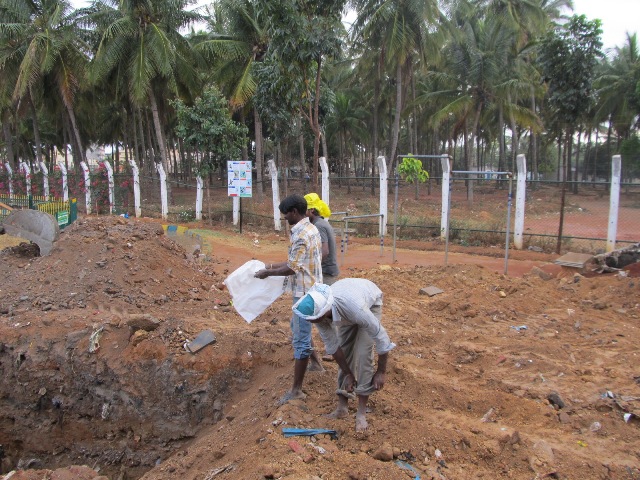
On Women’s Day, we salute this unknown woman’s ingenuity. Thanks to her, all the 18 pipes were laid yesterday and the JCB is levelling the ground today morning!
You can do your bit for Puttenahalli Lake! Join us this weekend (see previous post).

Pics: Usha Rajagopalan

Leave a Reply

Your email address will not be published. Required fields are marked *

Similar Story

Why concrete lakes are pushing away Bengaluru’s waterbirds

As natural shorelines vanish and extensive restoration destroys habitats, city lakes see a sharp decline in special wetland bird species.

Since Bengaluru’s lakes were formed by damming water flowing down valleys, they are typically wedge-shaped, with a gentle slope and a deep basin towards the embankment. This promotes the growth of diverse vegetation and animals, each adapted to a particular water depth. The result is a natural zonation – reedbeds and shoreline vegetation at the edges, floating and submerged vegetation in the middle, and open water at the deepest end. During the Open City biodiversity datajam held in December 2025, our group examined the ecological trends around Bengaluru’s lakes. In an earlier article, we examined how migrant and resident waterbirds…

Similar Story

Can cool roofs beat Chennai’s heatwaves? A look inside the state’s Green Schools push

Amid heatwaves, the cool roof initiative is being implemented across Chennai schools. But experts warn that it cannot be the single solution for urban heat.

Over the past few years, maths teacher Usha found her classroom sweltering during her usual 12.50–1.50 pm period, on the second floor of Perunthalaivar Kamarajar Government Girls Higher Secondary School. “It was so difficult to take class during the peak hours,” she says. But this year, she mentions that it feels slightly bearable, and attributes this to the shade of the trees, the wind blowing through the building, and the latest addition — solar-reflective paint on the roof. Data from a state government and UNEP Cooling pilot project at the Ambattur school shows that reflective coating brought the classroom’s internal…