Air quality in Chennai worsens since 2019
The amount of particulate matter in the air of Chennai has risen in 2022 than 2019. Then, it was the second most polluted city in India, with respect to PM 2.5 levels, according to CPCB.
In terms of PM 10 levels, Chennai has ranked higher and become the third least polluted city in Chennai. In 2019, the PM10 level was 55 units and last year, the amount was 65 units.
The National Clean Air Programme (NCAP) tracker report said that cities that had cleaner air in 2019 deteriorated over the years.
Experts say that the PM 2.5 and PM 10 levels could indicate more construction and industrial activities, but the real air quality data could be poorer.
Source: DTNext
Read more: Explained: Climate change jargon and what they mean for Chennai and its citizens
Marina beach gets a temporary disabled-friendly toilet
Adjacent to the disabled-friendly pathway, a temporary toilet for disabled people has been established by the Greater Chennai Corporation. Post nine months, the temporary structure would become a permanent feature after receiving user feedback. But, the permanent toilet will not be made of cement, as per the Coastal Regulation Zone rules. The current toilet, set up in a European style, has a ramp and handrails, apart from water and sewage systems.
Disabled community members say that bilateral transfer is necessary for wheelchair users to move from the closet to the wheelchair. Also, the toilets must also have a bench for people to change diapers and clothes, apart from giving a space for caretakers to sit.
Source: The Hindu
10 waterbodies in Chennai to become public spaces
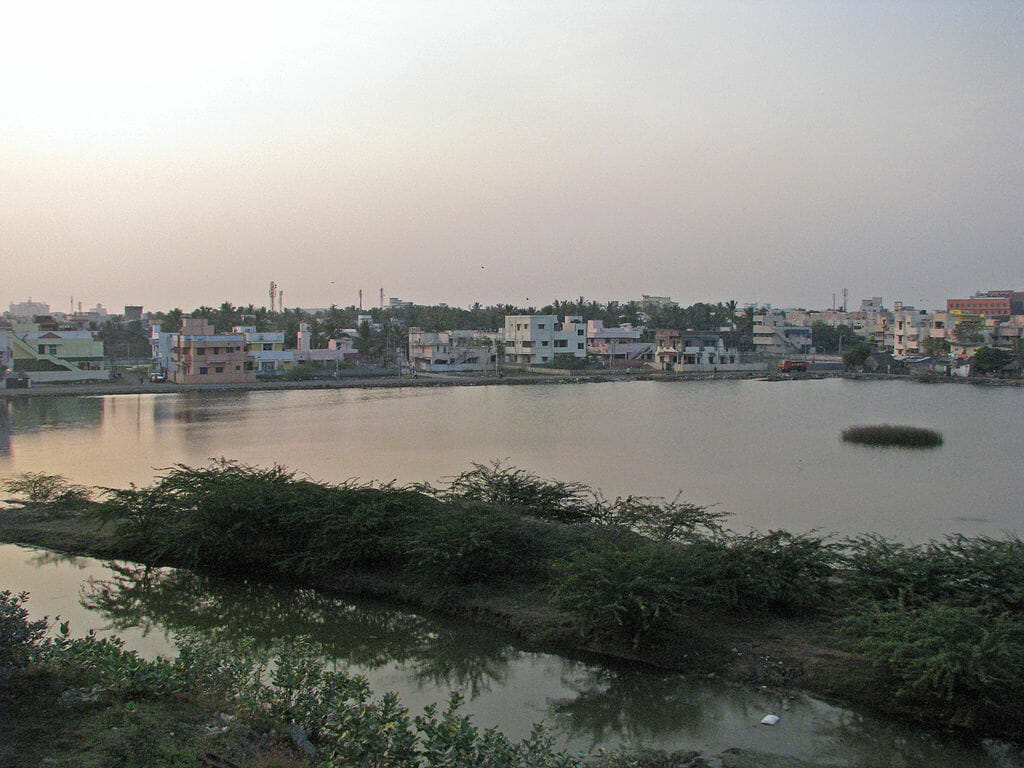
The lake-front development project will include the lakes of Perumbakkam, Retteri, Mudichur, Madambakkam and Velachery among other lakes in the Chennai Metropolitan Area. They are soon to become public spaces and an open design competition for the same to begin soon. CMDA plans to allocate Rs. 100 crores for the project.
The purpose of the project is to preserve blue and green spaces in Chennai. CMDA is mulling joining hands with Water Resources Department, GCC and other civic agencies to maintain and develop the waterbodies. But a hurdle in rolling out the project is waste discharging into the waterbodies.
Experts view that this project will prevent waterbody encroachment and illegal garbage dumping in Chennai lakes.
Source: The New Indian Express
Read more: How blue areas become grey: Reclassification of waterbodies in Chennai
Some suburban train stations yet to go digital
Even though the Tamil Nadu government is aiming to bring a unified ticketing system for different public transport modes, some suburban stations along the Chengalpet, Gummidipoondi and Tiruvallur routes are yet to get computerised ticketing system. Printed paper tickets are sold at these stations by employees, where people cannot get return tickets or renew their seasons passes.
Users have been stressing for computerised ticketing systems, because tickets get printed in bulk. Moreover, some trains are fewer via Beach station to suburbs. They are urging Southern Railways to rope in private contractors who can issue computerised tickets.
Source: The Times of India
Open defecation continues in suburbs
Despite GCC declared to be devoid open defecation in 2022, people still come across open defecation in the city. Some residents are forced to defecate in the open if the toilets are dysfunctional or closed.
Open defecation still happens in Saidapet, Thiruvottiyur and Besant Nagar among other locations. Women are forced to defecate in open grounds in Santhome, and residents are demanding more GCC toilets in heavily congested areas.
Sanitation experts view that public toilets’ construction and operation are not seen from a health perspective, but seen from an engineering perspective. Apart from that, they suggest that sensitisation campaigns are done for slum dwellers to motivate the latter to use public toilets.
Source: The Times of India
[Compiled by Padmaja Jayaraman]