All of Chennai is in different stages of ‘dug-up’ due to stormwater drain (SWD) work across the city. Residents have faced various inconveniences over the course of the work such as traffic jams, blocked roads, limited access to entryways and safety hazards. Despite this, there has been widespread cooperation for the work, as most residents recognise the importance of completion of the work to prevent flooding. But the alarming pace of tree felling in K K Nagar to make way for it has made residents concerned.
Unwitting victims of SWD work
A consequence of the work happening across the city has also been the loss of precious trees from local neighbourhoods. This is an issue that requires greater attention as the city has already suffered from a staggering loss of tree cover in the aftermath of Cyclone Vardah.
The SWD work in my neighbourhood in KK Nagar alone has resulted in the uprooting of several huge trees that have been a witness to our lives over many decades. Munusamy Salai and Lakshmanaswamy Salai have been particularly affected by the tree felling.
Some of these trees are over 50 years old each. The avenue trees that fell victim to the monsoon mitigation work had huge canopies and sheltered us from the scorching sun. The wide and sturdy trees were also habitat for several birds and insects.
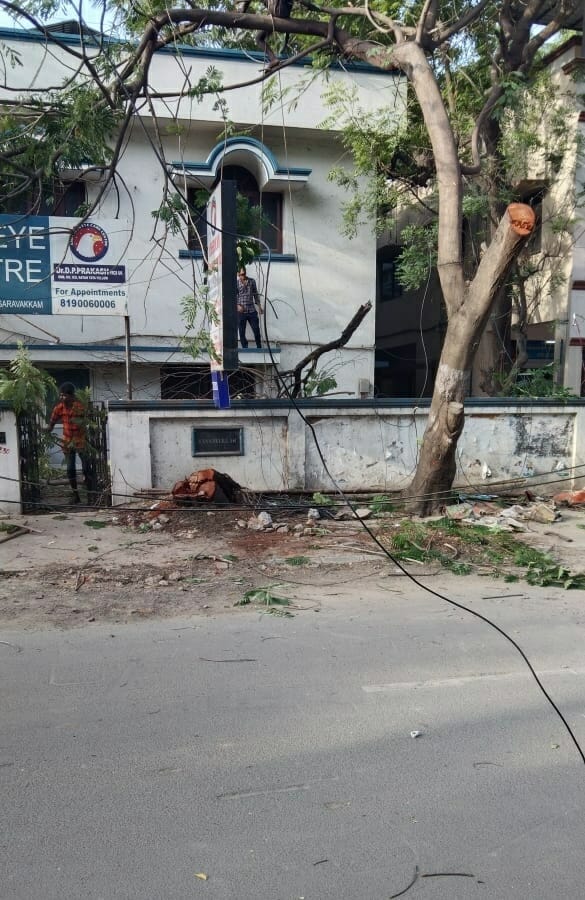
Having lived in the locality for over 23 years, I now fail to recognise the barren streets devoid of the majestic trees that once dotted it.
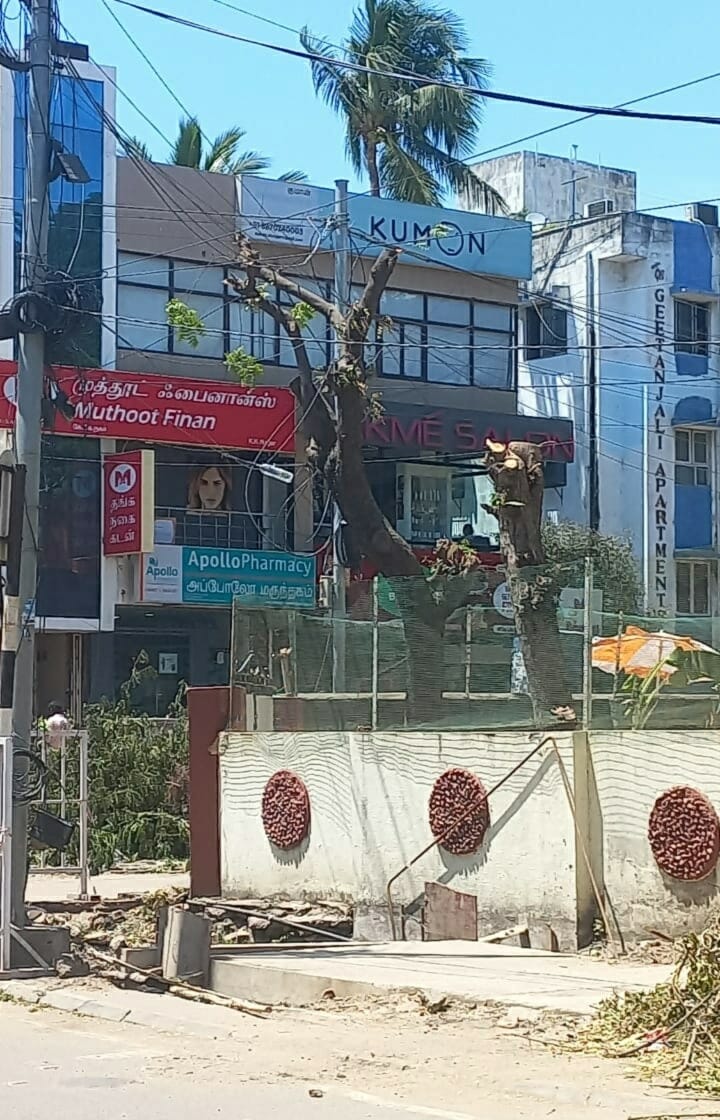
The trees being cut to make way for the stormwater drain project play a vital role in mitigating scorching summer heat across the city. Tree cover is also linked to rainfall. Indiscriminately felling trees might even cause less rainfall to the city, having widespread consequences in the future.
Read more: When Chennai trees come crashing down: The gaps in care and maintenance
Protests against tree felling in K K Nagar
While the work is being undertaken with the right motive, which is to prevent floods in Chennai, the people of KK Nagar have been extremely disheartened by the number of huge trees being cut for this reason.
While the residents are aware that the trees have been removed after the approval of the state-level Green Committee, many residents strongly feel that the planning of the SWD work could have been done in such a manner as to minimise the loss of trees. As things stand, the loss of trees in the neighbourhood has called into question the efforts by the civic body in ensuring that no tree is felled without it being absolutely necessary.
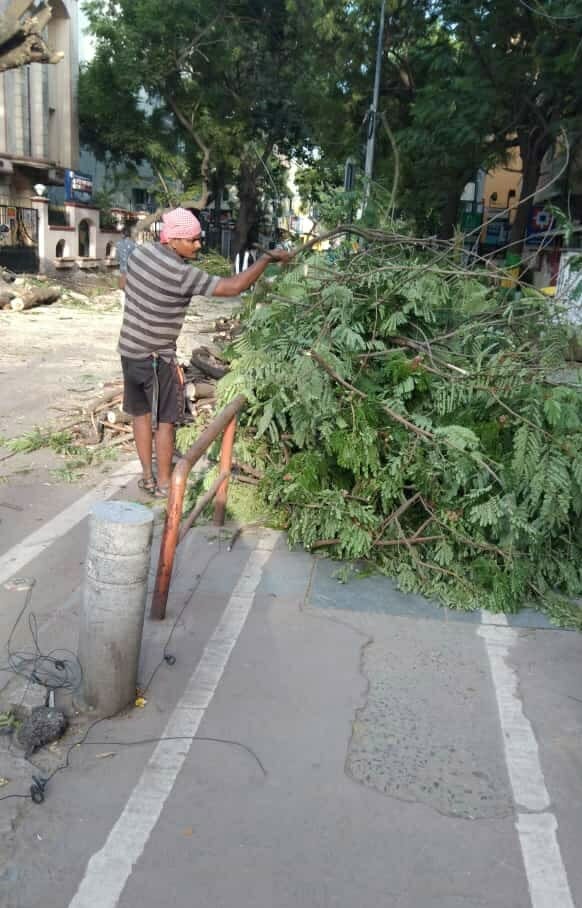
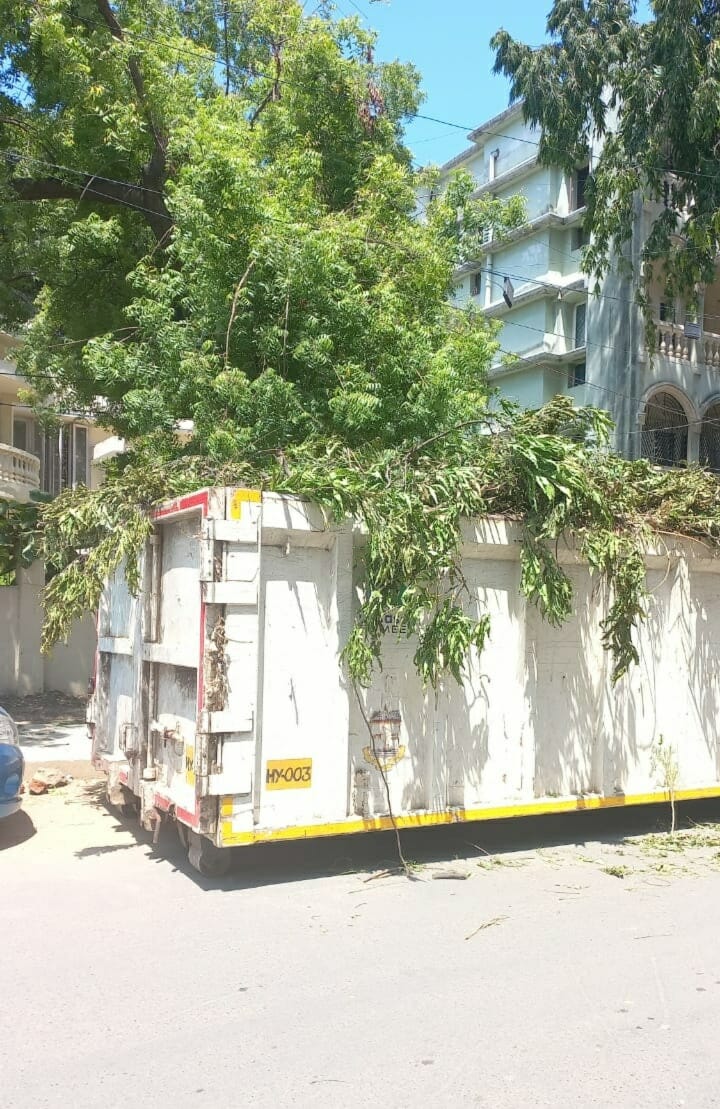
Even as residents protested the felling of trees, the civic body went ahead with the move. Some trees were felled clandestinely at night so as to not attract the ire of the residents looking to protect them.
While we are aware of the plans of Greater Chennai Corporation to plant 10 trees for every one tree felled for the project, the past history of tree planting drives raises questions over the usefulness of this move. For one, the sapling cannot replace the benefits offered by full grown trees that had existed in the area for decades. Secondly, it is unclear what kind of maintenance will be done by the civic body to ensure the success of the tree planting drive and survival of saplings and eventual growth into trees.
Read more: Panel proposes practical and scientific ways to green Chennai
Residents demand a stop to tree felling in K K Nagar
With these doubts in mind, residents of the area came together to launch an online petition to spread the word and garner support against the relentless cutting down of trees in the neighbourhood.
In addition to this, I have also tried reaching out to the public grievance office of the Prime Minister. The filed report was channelled to GCC and we await a response on the matter.
Meanwhile, I have also filed an RTI and await information regarding the alignment of the SWD in KK Nagar, the total number of trees cut down for the SWD project and the number of trees that will be cut in the coming weeks.
While we understand the need for the stormwater drain project, having the work done at the cost of trees that the neighbourhood holds dear and ones that serve many different uses has been a move most disappointing for many residents.