Beautification work by Corporation
Several beautification projects have been initiated in the city across localities by the Chennai Corporation. A new fountain at Marina beach has been completed and another such structure is under construction near the War Memorial and Egmore Railway Station.
As part of the drive, several areas including the T Nagar pedestrian plaza will receive additional lighting. On the cards is also a facelift for parks across the city including the famous Maadi Poonga. A park with fountains is planned near Mint Flyover at an estimated cost of Rs 5 crores.
Dynamic lighting has also been proposed for heritage buildings such as the Ripon Building and Victoria Hall. The projects are part of the Singara Chennai 2.0 initiative, which aims to create two new attractions in each of Chennai’s 15 zones.
Source: The Hindu
Police Museum unveiled in Chennai
A state-of-the-art museum in Chennai showcasing the history of the state’s police force has been inaugurated by the Chief Minister. The Police Museum is housed in the Old Commissioner’s Office in Egmore. The museum holds close to 200 artifacts from various eras. The cost of creation of the museum stood at Rs 6.47 crores.
The museum holds medals from the past, guns, vehicles used by the police force at various times and other artefacts such as those seized by the police from the likes of Veerappan and LTTE’s Prabhakaran.
The museum is open to the public and entry is free for students of government schools.
Source: India Today
Read more: Chennai to get three new museums, but will they be any different from the rest?
Chennai Metro yet to reach pre-COVID ridership
The Chennai Metro is yet to register the level of ridership that it saw before the COVID-19 lockdowns were put in place. While the service has seen the return of 77% of its pre-COVID ridership, the numbers are still far short of the target set during the launch of Phase 1 of the project.
Data from Chennai Metro Rail Limited pegs its September ridership at 89,539 passengers per day on average, for a total of 26.86 lakhs for the month. The target during Phase 1 launch was an ambitious 7.76 lakh riders per day. The current numbers only make up 11% of the target. September 9th saw the highest footfall with over one lakh passengers taking the metro.
The service was stopped at various points since the first wave, with the latest resumption taking place from June 21st.
Source: The Times of India
Read more: Why Chennai Metro needs to pay more attention to use of public space
Majority of drains and water bodies desilted
Prior to the onset of the Northeast monsoon, a majority of the drains and water bodies across the city have been desilted according to the Greater Chennai Corporation. Work began in the preceding months in order to ensure preparedness for the rainy season.
The vital storm water drain networks that prevent flooding have seen much needed maintenance work during this effort. Around 552 km of the city’s 697-km storm water drain network have been desilted ahead of the rains due in November. The authorities have also asked for the repair or replacement of major drain structures, covering 81 such structures across the city. The work is expected to be completed by the second week of October.
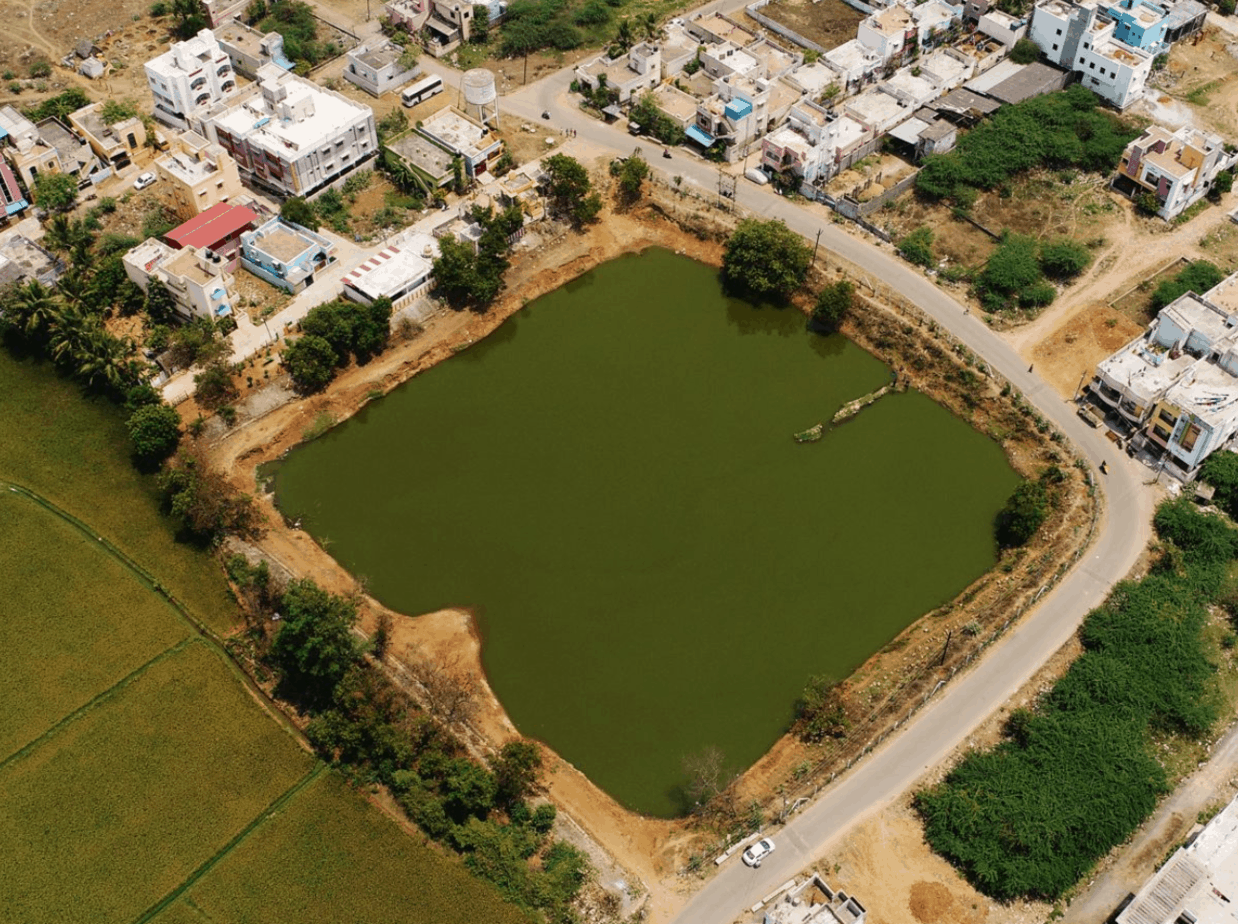
Data also shows that 148 of the 210 water bodies in Chennai have been desilted under various projects ahead of the monsoon. A meeting on monsoon preparedness with various stakeholders was held at Ripon Building to review the progress.
Source: The New Indian Express
[Compiled by Aruna Natarajan]
Ranga Nagar pond in Mudichur restored buy EFI ?? buy or by ??
Thank you for pointing this out. The error has been corrected.