Parched water bodies and empty pots along the lanes of Chennai illustrate the city’s unprecedented water crisis. While mismanagement by government departments and the poor Northeast monsoon have been touted as the primary reasons, let’s not forget our responsibility as citizens.
In an attempt to provide solutions to Chennai’s water crisis, ADDA in collaboration with Citizen Matters, Chennai (a digital news media site that reports on urban issues) conducted a knowledge-sharing workshop on Saturday (June 22). More than 70 participants from the apartments of South Chennai, which rely largely on private water tankers, attended the sessions to understand various approaches to water conservation including Rain Water Harvesting (RWH), Grey water Recycling, Water Metering etc.
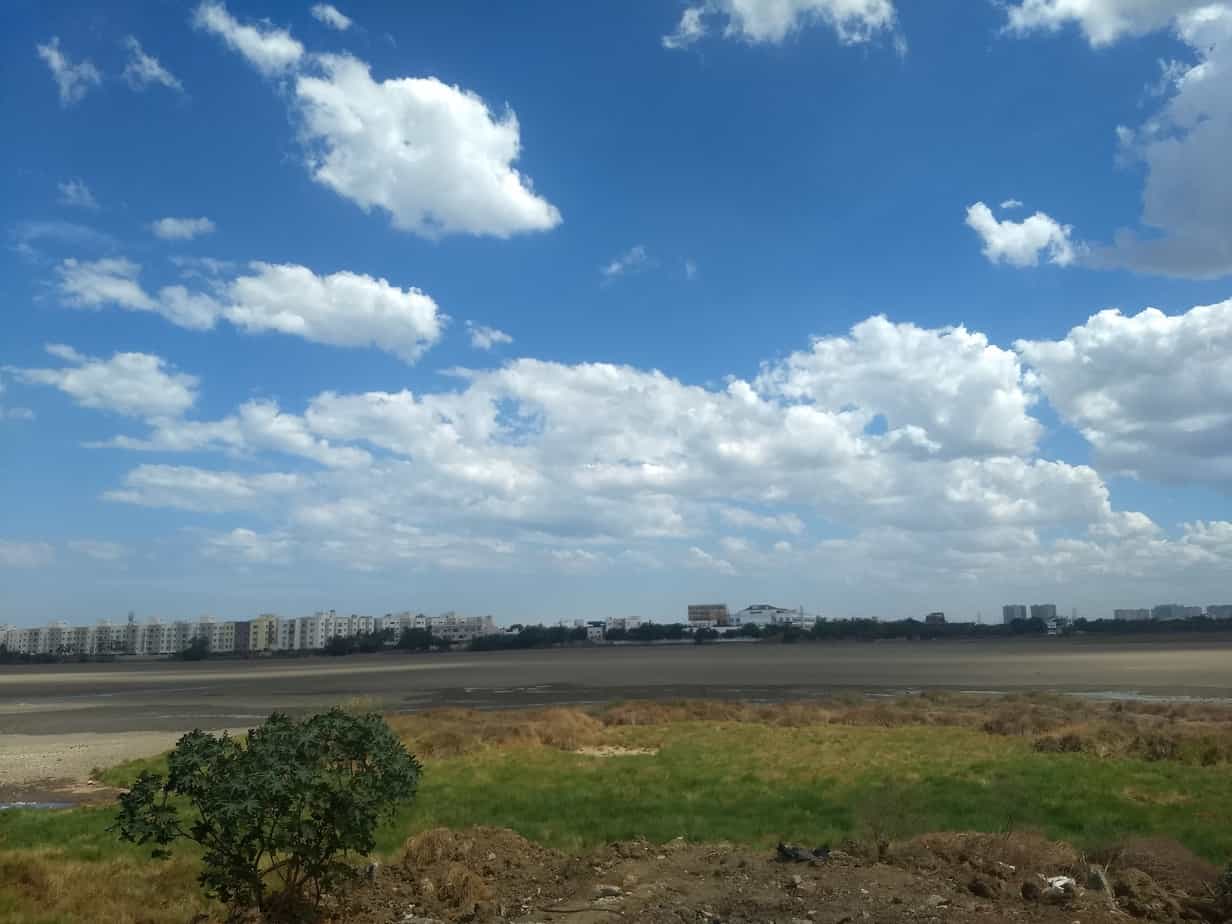
Parched Sholinganallur Lake that explains the dire water crisis at Chennai. Pic: Laasya Shekhar
Meenakshi Ramesh, Co-founder of Citizen Matters Chennai, welcomed the gathering and set the context for the workshop, mentioning some points on how Chennai arrived at this calamitous water situation. “It takes a crisis to wake a city and here we are, in the midst of a crisis and we must act,” said Meenakshi Ramesh.
Tamil Nadu has been a pioneer in Rain Water Harvesting with former Chief Minister, the late J Jayalalithaa, making it mandatory for all new buildings to install the facility as far back as 2003. “Back then, people were installing RWH structures just to abide by the law. Today, having realised the significance of RWH, citizens are opting for it. This is a welcome sign,”said Sekhar Raghavan, a conservation expert and director of Rain Centre.
“Chennai gets 140 cm of rain every year on average. Given the city’s population and water availability, it would have been possible for every Chennaite to get 130 litres of water per day, if we had conserved rainwater. Even if 50 percent of Chennai had conserved rainwater, every individual would be enjoying 65 litres of water, which is considered a luxury today,” he added.
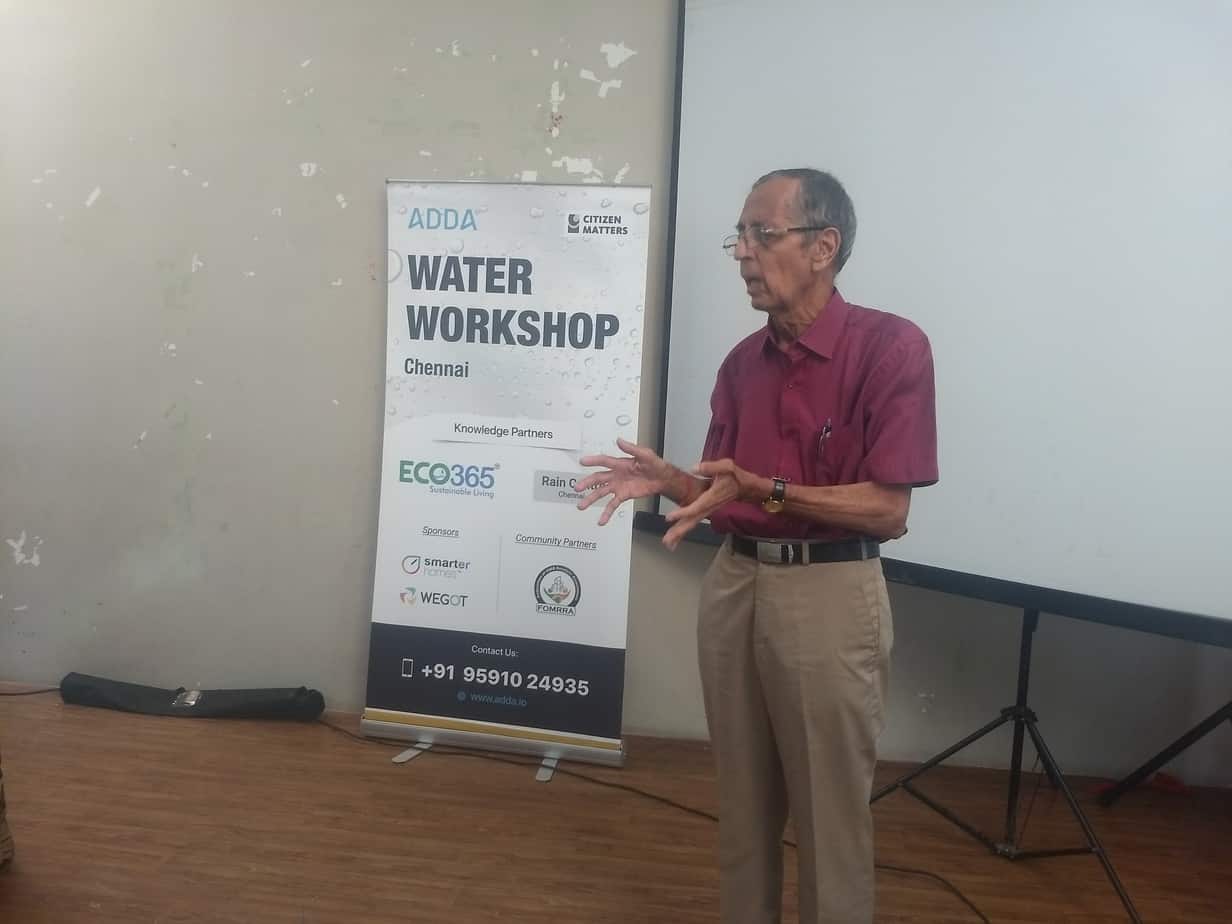
Indukanth S Ragade, a water conservation expert talks about the nitty gritty in grey water recycling. Pic: Laasya Shekhar
Explaining the importance of recycling grey water, Indukanth S Ragade, an expert said, “All we need for grey water recycling are space, soil, moderate sunlight and a bed of nutrient-absorbing plants such as Canna Indica and plantains.”
Citizens shared the success stories of water management in apartments. “Proof of the pudding is in tasting it. We did a demo for a block and when people saw that water harvesting is practical, they welcomed our idea,” said Harsha Koda, a resident of Sabari Terrace apartments at Old Mahabalipuram Road (OMR) and a founder of Federation of OMR Residents Associations (FOMRRA). Sabari Terrace with 56 apartments and a built up area of 100,000 square feet, saved 10 lakh litres of rainwater in 2018, even when the monsoon failed. During a good monsoon year, Sabari Terrace saves around 30 lakh litres.
Meera K, co-founder of Citizen Matters, explained the various steps that may be taken to reduce water usage, along with the technology and the challenges involved in each. She shared examples of what we can do as individuals and as a community. Meera shared success stories from Bengaluru apartments which have implemented water metering, thus ensuring equity in distribution and reduction in usage.
Errata: Indukanth Ragade was misquoted in an earlier version of this article. Plants like Canna absorb nutrients in the grey water. This has been corrected.
Dry wells everywhere make the problem of water shortage worse. It’s a good conference. Next time you have a conference, plz email me so that I can participate and suggest as a senior citizen with rich experience some ideas like others have suggested. I can focus on the man-made problems and suggest remedies