Help your doctor understand your problem

You get only a limited amount of time with your doctor. So you need to make the best of it. Here's how.

Doctors have a busy schedule, so if you proactively provide them with information about your health, rather than have them fish it out of you, so much the better. Here are some tips:
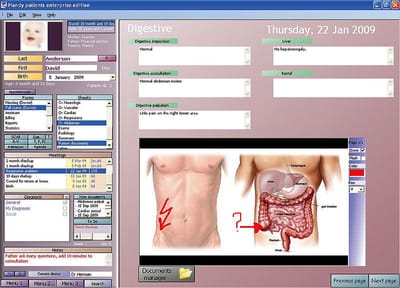
Electronic medical record.
Pic: Wikimedia commons

Be specific about what brings you to doctor. Explain the symptoms, mention duration of symptoms, any precipitating factor that you think has brought it up, if chronic then for how long it has been persisting. A few examples…

Pain in the abdomen: site of pain, whether acute or chronic, whether it shifts from where it started from, or radiates to another region, whether aggravated by or relieved by meals / vomiting/ change of posture, or pressure, whether first episode, or have there been previous episodes.

Fever: Whether it is continuous, or follows any particular pattern. Does the fever comes only in evening, is it high grade or low grade. Are any of the glands enlarged, is there any history of infection, is it associated with any rashes, is it recurrent?

Ensure you share past history of any disease, allergies or reaction to any drugs. Do not forget to inform about family history of diabetes /hypertension/ heart disease/cancers, any surgeries undergone, or history of sudden death especially amongst siblings or parents.

What goes into your medical record?

While it is best to maintain a file of all the documents, it helps if you have a document which summarises your medical history, and reports of investigations in a chronological order. You need to update it following every medical consultation.

Those who are tech savvy should save their medical records digitally. Electronic Medical records (EMR) are also a way of maintaining medical records. These are usually password protected, and when required printouts can be taken.

Leave a Reply

Your email address will not be published. Required fields are marked *

Similar Story

Smart safeguard: Annual rabies antibody testing for workers

Animal activists urge the government to recommend RVNA, a simple, cost-effective way to protect animal welfare workers against rabies.

The street dogs issue continues to spark discussion across Indian cities, without a sustainable and humane solution in sight. While the problem of dog bites may be  real, it is also important to be pragmatic, preemptive and protect frontline workers in the animal welfare sector by dealing with its greatest potential downside, head on.   A simple, cost-effective intervention is to mandate or strongly encourage annual Rabies Virus Neutralising Antibody (RVNA) titre testing for all animal welfare workers. This not only protects them from rabies but it also enhances public health resilience against the fatal disease, at minimal expense. Bengaluru is…

Similar Story

Delhi’s air is toxic, but are South Indian cities really breathing safe?

South India’s AQI may look “satisfactory,” but long-term exposure to toxic air, weak monitoring, and rising emissions shape a public health crisis.

"Delhi’s Air Quality Index (AQI) remains poor." "Flights cancelled due to smog in Delhi."  The headlines mostly focus on Delhi’s toxic air, and the spotlight rarely shifts. However, another story often goes untold: the air in South Indian cities. The AQI readings in Bengaluru, Chennai, Hyderabad and others mostly fall in the “satisfactory” range. Yet, does that really mean the air is safe to breathe? On a busy road in HSR Layout, Kanmani runs a tiffin centre from a pushcart. One evening, she began wrapping up earlier than usual. Just beside her shop, the air was thick with smoke. Garbage…