Fishy investigation in IIT suicide case: Father says caste issue sidelined, raises question on authenticity of note found
Ramesh Solanki, father of Darshan Solanki, an IIT Bombay student who died by suicide in February, wrote a letter to the special investigation team (SIT) expressing his concern that the police may have overlooked the possibility of “caste discrimination” playing a role in his son’s death.
He also questioned the findings of handwriting experts which concluded that the “suicide note” found at the scene was written by his son. The father has also expressed concerns regarding the SIT investigation, which implicated another student, Arman Khatri. This was based on the discovery of a note with the message “Arman has killed me” written in a corner. The Powai police handling the investigation had not noticed any such note.
Source: Times of India
Read more: Talking caste in Bombay
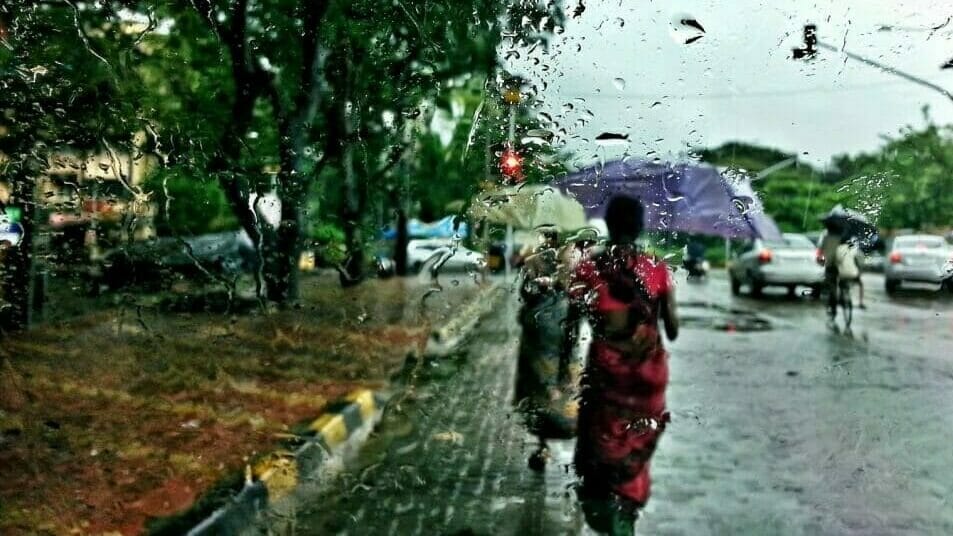
Unseasonal rains hit Mumbai, city to experience partly cloudy weather next week
Temperatures dropped in parts of Mumbai due to unseasonal rains on April 12th and then on April 13th, mainly in the northern and western suburbs, including Borivali, Bhayandar, Malad, Goregaon, Andheri, Naigaon, Vasai, Juhu, and Mira Road.
Mumbai’s weather station in Santacruz received 15mm of rain on the morning of April 13th, which is the highest amount of rainfall Mumbai has received in 24 hours for the month of April, according to data from the India Meteorological Department (IMD). According to the IMD’s seven-day forecast for Santacruz, the city will experience partly cloudy skies over the next week, with maximum temperatures hovering between 34-35 degrees Celsius, while the minimum temperature will remain between 24-25 degrees Celsius.
Source: Hindustan Times
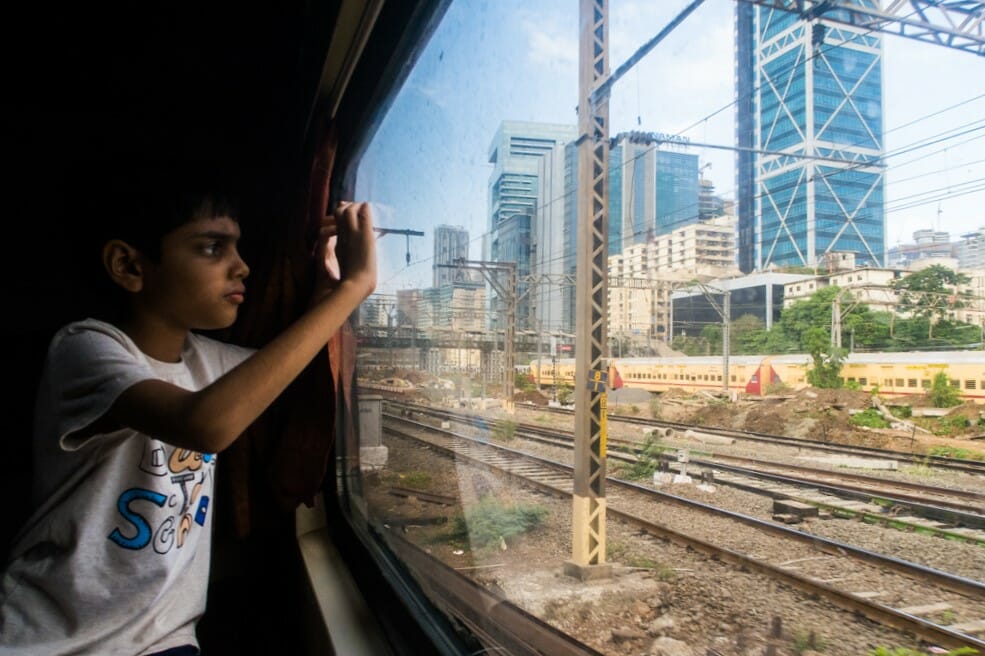
Snapped overhead wire between Dahisar-Borivali disrupts Western Railway services
Western Railway services were disrupted on Wednesday morning soon after overhead wires snapped between Dahisar and Borivali. A Western Railway spokesperson said three trains were held up and being diverted.
Read more: Are AC trains in Mumbai attracting car users off the roads?
One of the trains that were affected was an AC local and commuters complained that there was no information on the speakers inside the train.
Source: Mid-Day
Air pollution control measures left gathering dust
BMC’s dust mitigation project has been delayed, it was supposed to be implemented from April 1st. The civic body has not yet established ward-level task forces for its implementation and action.
A committee, under Additional Municipal Commissioner Dr Sanjeev Kumar, had prepared a plan and suggested forming three ward-level task forces in each ward for the implementation of the project. Two of these task forces were supposed to keep a check on construction sites and infrastructure projects. Meanwhile, the third task force was supposed to be responsible for controlling air pollution from crematoria and unclean fuel.
Source: Mid-Day
Elderly in MMR will be on their own by 2031, study suggests
About 2.4 million senior citizens will be living on their own in Mumbai Metropolitan Region (MMR), predicts a report published by a consumer knowledge firm Ormax Compass. The report indicated that retirees have recently been reassessing their plans for life after retirement.
The study suggests senior citizens in MMR are prepared to live alone in a nuclear environment and believe that they would probably be the last generation to provide care for their aging parents. Maharashtra has around 125 million people living in it, and its proportion of elderly individuals is higher than the national average, at 11.7% compared to 10%. This number is further expected to rise to 15% by the year 2031.
Source: Hindustan Times
Compiled by Eshan Kalyanikar