In photos: what’s left of a gaothan in Vile Parle

A snapshot in time of St Francis Pakhady, a gaothan in Vile Parle, one of the few remaining but vanishing remnants of Mumbai’s early inhabitants.

St. Francis Pakhady, a 200 year-old gaothan in Vile Parle, is no stranger to change. What began as a village of close-knit farmers on Salsette Island in British Bombay is now threatened by concrete development.

Bullock carts would ply the Milan subway to get from east to west. Train tracks were laid along one side, leading to a level crossing. The opening of Vile Parle station, and its subsequent increase in lines, trimmed and pushed back the goathan.

The upcoming sixth railway corridor between Mumbai Central and Borivali will eat 4.5 metres into Veer Ghanekar road, a stretch currently occupied by a line of parked cars. But to keep the road 18.3 metres wide, in accordance with the Development Plan 1991, the BMC issued plans to realign it. 12 of the gaothan’s cottages would be flattened, of the 70 currently standing.

Responding to a Public Interest Litigation (PIL) in April 2019, the Bombay High Court temporarily blocked the BMC from acquiring or demolishing any gaothan property without proper due process. But the brazen felling of a heritage tree in the precinct in January 2022 has not inspired much confidence.
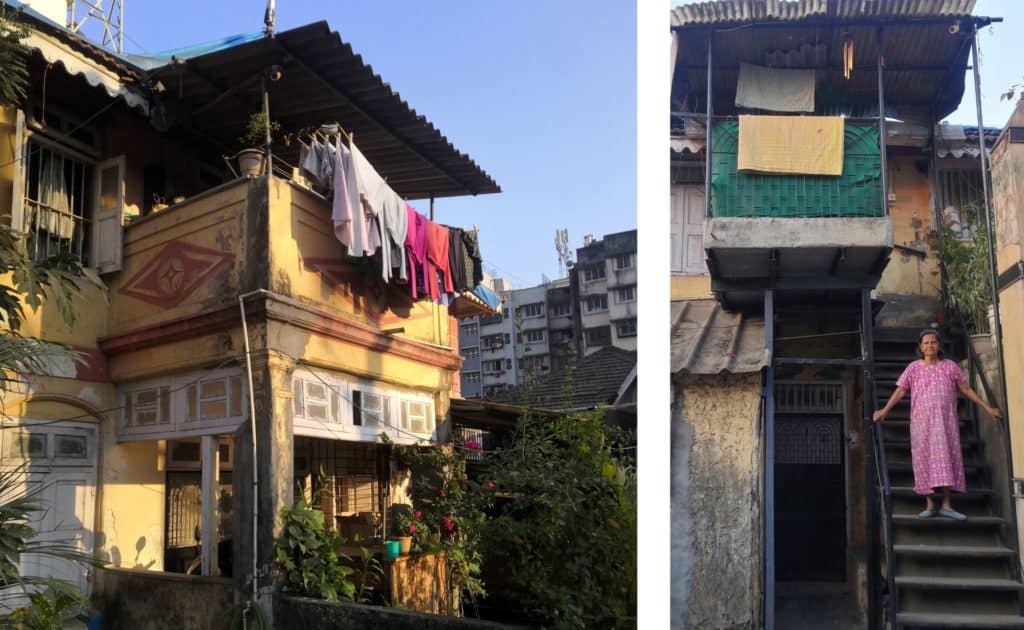
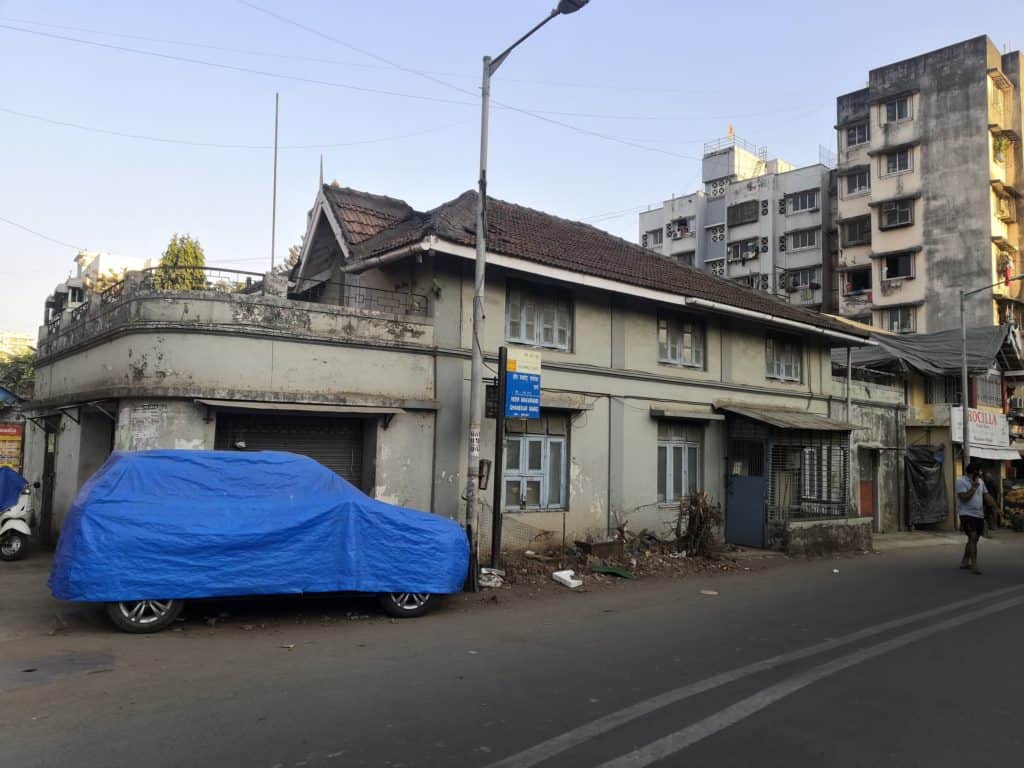
A house and resident in the Vile Parle goathan at the risk of being demolished
House No. 1 overlooks the train tracks and would be the first to go in the widening. Audrey lives on the first floor, with extended family below. Photo: Sabah Virani
An empty house at the front of the goathan that will be razed in the realisgnment of the road
Empty after the death of a resident, this end stretch of the gaothan will also be razed. The road will narrow when it reaches the building in the distance. Photo: Sabah Virani

The Romell Group has acquired bits of land throughout the gaothan. One house, demolished to make way for a Slum Rehabilitation (SRA) building, was allegedly acquired by forging signatures of two deceased landowners. An FIR was filed in 2018 after much struggle and the involvement of the Maharashtra State Human Rights Commission (MSHRC), but no headway has been made on the case.
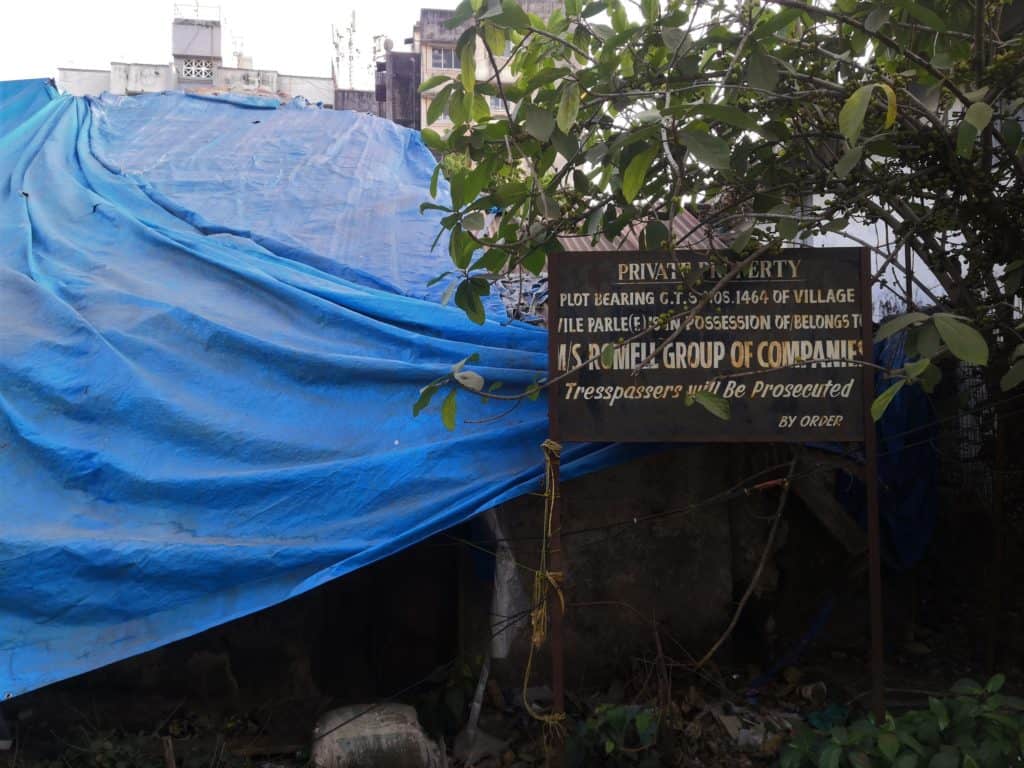
An acquired plot by the Romell group covered with blue tarpulin to keep the rain out
One part of the plot is owned by the Romell Group, while the remainder is still lived in. Photo: Sabah Virani

“Once the road has expanded, the entire gaothan on the front will get displaced. The others will become vulnerable to sell it to the builder, who will get an increased floor space index (FSI) because of the width of the road,” says Jude D’souza, a resident of the gaothan.
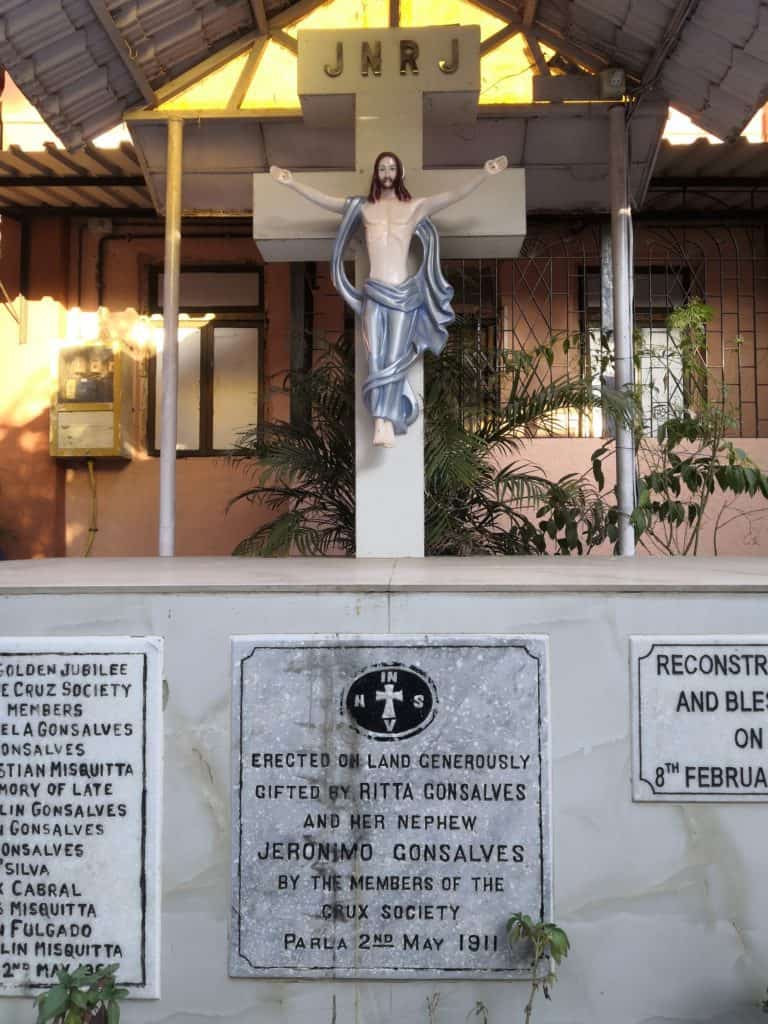
A crucifix in the Vile Parle gaothan, gifted by the residents in 1911
A plaque dated 1911 marking the land gift of Ritta Gonsalves and nephew Jeronimo Gonsalves, where the cruxifix stands. The residents of the gaothan are predominantly East Indian Christians, a moniker differentiating them from the Goan, hence Portuguese, Christians in Bombay at the time. Photo: Sabah Virani
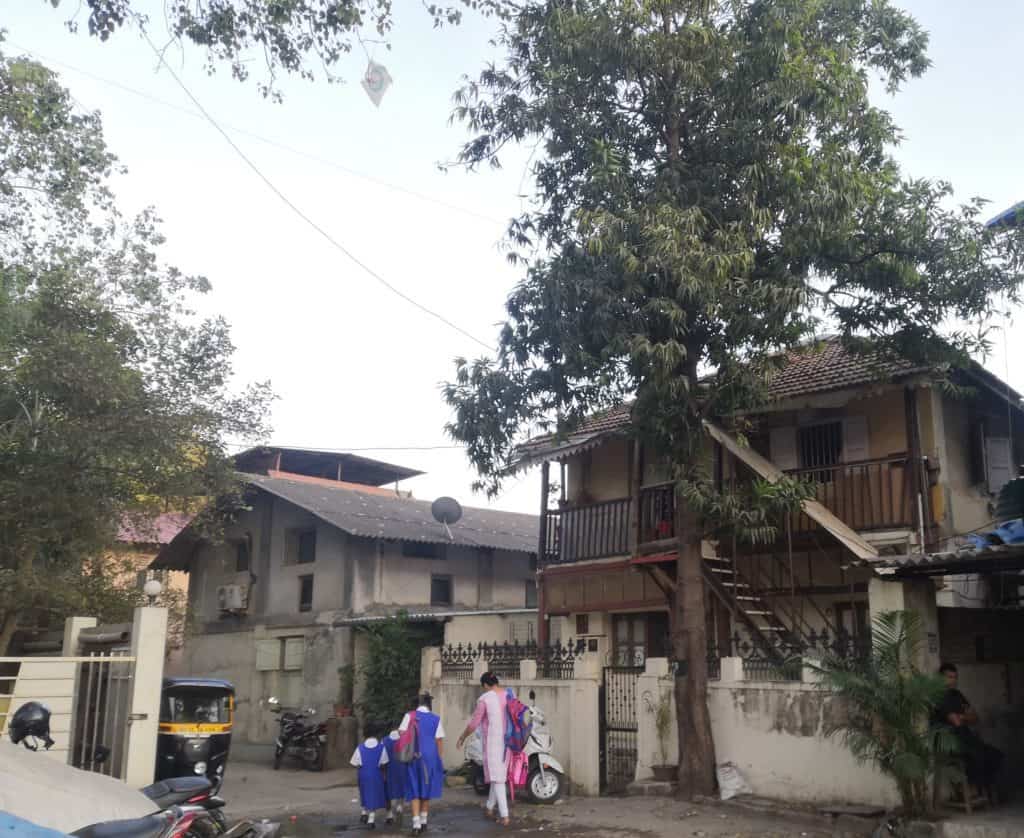
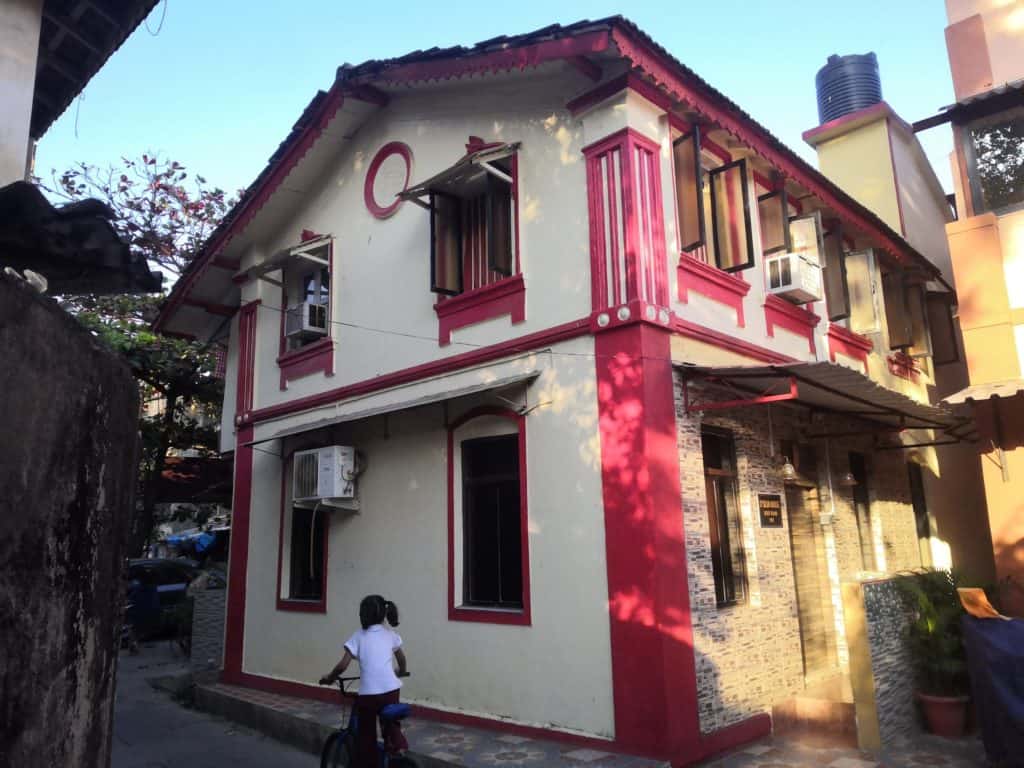
A Portuguese style house in the Vile Parle gaothan
The houses are influenced by Portuguese design: multi-stories, wooden floors, brick walls, sloped roofs with Mangalore tiles and decorated eaves boards. Many of them have been redeveloped, the open porch space taken in to make space. Photo: Sabah Virani

Read more: “Koliwadas are Mumbai’s living heritage and must be conserved”
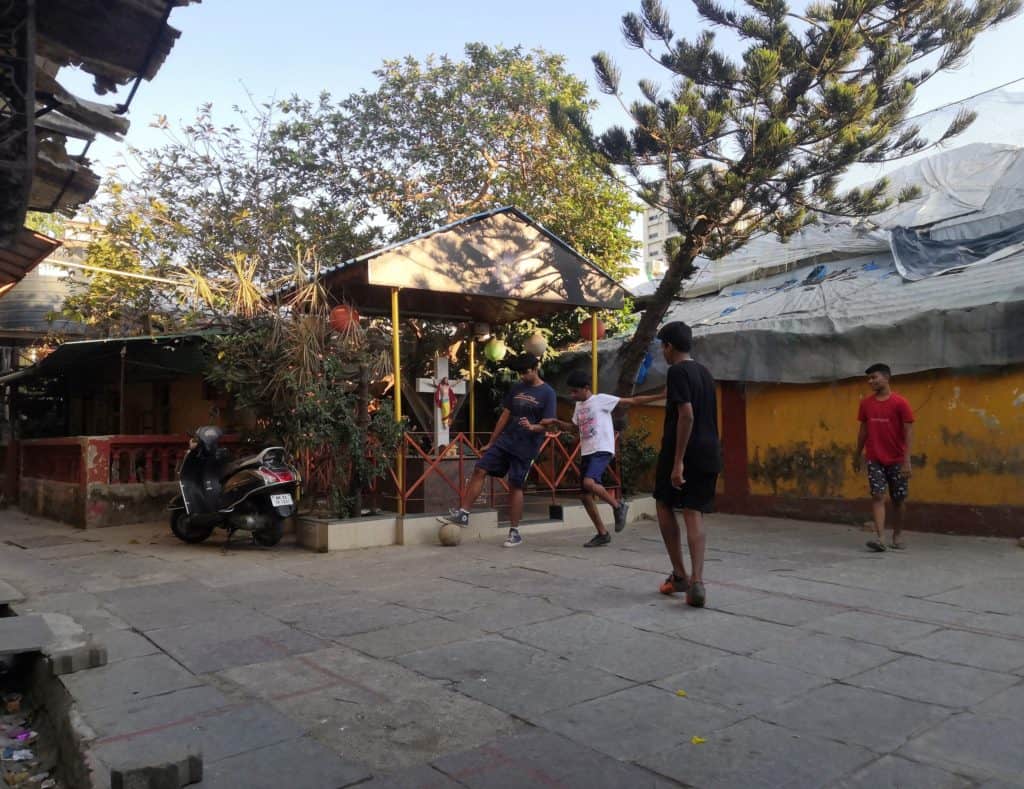

A game of football in the clearing of the Vile Parle gaothan
The narrow winding lanes of the gaothan open into a clearing, perfect for play and congregation. Photo: Sabah Virani
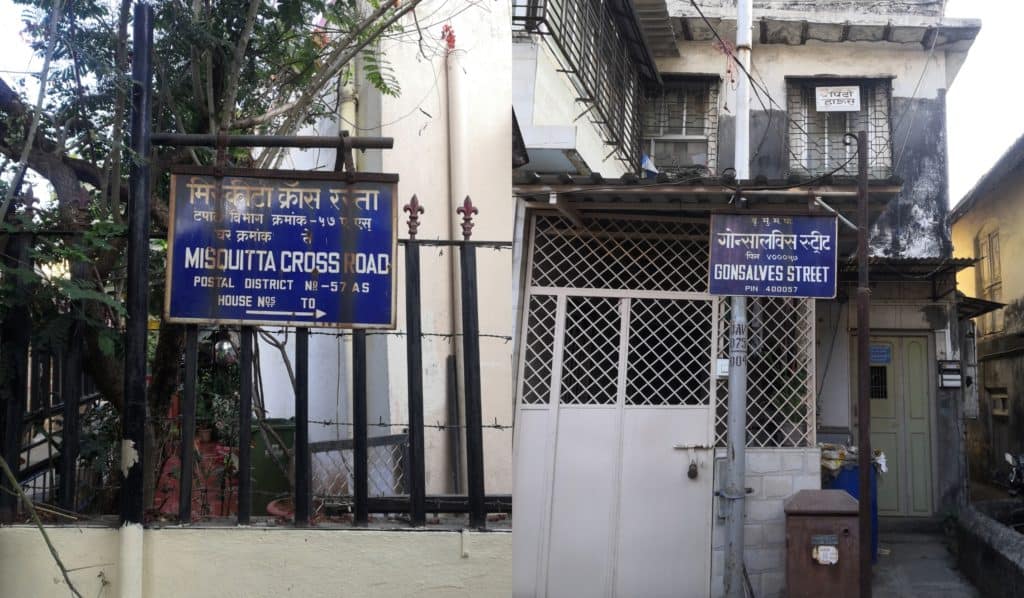
Sign boards of Misquitta Cross road and Gonsalves street in the Vile Parle gaothan
The Misquittas, Gonsalveses and Fernandezes were the first families to settle in the precinct, and the three streets that interweave throughout bear their names. Photo: Sabah Virani
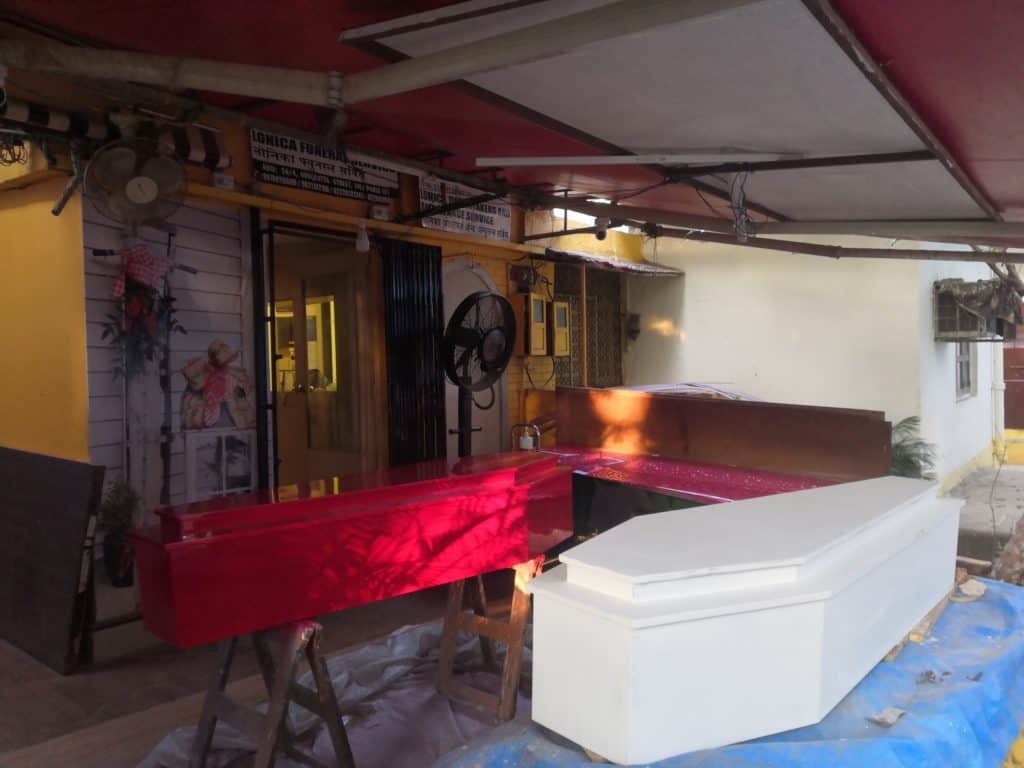
An undertaker's shop in the Vile Parle gaothan
An undertaker and ambulance office in the gaothan. Photo: Sabah Virani
Houses in the Vile Parle gaothan
A government resolution in 1961 allows the goathans to expand within 200 metres of their perimeter every 10 years. But from 300 to 128, their numbers and size has only dwindled. Photo: Sabah Virani

Also read:

Leave a Reply

Your email address will not be published. Required fields are marked *

Similar Story

Bengaluru’s Gunjur CDP Road: Two decades of delays and poor coordination

Conflict between the GBA and Forest Department has resulted in a stalled east Bengaluru road, inconveniencing residents.

For residents of Gunjur, Panathur and surrounding neighbourhoods in east Bengaluru, the promise of better road connectivity has remained elusive for nearly two decades. The proposed 150-foot-wide Comprehensive Development Plan (CDP) Road, intended to connect Gunjur to the Outer Ring Road (ORR) via New Horizon College, was included in Bengaluru’s Revised Master Plan (RMP) 2015, approved in 2007. Yet, in 2026, a crucial stretch of the road, situated directly inside the Panathur Tree Park, is still incomplete.  While the CDP road was proposed in 2007, a crucial 400-500 metre stretch of the road has already been used to develop the…

Similar Story

How to ‘SORT’ Bengaluru: A road map to transform the Sarjapura-ORR corridor  

Pedestrian corridors, AI-enabled traffic signals and frequent bus service — this detailed plan proposes improved mobility in Bengaluru’s tech belt.

Bengaluru’s economic engine is choking. Every day, over 11 lakh people, made up of employees and students depend on the Sarjapura–Outer Ring Road corridor. Yet mobility here has collapsed: Commutes of 2–3 hours for distances under 15 km Rising pedestrian deaths due to unsafe roads Public transport that is irregular, overcrowded, and unreliable. If left unaddressed, congestion will worsen, productivity will sink, and Bengaluru’s global competitiveness will suffer. The Karnataka government and Greater Bengaluru Authority (GBA) have initiated a game plan of improvements for ORR, including white-topping. We believe there is a huge opportunity beyond a “quick fix” to rejuvenate this…