Mumbai starts partial lockdown
According to joint guidelines produced by the BMC and Mumbai Police, a weekend shutdown and strict night curfew beginning at 8 PM will be followed for public spaces. With Section 144 now imposed on the city, no more than 5 people are allowed to crowd public spaces and gardens from 7 AM to 8 PM on weekdays while the weekends will see a total shutdown except for essential services. Home delivery of essential items will be allowed 24×7. Beaches will remain completely closed until April 30th. Public transport will continue at full capacity except for autos (two passengers only) and taxis (50% passenger capacity).
Source: Hindustan Times, Times of India
Read more: COVID-19 Relief: How to reach the marginalized of the marginalized
International passengers getting better end of the bargain
Inbound passengers capable of shelling out over Rs. 10,000 to airport officials are skipping institutional quarantine. An investigation found that civic authorities are allowing international air travellers to evade the mandatory seven day institutional quarantining process for bribes ranging from Rs. 10,000 to Rs. 12,000. This corruption comes at a time when Mumbai has reported over 10,000 new COVID-19 cases with the recovery rate dropping down to 80%.
Source: Mid-Day, Wire, Mumbai Mirror
Panvel vaccination centres shut; Remdesivir in shortage
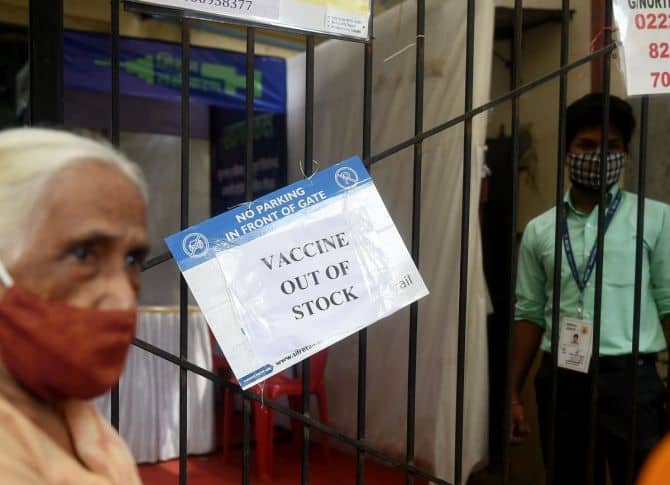
Citing unavailability of COVID-19 vaccines, all government and private vaccination centres in Panvel have temporarily closed doors. Panvel isn’t the only spot in Mumbai hit by supply shortages. JJ Hospital, a government-run facility, exhausted its Covaxin stock on April 3rd-4th. Exhibition ground turned COVID-19 facility, NESCO in Goregaon too stated on April 7th that it had not received any Covaxin supply for 10 days. Hiranandani Hospital will stop vaccinating Mumbaikars beginning April 9th if no additional supplies are delivered. To add to the woes of patients, the city is also severely lacking in antiviral drug Remdesivir. There is an estimated deficit of 20,000 doses at a time when 20% of active cases in Mumbai are in urgent need of it.
Source: Livemint, Mid-Day, Indian Express, Times of India
Read more: Are Mumbaikars aware of the vaccines?
Champion of mill workers’ Datta Iswalkar passes away
Veteran trade unionist and founder-president of Girni Kamgar Sangharsh Samiti (GKSS) succumbed to a brain haemorrhage on April 7th. Iswalkar formed GKSS after a series of mill worker strikes in the 1980s. It was Iswalkar’s unwavering leadership under which mill workers availed free public housing in buildings constructed on mill lands. 15,000 mill workers were able to reside in free homes after agitations led by Iswalkar in the early 2000s.
Source: Times of India, Outlook, Mumbai Mirror
Water taxis to launch in May
Union Minister Mansukh Mandaviya confirmed that water taxis will be operated on 12 routes beginning in May. These include the Domestic Cruise Terminal, Nerul, Belapur, Vashi, Airoli, Rewas, Karanja, Dharanmtar, Kanhoji Agre Island, and Thane. Travel times between various parts of the city will decrease considerably by utilizing the waterways.
Source: Mumbai Mirror
Fire erupts in Kurla
On Wednesday, a major fire broke out in the narrow lanes of Kurla’s Kutub Mandali Road. Known for dealing in spare parts, the market area was blazing for hours after the Fire Brigade arrived. The fire was declared a Level 3. No casualties have been reported so far.
Source: Scroll
Traders and hotel industry protest lockdown
Borivali East Traders Association protested on Tuesday with placards while shopkeepers, primarily women, gathered in Bhendi Bazar to demand the government roll back public restrictions. Hospitality associations too held a state-wide silent protest citing rapidly increasing financial problems for workers and owners alike. Hawkers and others part of the large unorganized sector in Mumbai too fear catastrophic impacts on their livelihoods due to the fresh lockdown. A salesman in a mall told Indian Express said their salaries have been slashed by over 50% and they have no job security or assurance of future wages anymore.
Source: Livemint, Outlook, Indian Express
Read more: COVID-19 broke the backs of informal workers
Migrant workers left in lurch again
Trains from Mumbai to Uttar Pradesh and Bihar are running at full capacities as migrants begin their journeys back home once again. Partial lockdown in the city has hit many migrant workers’ earnings almost immediately. Fearing uncertainty for a second time this pandemic, many have decided to travel back to the relative safety of their villages. A tailor told Times of India that his zari unit has been shut by the owner only 5 months after he was able to return to the metropolitan to work. This has left him, along with several other migrant workers, with no option but to leave Mumbai again.
Source: Indian Express, Times of India, CNBC TV
Read more: COVID-19 Relief: The city discards its builders
[Complied by Nihira]