On the third day of the fast in Bengaluru, more than one thousand citizens gathered at the Freedom Park. The candle light vigil today (April 8th) is expected to bring close to ten thousand people.
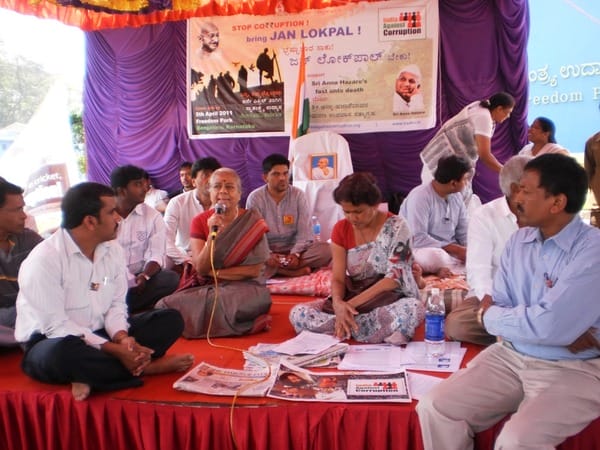
Veteran theatre personality Bhargavi Narayan extending her support to the movement, on the third day. Pic: Navya P K
From April 5th, eminent individuals led by anti-corruption crusader Anna Hazare have been campaigning from New Delhi for a powerful and undiluted Lok Pal Bill to deter rampant corruption.
In Bangalore, eight citizens went on an indefinite fast at Freedom Park during the week, joining tens of hundreds of other citizens nationwide in support of Anna Hazare’s campaign. Kanakapura Road-based Mahendra Kumar Gandhi took the plunge first. He was joined by JP Nagar-based Anand Yadwad, Jeevanahalli-based Ashutosh Kumar Singh, Indira Nagar-based Indradutt and Konena Agrahara-based Sumit Raj Singh Negi. On April 7th, Chamarajpet-based Shantilal Jain, Kumaraswamy Layout-based Tulasidas and JP Nagar-based Nagavishwesvar B, joined this group to make it eight. Scores of others meanwhile have been relay-fasting to build pressure.
Nagavishwesvar, 28, is a software professional. "Corruption is affecting our environment. It’s affecting everyone and has to be stopped. I believe government will respond to this protest", he says. Nagavishwesvar intended to do a day long fast on April 7th, and instead decided to go indefinite.
— Lokayukta Justice Santosh Hegde in an earlier interview to Citizen Matters
Key demands of the anti-corruption movement on the Lok Pal Bill
• Within two years, the corrupt should go to jail.
• Lokpal and Lokayukta will have suo-motu powers (no prior permission needed) to investigate and order dismissal corrupt officers.
• Enhanced punishment – The punishment would be minimum 5 years and maximum of life imprisonment.
• Loss caused to the government due to corruption will be recovered from all accused.
If the bill with clauses proposed by the activists is passed, it will create an independent body called Lok Pal at the centre that will be far more powerful that the current patch work of agencies: CBI, CVC and other departments. All of these ultimately subject to the whims and fancies of the government of the day.

Citizens from within and outside Bangalore gathered and spoke about the need to fight corruption. Pic Navya P K
The fast has gained support all around the country, even as the activists leading the effort in New Delhi have been criticised for their approach by a few leading intellectuals and columnists. The media has also been criticised for running a campaign partisan to the activists.
But criticism is not deterring the youth from signing up thousands. In Bengaluru, close on the heads of the Saaku and Dandi march campaigns; young professionals have already become a major part of the support movement.
On the second day of the fast at Freedom Park, over 500 visited the venue as support swelled. "After media reports, we have been receiving calls from public wanting to join or support the fast." says R Sreekanth, a member of Loksatta political party, which is part of the IAC coalition.
Also see: Bangaloreans join Anna Hazare
⊕
This effort by enlightened citizens is very much welcome. It should not die down like any other political demonstration. some action council need be formed at every level of administration to highlight corruption giving wide publicity around the place of living of the corrupt so that more chappals are thrown whenever they appear in public places,they should lose their job, their family shoud decry, abandon them, o be socially boycotted for lifetime.