Global warming due to increasing carbon footprint is a major challenge to environmental sustainability. The use of fossil fuels, such as coal, for power production is among the major causes of carbon dioxide emissions. Currently, Karnataka generates 61.5% of its power requirement through thermal stations that use coal as fuel.
Though we have one of the world’s third largest solar power plants, the Pavagada Solar Park Palavalli in Tumkur district, only 0.11 % of the state’s power requirement is met through solar energy. There is, however, huge potential to generate power through large rooftop surface areas with sunshine, which is as yet untapped.
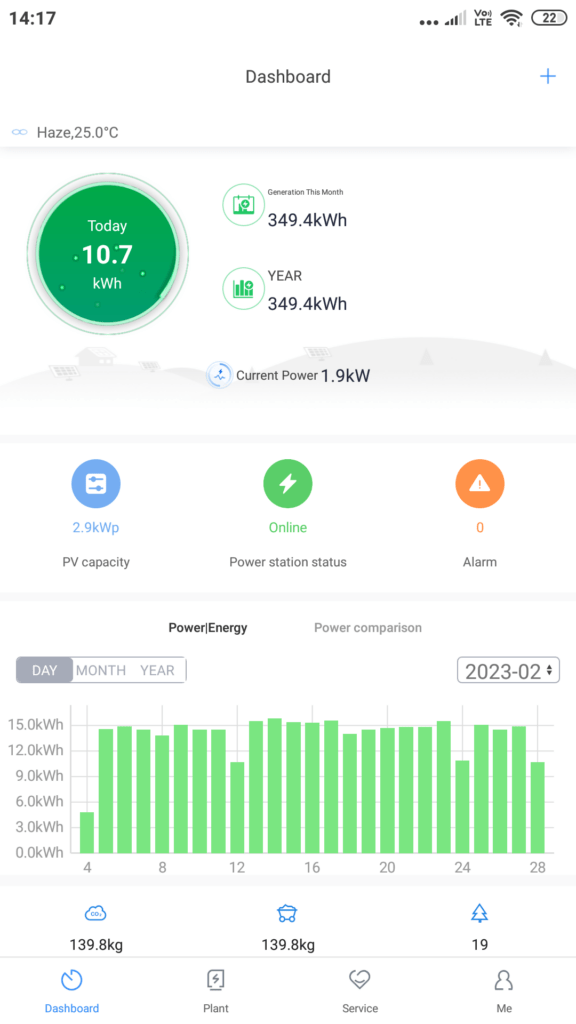
It is advisable, therefore, that homes move to an ‘on-grid solar rooftop system’. The easiest way is for homes to meet their own power needs and export the excess units to BESCOM. My home system of 2.9 KW with Tata Solar ‘Mono Perc Half cut 144 cells DCR’ panels and Growatt string inverter were commissioned and synchronised on February 4th afternoon, and since then has produced 355 units of electricity as of February 28th.
India as a responsible nation has pledged that by 2030, 40 % of its power requirement will be through renewable energy sources such as solar energy, wind energy etc. Moving to solar energy is a great opportunity for a tropical country like ours to generate low-cost power and also save the environment.
The feasibility of moving to solar energy
The one-time investment after subsidy (Rs 44,500) could be about Rs 1.8 to 1.9 lakh for a 3 kW (all-inclusive, current technology-Mono Perc DCR module) system that could generate nominally about 430 units per month. So, apart from the contribution to reducing carbon footprint, the financial returns are around 20%, per annum, through savings of the current bill.
There are, therefore, compelling reasons for every house and apartment to move to solar energy.
How to install a home solar system
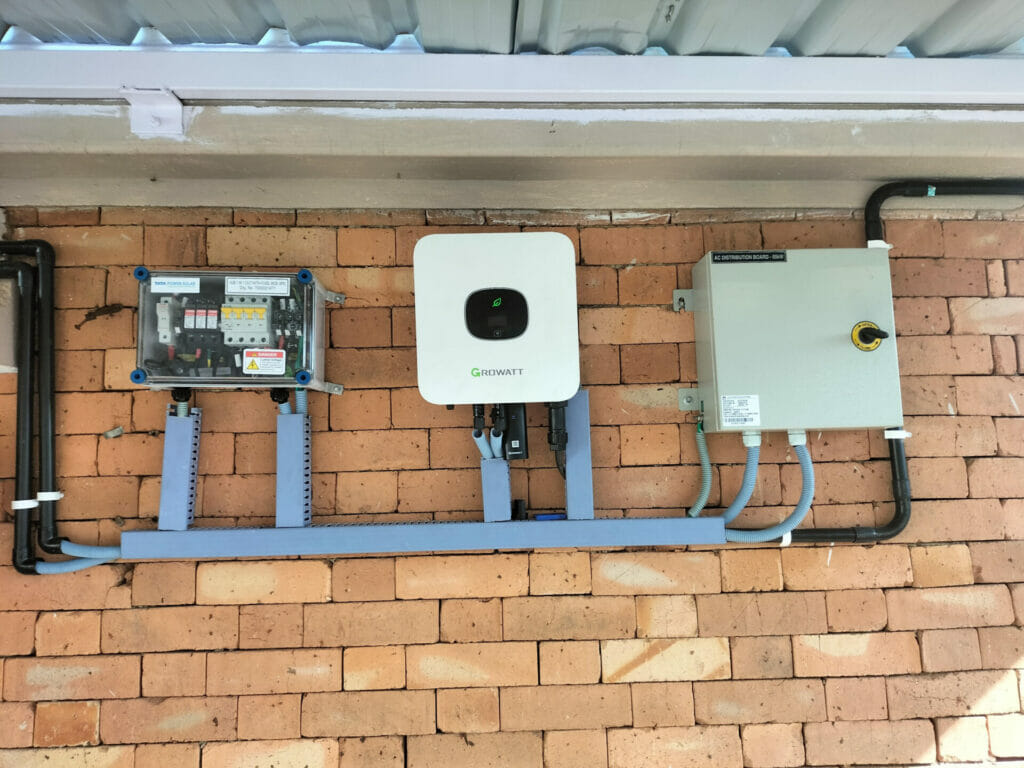
The first step is to decide on the capacity needed. For this, the following are key considerations:
- BESCOM-approved load: You are allowed to install it on the grid system only up to your approved load capacity.
- Monthly consumption: Decide this based on the maximum, and an average number of units per month, and plan for future needs (say additional gadgets, EV etc.).
- Shadow-free rooftop space available: You will need roughly 100 Sq ft area / KW.
BESCOM/MNRE Empanelled Solar vendors do provide free consultations, but it is always better to cross-check once with other experts.
Read more: You too can build a sustainable home, just do as this former submariner did
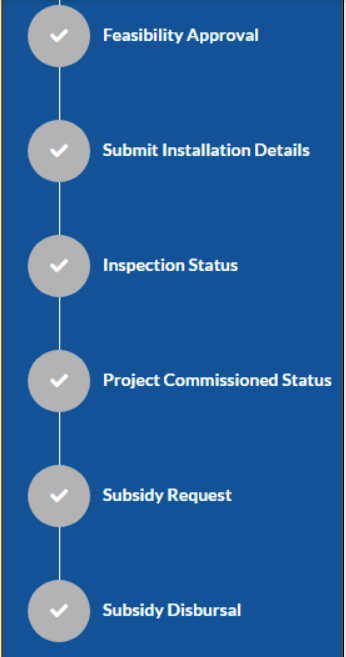
Next step: Apply for the Soura Gruha Yojane (SGY) scheme on the National Portal
Residents can directly register on the National portal using the BESCOM consumer number and registered mobile number, and file an application in simple steps instantly, and upload the latest BESCOM bill.
Once that application is submitted, intimation goes to the BESCOM Divisional office to conduct the feasibility and give approval. Your BESCOM Assistant Engineer /Junior Engineer will visit your premises to inspect and upload his report within one week. If not done automatically, you may contact your local BESCOM Assistant Executive Engineer and get it expedited. Once you find it uploaded, the installation can be done.
In the portal, you may also find a list of 35 empanelled vendors, you may choose three to four of them from your neighbourhood and take quotes, negotiate with the most reliable brands with a proper price and finalise.
Once the order is placed, the vendor will work with you to take forward the rest of the processes, such as getting and uploading the inspection report, commissioning/net meter synchronisation etc.
I was interacting with BESCOM officials directly and did not have to pay any bribes at all. Our divisions AEE, AE and JE have been very upfront and enthusiastic about the project and professionally supported us. Do not get carried away by the demands of some middlemen and agents.
Read more: How Century Saras put sunshine to best use
Tips:
- The vendor needs to be with you till the time the defect-free subsidy claim is made by you, and then acknowledged and accepted by the Ministry of New & Renewable Energy(MNRE).
- The MNRE system is transparent and the portal gives you regular updates.
- The current program as of now is open for applications till March 31 2030.
- There are also thousands of residents who applied in 2020-21 on the BESCOM portal under the earlier scheme, which was dormant for two years, and now they can also avail of the benefits as the implementation of that scheme is also happening now, through 3 BESCOM empanelled vendors.
Appears BESCOM is slow & appears to be discouraging SOLAR ROOF TOP. They need to first practice , before they preach for others. I am trying for 2nd SOLAR SYSTEM since Nov 16th 2022, no proper response from them till date.