With Bengaluru experiencing near continuous rainfall over the last few days, water scarcity is the last thing on any one’s mind. But come February, when the water taps open to a trickle and the tanker water suppliers hike their rates, it won’t be easy.
What does it take to save every possible drop and manage water demand to avoid the typical summer worries?
As per the BWSSB (Bangalore Water Supply and Sewerage Board), the current water demand for the city is 2,100 MLD (Million Litres per Day), which is an increase of 50% compared to the demand 10 years ago. The demand is projected to increase by another 38% by 2031. This inevitably puts enormous stress on the finite water sources, be it external sources like rivers or the local groundwater sources.
Therefore it is important to take all possible steps to make sure the available water is used judiciously. The good news is that each of us can take steps to contain the increasing water demand, be it at individual level, household/institutional level or community level.
Read More: The basics of rainwater harvesting
Biome and BWSSB, in collaboration with Citizen Matters and Bangalore Apartments Federation, is organising a webinar to share the steps residents need to take, to limit water consumption and reduce wastage.
BWSSB, which has the responsibility of managing water demand in Bengaluru, has come out with clear rules to reduce consumption. The agency has also developed a RWH (Rainwater harvesting) theme park in Jayanagar, which has demo installations to guide citizens on the ways to reduce water demand.
At the webinar, we will get to hear from BWSSB senior officers about how water demand is being managed in the city, the applicable rules and regulations, and how these are being implemented. The officers will also discuss the RWH theme park. Besides, Bengalureans who have reduced their water demand will share experiences of how they went about it and the benefits they are seeing.
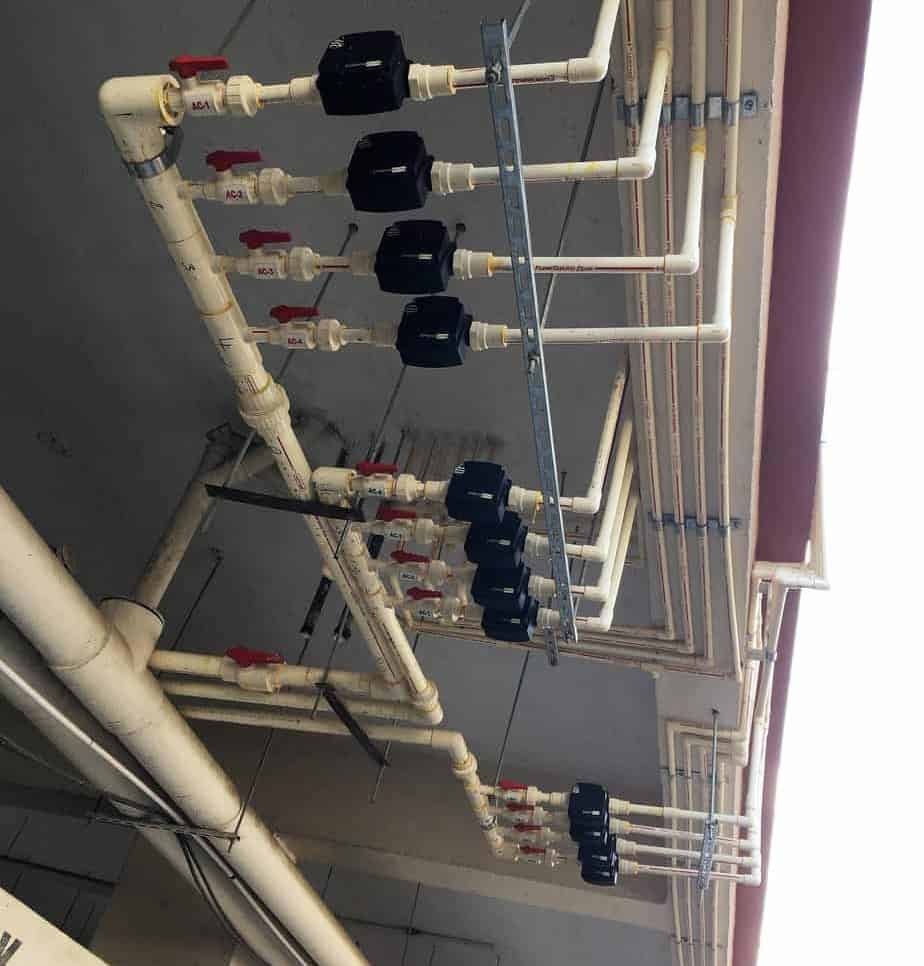
Read more: How smart meters are helping Bengaluru apartments save water
The webinar will be followed by a brief Q & A session open to participants.
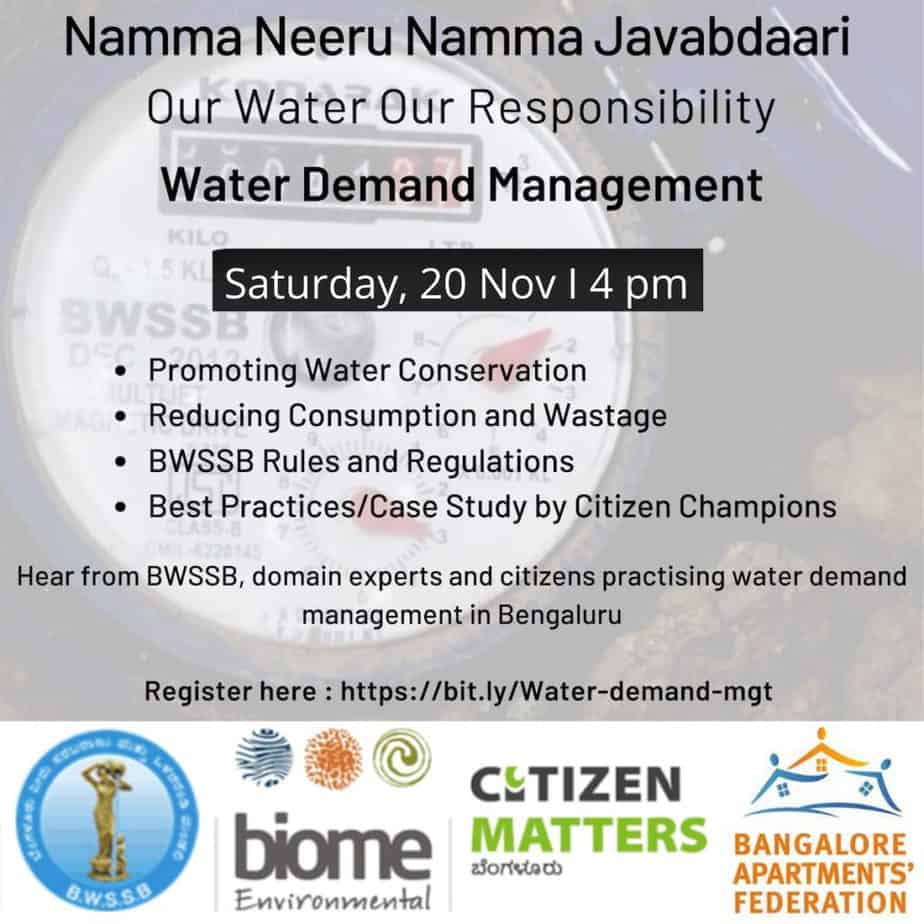
Event: Namma Neeru Namma Javabdaari (Our Water Our Responsibility)
Date: Saturday, November 20, 2021
Time: 4 pm onwards
Register here: https://bit.ly/Water-demand-mgt
Speakers
- K N Rajiv, Chief Engineer, BWSSB
- B M Manjunath, Public Relations Officer, BWSSB
- V B Maheswarappa, Executive Engineer, BWSSB
- Prasanna Vynethea, Vice President, Bangalore Apartments Federation
- Rakshitha M L, Project Officer, Biome Environmental Trust
- Monisha Varma, Citizen champion, Resident , Astro Rosewood Regency, Kaikondrahalli
- Shameer A, Citizen champion, Resident, SJR Verity, Kasavanahalli
- Avinash Krishnamurthy, Director and Project Manager, Biome Environmental Trust (Moderator)
- Sandhya Bhat, Citizen Anchor, Citizen Matters (Co-Moderator)
Why such initiatives are not spread more effectively. This is want citizens need. This is what citizens have to learn.