Plasma therapy, also known as ‘convalescent plasma therapy’, is an experimental mode of treatment. It uses the blood plasma donated by patients who have recovered from COVID-19, as their bodies would have developed protective antibodies against the virus, to treat those with the virus. Usually used on patients who are not responding to conventional treatment, plasma therapy is currently helping many COVID-19 patients recover.
How antibodies work
When one contracts an infection, especially a viral infection, their recovery depends on the production of antibodies to fight the antigen (the virus, which in the current case, is COVID-19). These antibodies are present in the recovered person’s blood for a few weeks after recovery.
On the other hand, those who are not recovering from the viral infection could be failing to fight it off as they may not have developed the warrior antibodies.
If the patient who is failing to recover is administered antibodies from a convalescing patient (rich in antibodies), the ailing patient would be able to fight the virus and recover from the infection.
Administration of convalescent plasma from a recovered individual to an ailing patient, in order to boost the levels of antibodies, is a known treatment modality in medical science.
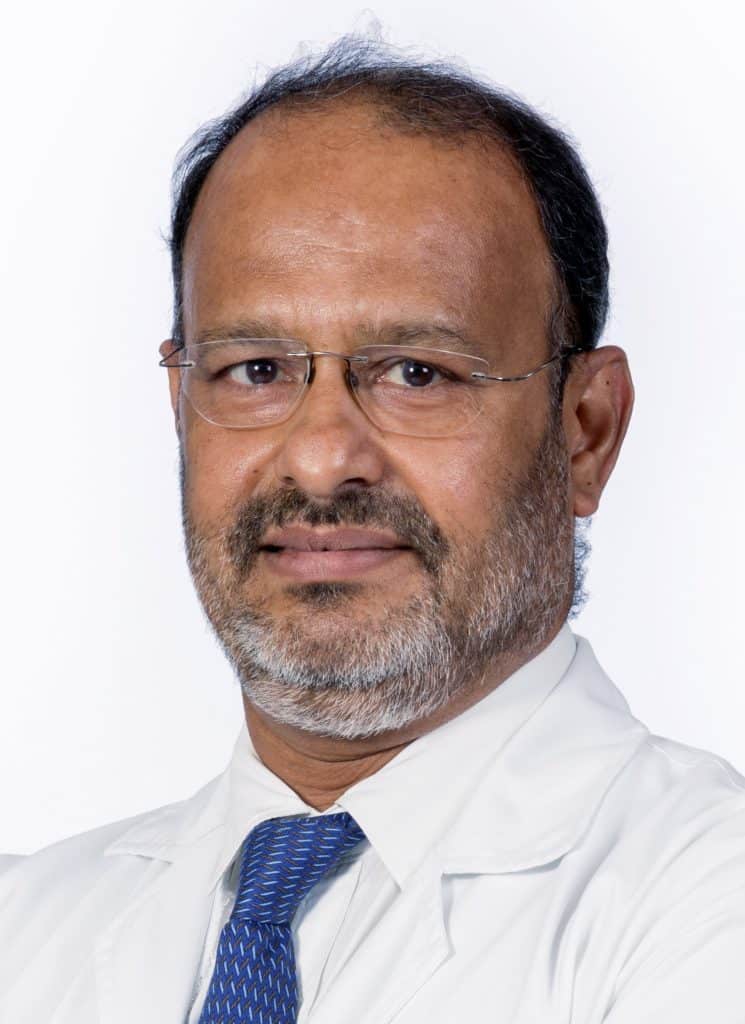
Dr Murali Chakravarthy, managing director and chairman of Fortis Hospital’s Central Infection Prevention and Control Committee, explains: “The hypothesis that administration of antibodies for a similar infection to an individual who cannot mount antibodies, to hasten a cure, is logical. Additionally, there is no other treatment modality for Covid-19 infection. It is but natural that while on the edge, with no other viable option, anything that might work will be tried. Plasma therapy is one such. It has been experienced that this modality works best in patients with moderate disease, that is, patients not improving on oxygen, but not yet deteriorated to require ventilation.”
A component of blood
Plasma, the liquid component of blood, is a yellow-hued fluid that assists in clotting and immunity. The process of donating plasma, from a patient point of view, is the same as donating blood.
Dr. Pramod V. Satya, Consultant – Internal Medicine, Vikram Hospital, Bengaluru explains that the process of donation would take an hour-and-a-half. “After the blood is ejected from the recovered patient, the serum is separated and screened for virus-neutralizing antibodies.”

Plasma therapy, Dr Pramod says, is safer than the anti-inflammatory drugs currently being used because it provides Covid-specific therapy. Since it is a natural human product, it is well tolerated by the human body and is less expensive, he points out. It is particularly useful for those who are immunodeficient and cannot generate an effective immune response on their own, he adds.
Who can donate
- Donors (recovered patients) can come forward after quarantine (about 24-28 days after onset of symptoms). Their antibodies (anti SARS co v antibodies) are checked free of cost.
- If the antibodies levels are good, they will be sent to the blood bank to donate plasma.
- The donor should not exhibit signs of the infection, should be out of the hospital and leading a normal life.
- The person wishing to donate must be Covid-negative in two consecutive RT-PCR tests.
- Plasma donation is voluntarily.
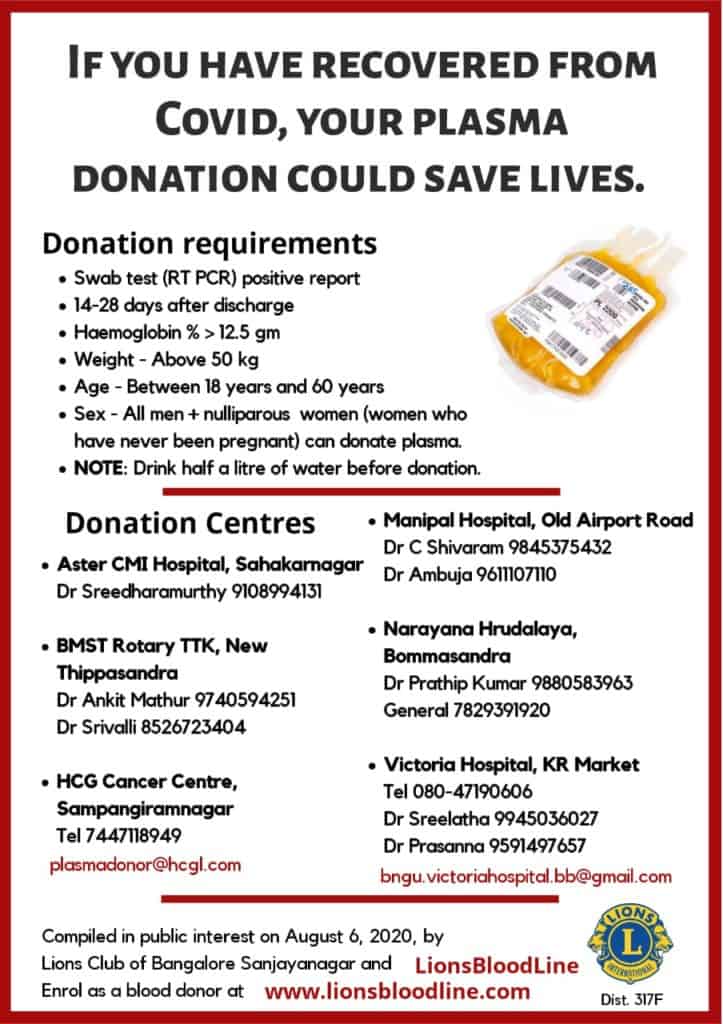
- Donors should be at least 18 years of age. Women who have never been pregnant (nulliparous) and whose body weight is more than 55 kg, are eligible.
Few volunteers
Sadly, convalescent plasma donors are not forthcoming. This is largely due to the misconception that they may get reinfected during the donation process.
“Also, doctors using plasma therapy are not very enthusiastic in overtly advocating it because the response is not the same in all patients. They don’t want to increase the level of expectation of the patients and their kin. All plasma donations do not convert to patient cure,” says Dr Murali.
The Karnataka Government’s Mission COPE (Covid Plasma Endeavour), in association with Covid India Campaign, ICATT Foundation and HCG Hospital, aims to promote plasma donation among patients who have recovered from COVID-19.

Dr Vishal Rao of HCG Global says, “We have about 100 donors who have come forward and 180 people have benefited from it. Karnataka currently has 80,000 plus recovered people, so 100 is not good enough. There are about 700 people in ICU in Karnataka and we must make a pledge to help all of them.”
The number of recoveries in the state has now crossed the 2 lakh mark.
The challenge of procurement
Although plasma samples in blood banks are steadily increasing as more recovered patients are coming forward to donate, the challenge for the medical system is in procuring plasma. The state government has even announced a monetary incentive of Rs 5000 to plasma donors.
“Those who have recovered from COVID-19 can help us in saving precious lives by donating plasma. Plasma donation is a safe and simple procedure. Rs. 5000 will be provided towards nutrition and care of a donor,” Pankaj Kumar Pandey, the state’s health and family welfare, commissioner, says.
Dr B G Dharmanand, Consultant Rheumatologist at Vikram Hospital, who has himself donated plasma after recovering from Covid-19, testifies that the procedure is safe and that a plasma donor can donate again and again, three or four times.
- Plasma donation does not harm the donor. It carries the same risk as blood transfusion.
- The donation happens between compatible donor and recipient.
- Donors can donate more than once, based on their physical condition.
- Plasma therapy can be repeated, should the recipient not show a good response. The plasma from another donor could be tried the second time.
Plasma Resources
- Plasma bank in Victoria Hospital in collaboration with Sai Krushna Charitable Trust. Call 080-47190606. Email: bngu.victoriahospital.bb@gmail.com
- Inaraa, a digital plasma bank that connects COVID-19 recovered donors with patients by listing potential donors on its site. http://www.inaraa.org/
- Government resources. Call 080 6191490 – extension 104#. https://www.karnataka.com/govt/how-to-donate-plasma-for-covid-treatment/
- Covid India Campaign, www.CovidIndiaCampaign.org, Helpline number: (080) 6191 4960
- https://pintnetwork.com/ – see Karnataka section
- Department of Pathology, KIMS, Huballi Tel: 9448733130. Email: drwd.kims.bb@gmail.com
I want plasma who has recovered from covid 19
I want plasma who has recovered from covid 19