BTM playground turns into dumping ground

The only open space in BTM is fast becoming a dumping yard. Residents blame the lack of fencing for this.

The only large playground on 19th Main, BTM layout, 1st stage has become dumping yard, for construction debris, owing to the broken fence all around. This playground comes under BBMP ward 176 and is a major open lung space for the neighbourhood.

The residents feel that if the fencing is not done, the entire playground will soon become a dumping yard. Some contractors have started to illegally dump construction debris at night. Subramaniyam Sheshadari, a resident who stays opposite the playground says that at the least, the fence should be repaired to avoid the situation from getting worse.
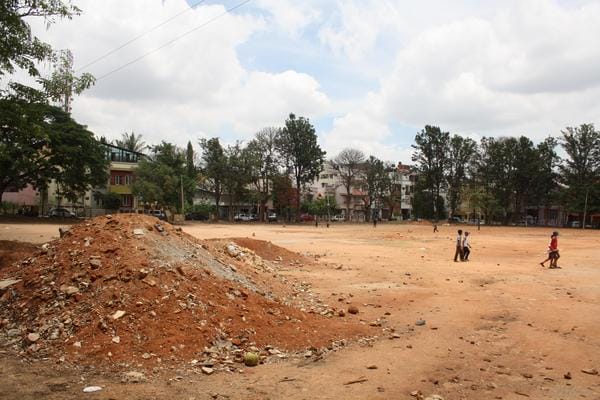
Debris in the playground due to illegal dumping

The residents feel that ward Corporator GNR Babu, has done his bit to keep the playground in good shape. Recently Babu took the initiative to install street lights around the playground and levelled one part of the ground to make a badminton court. Residents claim that the street lights have brought down the instances of chain snatching in the vicinity.

However when it comes to fencing, BBMP’s lack of funds seems to be an issue. Babu though now says that the project to overhaul the ground has been finally approved and will be completed in 3-4 months. Babu says, "Around 25-30 lakh rupees budget has been approved by BBMP. It includes re-fencing, building toilets as well as a provision for a security guard to safeguard the area." ⊕

Leave a Reply

Your email address will not be published. Required fields are marked *

Similar Story

How Chennai’s Third Master Plan can tackle climate risks

As the city faces extreme weather, a study calls for ward-level action, improved climate adaptation and inclusive planning.

Over the past two decades, Chennai has weathered a tsunami, repeated floods, and now, according to a new study, a rapidly worsening mix of heat and rain. Heatwave-preconditioned extreme rainfall events in the Chennai Metropolitan Area have nearly tripled over four decades, rising from an average of 1.2 events a year between 1982 and 1991 to 3.2 events a year between 2012 and 2021. When a heatwave comes before the rain, the same study finds, the population exposed to flooding rises elevenfold and the number of buildings affected rises seven-fold. A separate assessment projects that heatwave days in the city…

Similar Story

PG collapse in Delhi’s Satya Niketan: Who is responsible?

A DU PG collapse exposes the gap between Delhi's planning rules and real building safety. Watch this video to know more.

On September 6, a five-storey boys' Paying Guest (PG) accommodation collapsed in Satya Niketan, near Delhi University's South Campus, leaving seven people dead. This video looks beyond the single building to ask how the neighbourhood reached this point. Delhi has had a formal planning system since the DDA was set up in 1957 and the first Master Plan followed in 1962. Yet Satya Niketan has grown into a dense student housing hub. Officials say the collapsed building had permission for only the ground plus first floors. Ayush Anilal, an architect, studied the area for his thesis. He explains how intensely…