Having known Sarita Kotagiri for the past few years, I have reached a conclusion that philanthropists do not necessarily have to be celebrities or famous personalities. Anyone who really cares for others can always find opportunities to help in many different ways. All that one needs is a big heart.
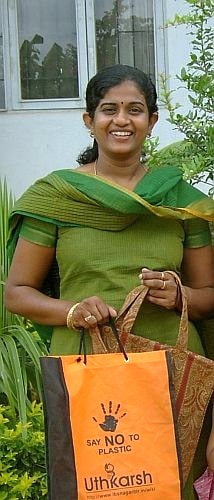
Sarita Kotagiri. Pic courtesy: Trupti Godbole
Sarita Kotagiri is a home maker in her late 30s. This pharmacy post graduate, a top scorer in from Al Ameen College of Pharmacy has been helping innumerable people in all walks of life.
A busy homemaker like many women in the city, Sarita manages household chores and two children apart from pursuing her hobbies like painting and embroidery. Sarita also volunteers as a teacher in the APSA Dreamschool (Run by APSA – Association for Promoting Social Action) for two hours every day where she teaches science and social studies to needy 10th class school children.
Last winter, Sarita saw small children in APSA braving the cold weather without woolen clothes. She procured sweaters for some twenty odd children. Each year, on her sons’ birthdays, she arranges a sumptuous lunch for the APSA hostel children, and her whole family enjoys eating with the hostel children. On the occasion of her mother-in-law’s birthday, for the past two years, she has been getting a hearty breakfast cooked for all the maids from her apartment.
Two years ago, she observed a watchman’s son standing outside a Karate class, and she went ahead and sponsored the boy’s Karate class fees, his uniform, his Karate class test fees etc.
Each summer, Sarita gets boxes full of mangoes from her mango farm from her native place. She gives them away to just to friends but to all the maids, security guards, gardener, drivers, working in the apartment.
This year, Vijay, our newspaper delivery boy, needed some help with his studies and school work since he will be appearing for his SSLC exam this year. Few people from the apartment have helped with his school fees. Sarita helps him with his lessons on weekend afternoons.
Sarita is my colleague at our RWA (Uthkarsh). She is enthusiastic and participates in many waste management campaigns. She has setup waste management at source in her apartment and also ensures that it is running smoothly. Our society definitely needs more next door philanthropists like Sarita who believe in hands-on work and have a big heart.
⊕
Thanks for this inspiring story, Trupti and CM. Hope you all continue your spirited efforts. Btw, you’re joking about celebrity philanthropists, right?