A childhood’s memories
Of looking and waiting
For something exciting
From the grove of coconut trees
A busy woodpecker
An agile tree climber
Two young boys
Who made little noise
If we missed these
We simply counted the trees
What rekindled these memories
Was Visthar’s coconut trees!
Situated in an eco-friendly campus in Dodda Gubbi off the Hennur Road in east Bangalore, Visthar is a treasure trove of nature’s bounty that drives one to reflect inwards while celebrating life. A veritable hub of socio-cultural and environmental consciousness this organization turned twenty one recently. Famous for hosting annual festivals and events that highlight existing and new challenges to basic human rights and the survival of the marginalized, it emphasizes the need to resist the former, jointly.
Visthar offers study programmes on gender, diversity, peace and development, some of which are accredited by the Tata Institue of Social Sciences, Mumbai, Xavier Institute of Social Science, Ranchi and the Univerity of Minnesota, USA. It attracts students, artists, performers, social workers and visitors from various parts of India, Africa, South and South East Asia, the US and northern Europe, regularly.
The organization runs Bandhavi, an initiative under which daughters of Devadasi women from Koppal and Adoni (Andhra Pradesh) live away from their families, acquirng academic qualifications and skills in art, craft, baking and dairy farming. Visthar has also been promoting livelihood and empowerment of rural women and children from traditionally excluded groups like bonded labourers, dalits, adivasis and the physically challenged. This is through Sasive (meaning mustard seed), a project that facilitates co-operative agriculture, tailoring, et al, in Bangalore and Koppal district in north Karnataka.
Launching Bhoomi Shaale (the Earth School) on June 5 2010, i.e., World Environment Day, Visthar proposes to take education in traditional arts and ecology to a few thousand school children in Bangalore and Koppal. It has begun doing this through hands-on farming and environment conservation activities in its verdant and scenic six acre space and Eco Clubs in the respective institutions that include private, government and aided ones. Importantly, this also aims to unite kids across the socio-economic spectrum.
The pictures hope to portray a bit more about this inspiring ‘expanse’, an interpretation of Visthar…

The jackfruit tree encompasses the meaning of Visthar

Serene beauty

Messages from all over

Mandala, the meditation space
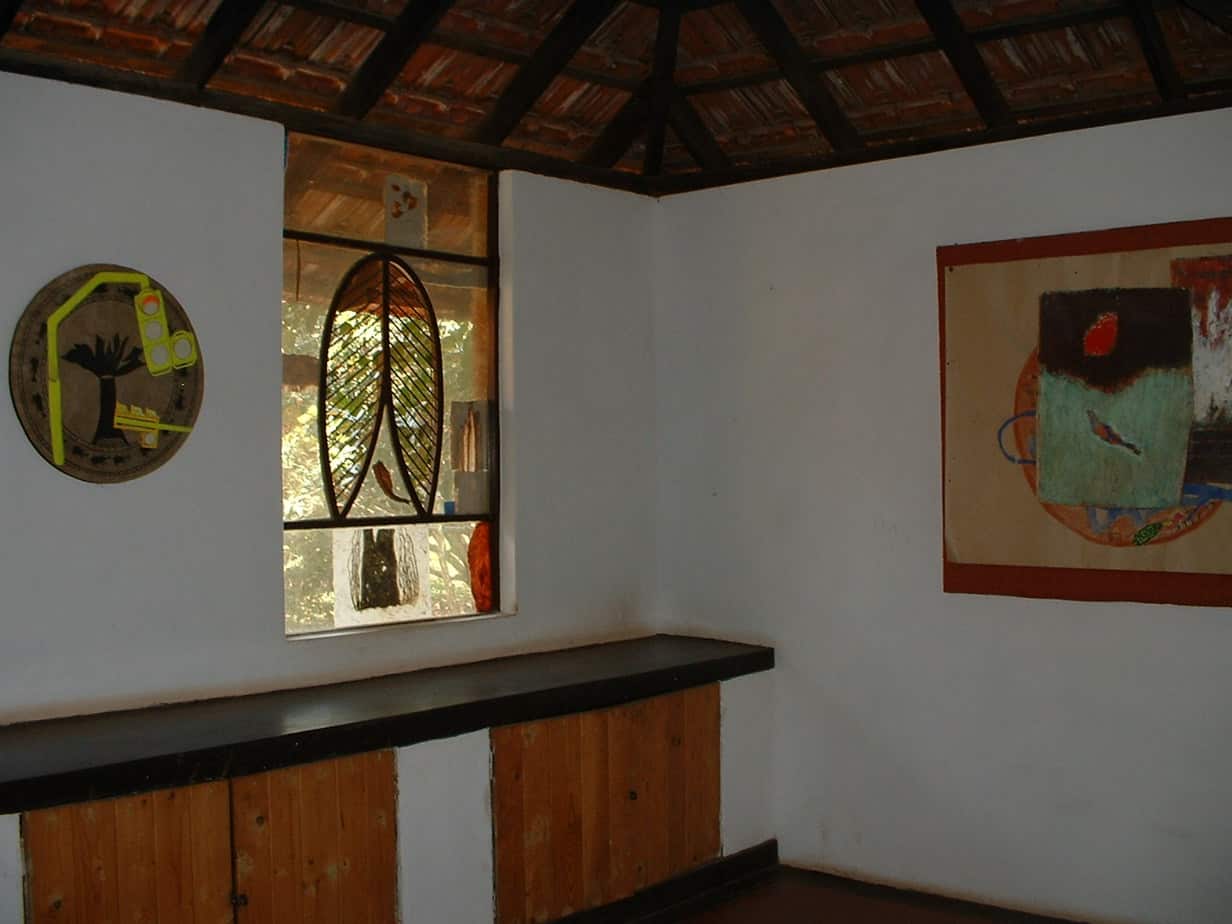
Art is everywhere…

Creations from paper

Hail Mother Earth!

Namma Angadi – a store

Place to meet and learn

Dine differently!

We are the world…

Vistharites 🙂