Broken commodes decorated along the compound wall that separates Railway land from BBMP land and footpath… coconut fronds thrown casually everywhere… the parked vehicles meant for carrying the dead, a garbage pickup point which never seems to be empty… the ground attacked continuously by garbage burning and stagnant water and turned black… add to this the unbearable stench of dead and decaying animals that makes you run for life, and you know you are in the backyard of Malleshwaram — on 11th main, Railway parallel road.
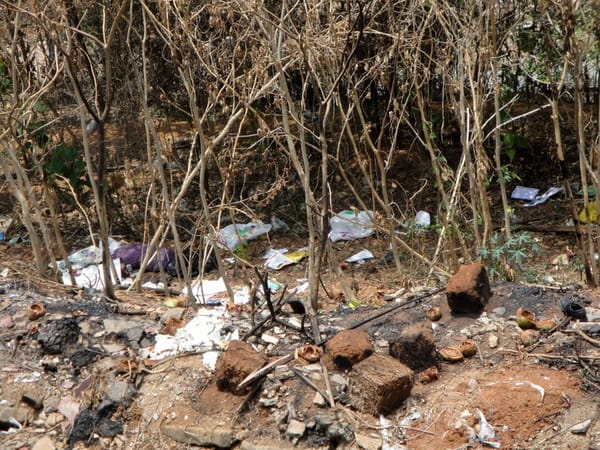
Unused Railway land has become a dump filled with weeds.
The unkempt garbage-filled land adjacent to the railway tracks, along 11th Main from 6th Cross to 9th Cross is not only an eye sore but also very unhealthy and dangerous for citizens living near this area. Now this wall is being used as a public urinal by all passing vehicles, vendors and the auto drivers who park their vehicles on 9th Cross. The stench of urine is unbearable.
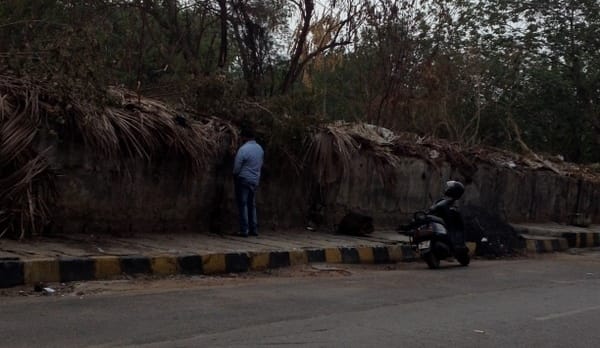
Urination is a menace on 11th main road, Malleshwaram, that keeps walkers away from footpath.
The land belongs to Railway department. It is also being misused as a local dump yard. People from other parts of Malleshwaram and the surroundings use this area to dispose things which cannot be dumped elsewhere. Construction debris, all kinds of unwanted garden waste, daily unsegregated waste etc are a regular here. The dry garden waste like coconut frond etc are either burnt intentionally, or catch fire accidentally. Hence fire is also a common problem in this area.
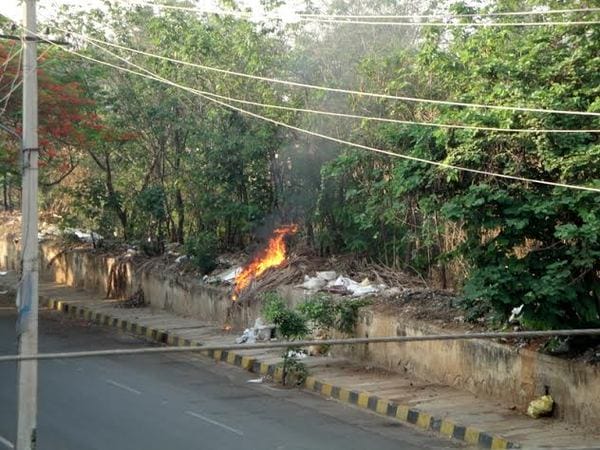
Dry garden waste catches fire now and then, in the backyard of Malleshwaram
New addition is the waste from butcher shops dumped here without anybody’s knowledge. This waste gets decayed with time, and the stench starts coming out. With thee occasional rain, the stench has become strong and unbearable. This, and the smoke are polluting and are proving to be dangerous to public health. Life has become difficult for people in these surroundings.
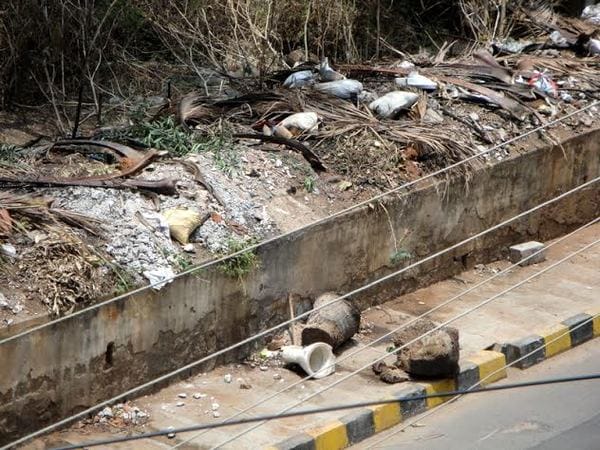
Waste, debris and ceramics dumped indiscriminately beside Railway Parallel Road, Malleshwaram.
Environment engineer of the ward, Sushma says that the waste from butchery shops will be collected by BBMP separately. Those who dump here don’t seem to follow the rule, but she has no clue as to who they are.
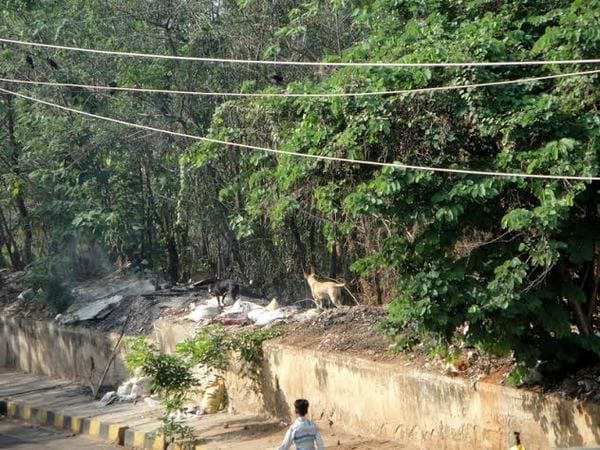
Dogs trying to figure out the source of stinking meat on Railway Parallel Road, Malleshwaram.
The responsibility of maintaining this railway land clean and healthy, looks like nobody’s business. Neither the BBMP or the Railways want to take it. BBMP contractors are adding to the menace by dumping whatever they don’t want to carry in this land.
Citizens who live nearby suspect that the area is a hub of a lot of nefarious activities. Right now nobody has a clue about how to tackle this.
(The pictures used here are provided by Rekha Chari, a resident of Malleshwaram.)