Why crowd management is needed at Yeshwanthpur Metro Station

As the metro network ridership grows, crowding at metro stations too will increase, which could cause safety issues and increase in total travel time.

As metro network expands and ridership increases in Bengaluru, crowding at metro stations will be experienced more frequently. This raises concern with regard to safety issues, stressful rides, increased travel time, among other problems.

I have been commuting from home to college and back by metro since 2017. Yeshwanthpur metro station, my starting point is always heavily crowded, especially on Mondays and festival days. The metro station gets crowded as many passengers alight at the nearby Yeshwantpur railway junction.

The main reason for my running late on most days is the bottleneck caused by the crowds at the ticket/token counters. My request to the metro management is to provide a separate entry point for daily passengers, who need not buy a token since they own a card.
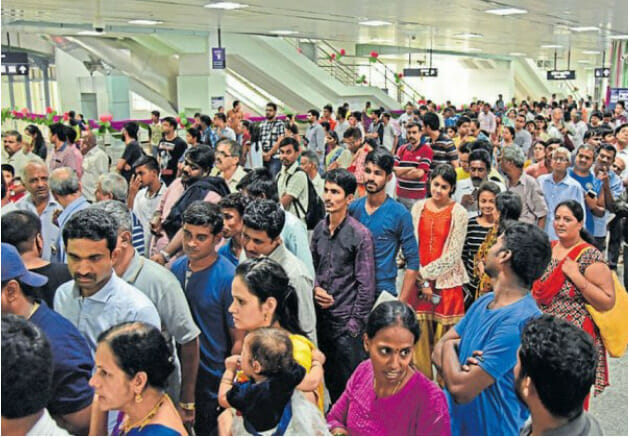
People standing in queue in the metro station
Queues at the Yeshwanthpura Metro station, especially during peak hours, without any designated lines, creates delays and discomfort. Pic: Rakshith Adiga

Read more: Namma Metro has only worsened Bengaluru’s traffic congestion and air quality
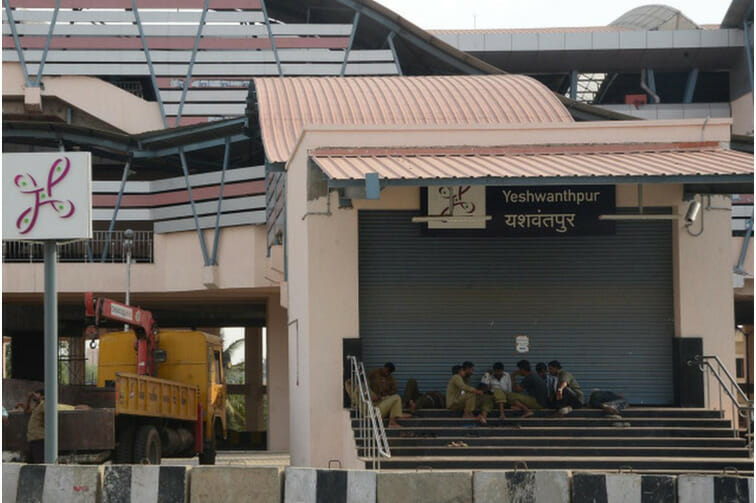

The entrance of Yeshwanthpur Metro station. Pic: Rakshith Adiga

Flexible crowd management systems

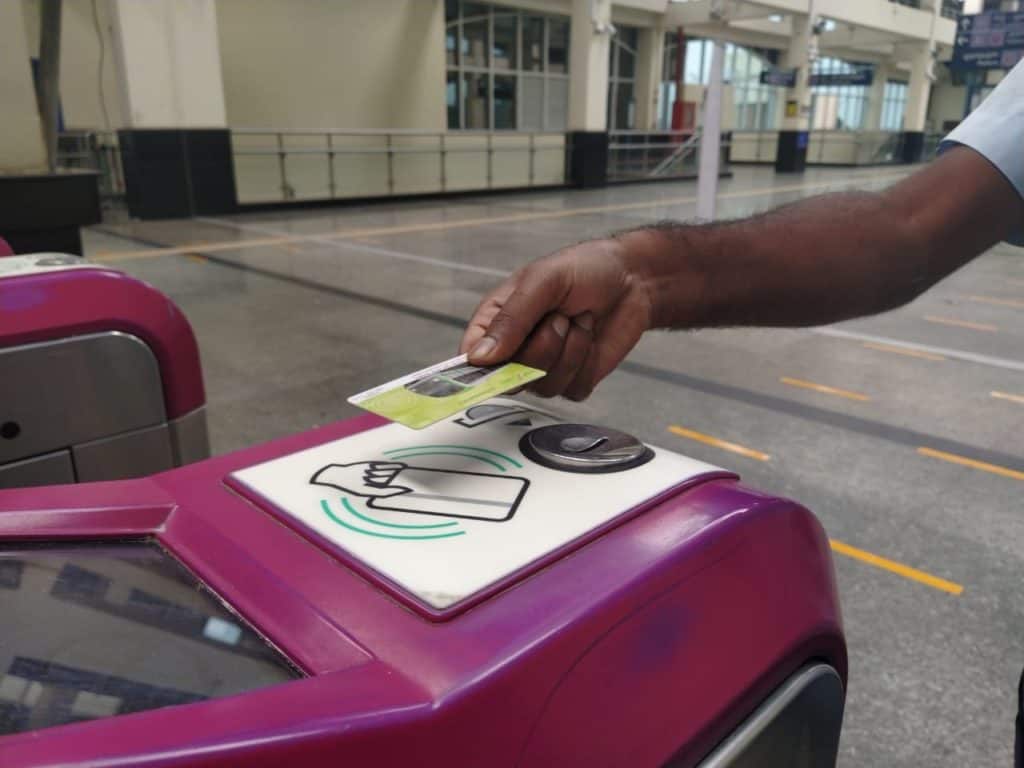
Smart card being used for a metro ride
Representative image. There should be a separate entry point for daily passengers as they already own a card. Pic courtesy: BMRCL

Victor Mensink in his thesis, titled Crowd management in train and metro stations, proposed “a method to systematically select and assess effective crowd management measures to increase the safety and throughput in train and metro stations”. Victor adds that apart from large structural changes, “short term more flexible and cheaper crowd management measures can be applied.” This is a solution that can be looked into in Bengaluru’s case.

This article is part of the Citizen Journalism for Changemakers-CJC Programme, which was conducted from February to March, 2023. This programme was supported by Rohini Nilekani Philanthropies.

Also read:

Leave a Reply

Your email address will not be published. Required fields are marked *

Similar Story

Cycle city no more? Audit reveals only 11% of Pune’s roads pass the test

Pune is set to host the 2026 Grand Tour, but a Parisar audit reveals unsafe, narrow, and encroached cycle tracks across the city.

Children and adults pedalling to school, work and play — this was a common sight on Pune's streets not so long ago. Once known for its vibrant cycling culture, the city still has many groups and communities that promote non-motorised transport. However, with the rise of motorised vehicles, cycling has not only taken a back seat, but has also become unsafe and inconvenient due to poor infrastructure. This is despite Pune having dedicated cycle tracks and lanes. The decline in cycling infrastructure is reiterated by a recent audit, which found that only 11% of cycle tracks in Pune fell in…

Similar Story

Why accessibility remains elusive at Bengaluru’s bus stops and terminals

Our reality check of the city's major bus stops revealed that most do not adhere to MoRTH guidelines, excluding persons with disabilities.

Bengaluru is racing to bridge the gap between first-mile and last-mile connectivity in public transport, but for people with disabilities, the journey is riddled with obstacles. Inaccessible bus stops and terminals in the city keep them excluded. “I have been travelling on muscle memory alone. There are no supportive facilities or infrastructure in bus stops or terminals,” says Mohan Kumar, a visually-impaired person who has been commuting in Bengaluru buses since 2012.  The exclusion starts at the bus stop. “Even if buses are inclusive, it is nearly impossible to reach the bus stops in Bengaluru due to poor design and…