The winter sun was out, and so were the 56 kids who came along with their little siblings and parents. They all came to Puttenahalli Lake on this pleasant Saturday morning to listen to Gitanjali Sarangan (Geetu) and her team – Anagha, Sasha, Damroo, Akshat, Arun and Manasa (from Snehadhara Foundation) spin a yarn based on a story “Who Owns the Water?” by Deepa Balsavar.
[“Who Owns the Water? is one of the stories in the book Water Stories from Around the World, published by Tulika.]
Raj (from Music for Soul) came with his guitar and got everyone in the mood to swing and move. Geetu and team did warm up dances and singing with their musical instruments, and the stage was all set to bring the story out.
After a brief real story about Puttenahalli Lake by Sapana, Geetu took the children and the adults along with her into a world of words, songs, enacting, jingles, screaming, jumping, moving, swirling, twirling, and what not. The adults loved Shantaram, Mahalakshmi and Chakarapani, while the children loved making noises of water, frogs, cows, boars, prinias and more!!
The message of the story was that the water of a lake belongs to everyone and not just one person.
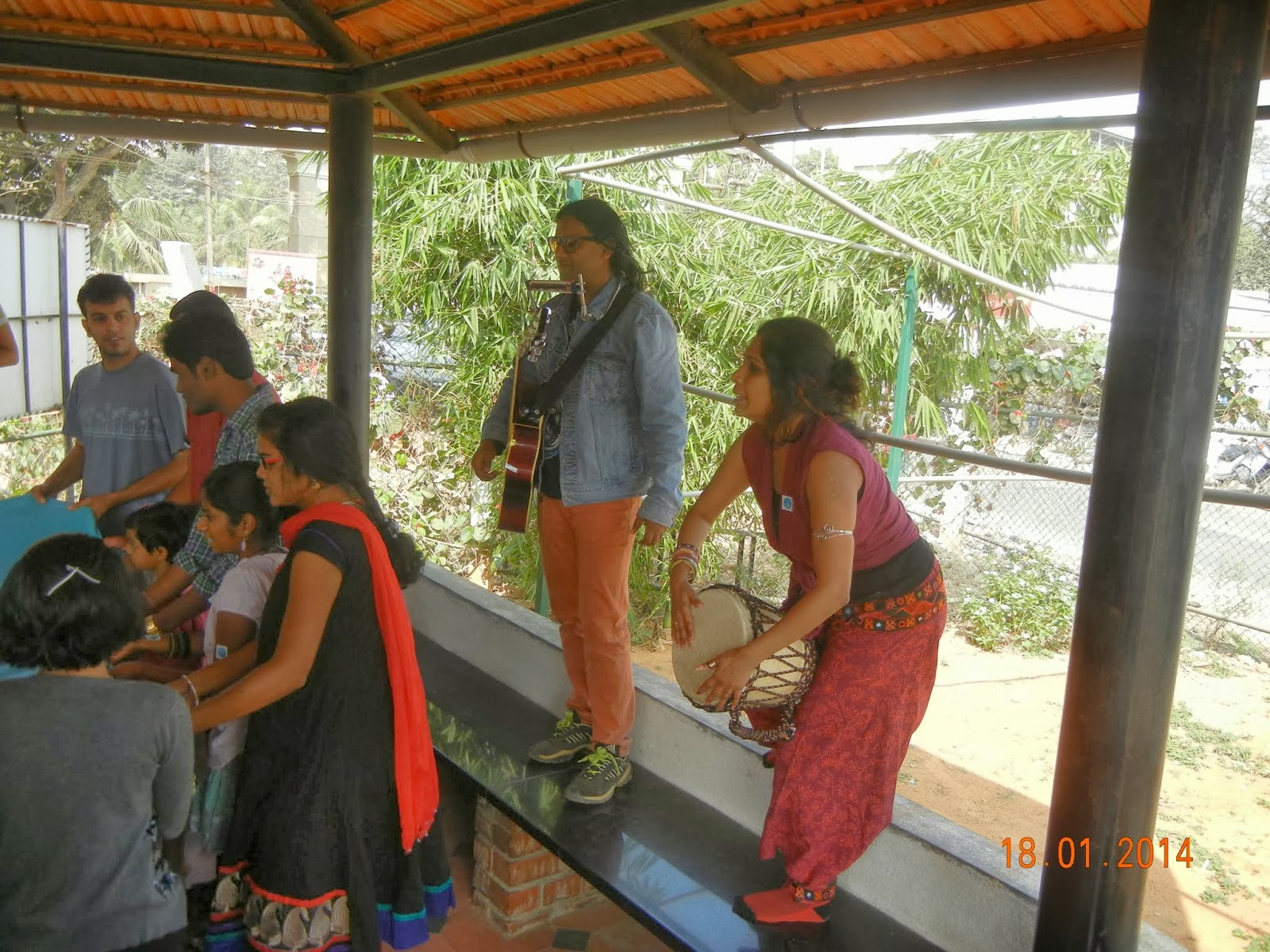
Raj and Geetu
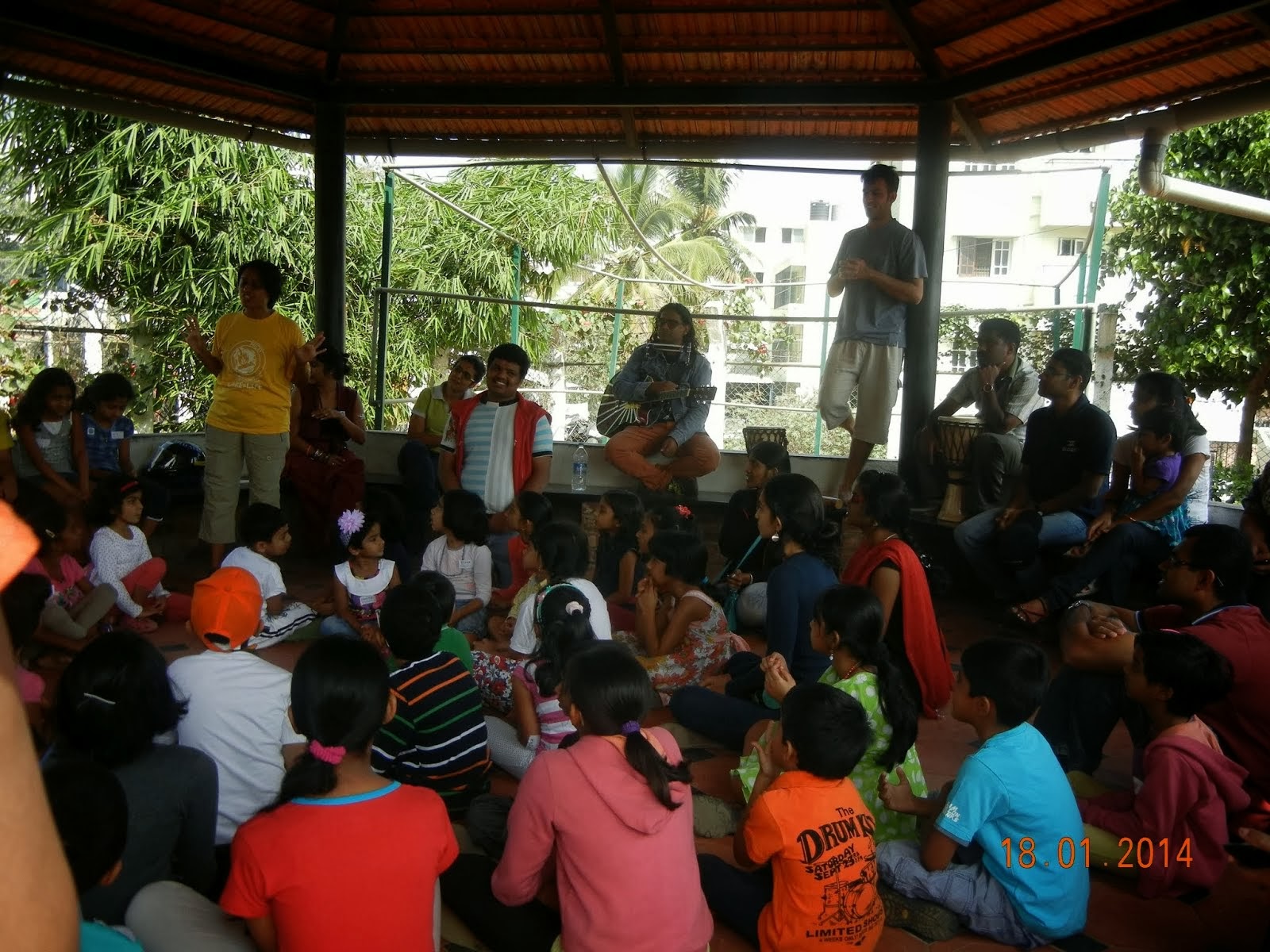
Sapana talks about Puttenahalli Lake
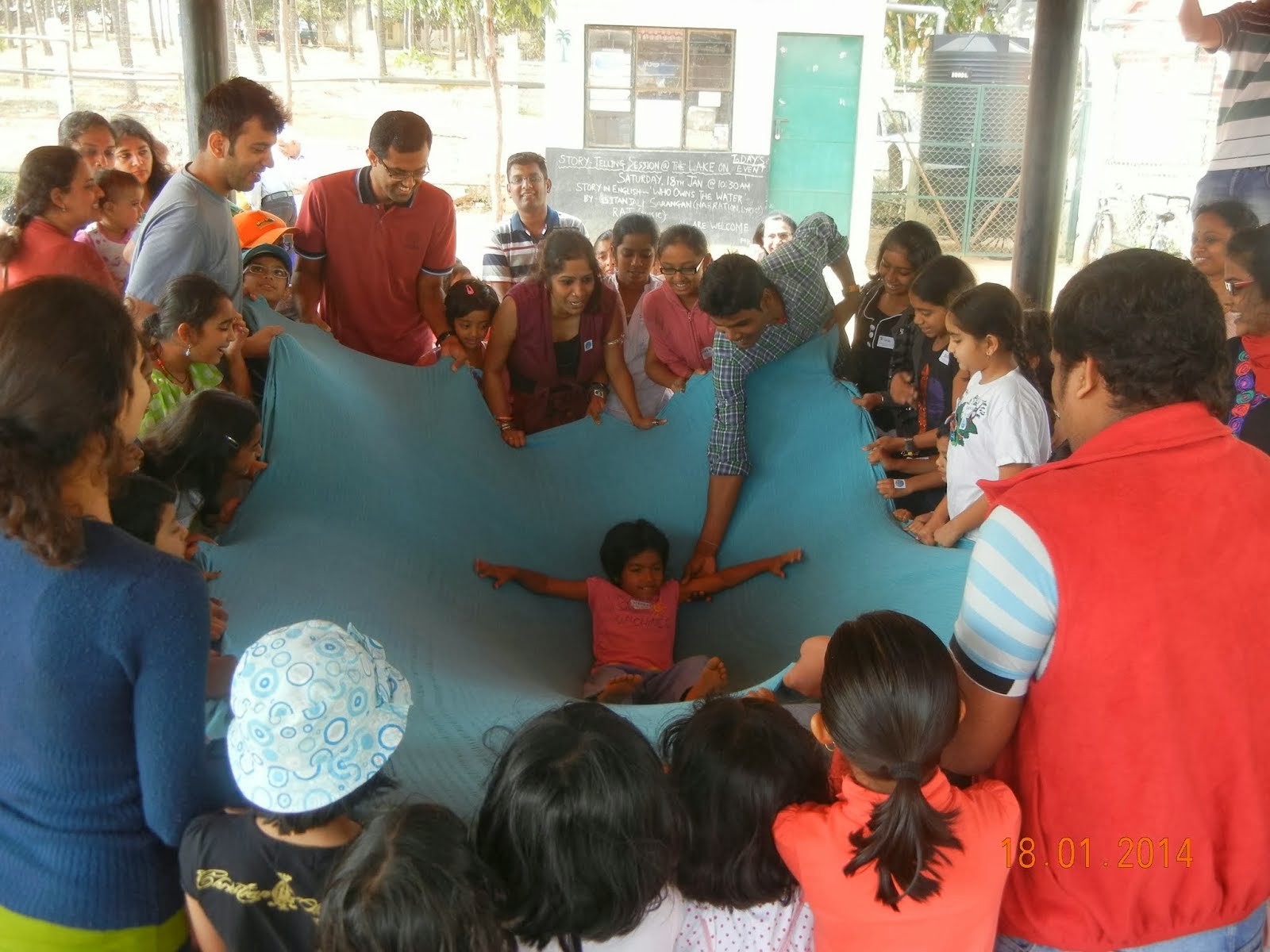
The interactive session kept the children busy
PNLIT’s OP Ramaswamy gave a vote of thanks to Snehadhara and everyone who attended, and asked if PNLIT should organise more sessions such as this. Of course, everyone wanted more!
We sold PNLIT magnets, wristbands and keychains to the kids, while the adults wondered why not have these events for them too!
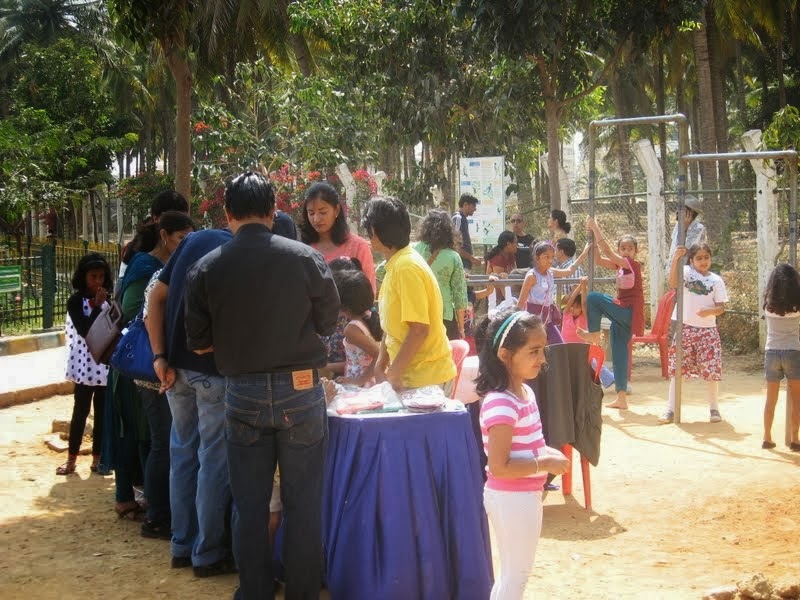
PNLIT goodies on sale
And we keep the PNLIT boat rowing and moving and hoping that more new faces will join us in these events, to spread the idea of taking care of our neighbourhood and its resources.
Reported by Sapana Rawat, PNLIT volunteer
Pics by OP Ramaswamy, Nupur Jain
*******
Special thanks to Sapana for coordinating the event and to the Snehadhara team for conducting it.
More pictures and videos can be seen here and here.
More pictures and videos can be seen here and here.