The Garganey Ducks are back

We are delighted to report the sighting of our winter visitor, the Garganey Duck. On 3rd Dec. when we went to the Puttenahalli lake at 3 p.m. we saw four of them. Typical of its highly territorial nature, the Eurasian Coot, one of our resident species  was busy chasing the ducks away. The quartet merely flew a short distance and made themselves comfortable once again. We hope they are joined by more of their ilk. To know more about this migratory species, see here.

 
The Garganey was sighted at Puttenahalli Lake for the first time in 2011, an event which was reported in the Hindu article Ducking It. The birds were here last year too.
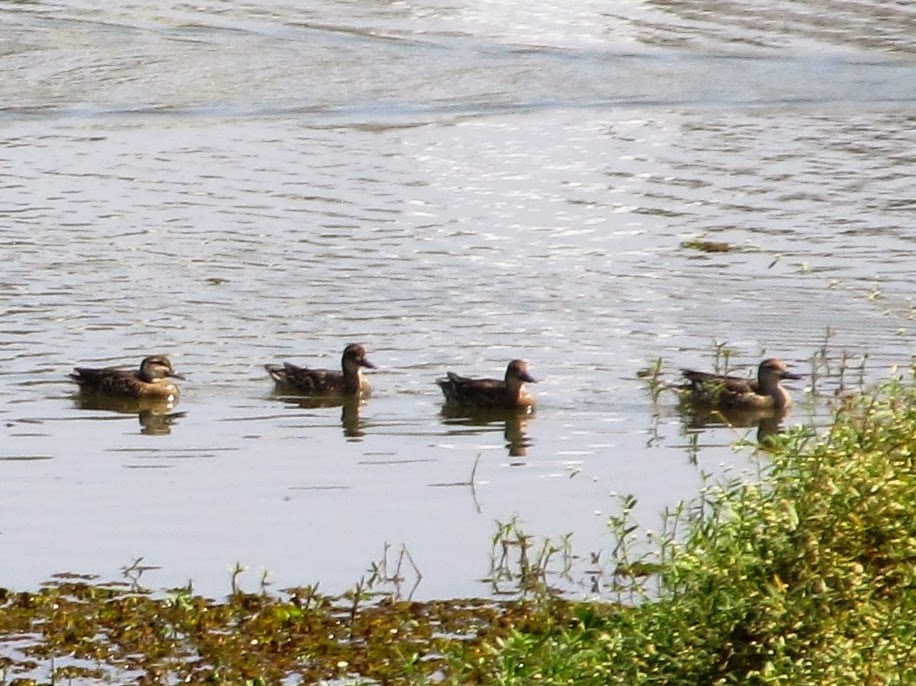
 
Female Garganeys at Puttenahalli Lake, Dec 2013 
 
We were unable to take any photographs, however, BTV, a city tv news channel, who had come over for a story and have filmed the Garganeys. 
You are welcome to visit the lake and take photographs of our winged visitors. 

Leave a Reply

Your email address will not be published. Required fields are marked *

Similar Story

Where are the flamingos? How Metro construction is devastating Chennai’s Pallikaranai Marsh   

In a report, environmentalists warn marsh blockages increase flood risk for South Chennai and call for urgent measures to avert ecological damage.

On a regular day in May, the calls of migratory waders and other shorebirds foraging in sprawling mudflats fill the air in the southern reaches of Chennai. May is the dry season for the Pallikaranai Marsh, when water levels naturally recede, exposing the critical feeding and breeding grounds that attract hundreds of bird species to this globally recognised urban wetland. But this year is different. The mudflats are gone. In their place is a stagnant expanse of water. This unusual water level during the dry season is not due to early rains. Indiscriminate construction within the marsh is blocking the…

Similar Story

CIDCO’s new flamingo study raises questions on Navi Mumbai airport safety, wetland future

The Bombay Natural History Society had earlier pointed out that protecting wetlands and ensuring aviation safety should go hand in hand.

The City and Industrial Development Corporation of Maharashtra (CIDCO)'s decision to appoint Australian aviation consultancy Avisure to study bird movement around the Navi Mumbai International Airport has raised fresh questions about the future of Navi Mumbai's wetlands. The agency has cited the ongoing study as grounds to defer legal protection for DPS Flamingo Lake, arguing that no irreversible decision should be taken until the assessment of bird-related aviation risks is complete. But bird movement around the airport is not being studied for the first time. Findings of BNHS More than a decade ago, the Bombay Natural History Society (BNHS) was…