This is the second of a two part story on the Delhi government’s initiative in introducing Entrepreneurship Mindset Classes for school students of classes 11-12. You can read the first part here.
Students are clearly smitten by what is expected of them in this programme seeking to encourage and nurture entrepreneurial mindset. “People study, work hard and pass exams, yet very few get jobs, and fewer of them get decent jobs,” says Khushi, a student of the government-run School of Excellence in Kalkaji. “If this curriculum and the Business Blasters makes me a business woman, I will know where I am headed”.
Khushi and her Speakersters team of four others zeroed in on the idea of a good quality, affordable, Bluetooth speaker. They realised the need for such a device when long sessions of online classes made the use of earplugs and head phones stressful and led to excessive strain on their ears.
They bought the components from the wholesale market, used environment-friendly wood instead of plastic, and built a choice of speakers with and without amplifiers with a six-month guarantee. As Yash Gupta, who leads the team and handles the accounts later told the “sharks”, each speaker cost Rs 250, and they sold them for Rs 299. Some of their early customers asked for a few more. The idea showed promise. The idea has elicited investor interest and the team has begun working on scaling it up.
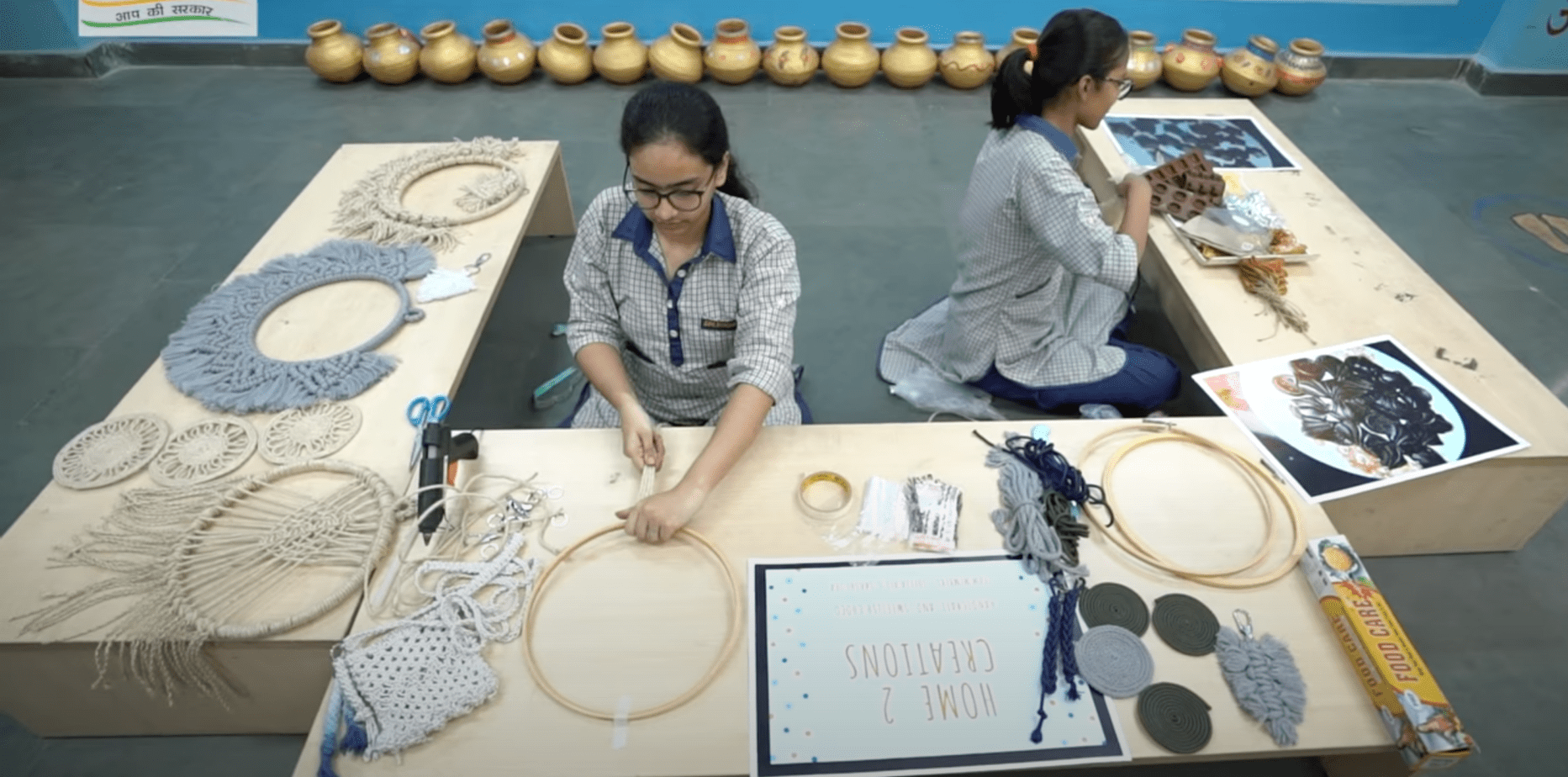
Another team sold paintings and earned a profit of Rs 30,000, and yet another marketed high quality compost. One team made handicrafts and artisanal chocolates to great success. All of them have got more money, mostly less than Rs 50,000, yet they have angel investors showing interest in their business ideas.
“The programme has taught us what we learn after college now itself—how to communicate with people, customer management, the value of money and most importantly, time management,” said 16-year-old Divyanish of the painting team.
Read more: Future of jobs: Internships, the new final job interview
Shark Tank India
On June 22nd, a popular satellite television channel aired its first promo of its business reality series Shark Tank India. The promo called for registrations from small entrepreneurs whose business ideas would be assessed by successful businessmen like Anupam Mittal, founder-CEO of Shadi.com, Peyush Bansal, founder and CEO of Lenskart.com, and Ashneer Grover, founder and MD of digital payments BharatPe.
These “sharks” were to assess, tweak, invest, and handhold to scale up those whose ideas passed their gruelling interview. The reality show went on air from December 20th.The “sharks” were friendly and encouraging, yet shrewd business guys to give a dispassionate and workable feedback to the entrepreneurs showcasing their products and services and seeking funds against a percentage in equity. The sharks sometimes outbid one and another when the business idea tempted them.
Business ideas presented ranged from the mundane to the bizarre. One young lady was making designer sleeves that could be worn over any dress or top and match it with any event. The response was lukewarm, though she did get a little bit of money.
There was “Momo Maami” who sold 35 varieties of frozen momos, and her equity was grabbed by three “sharks”. All the sharks wanted to bite into those frozen momos – she tabled a platter for them. One wannabe entrepreneur pitched an electric cycle for campus and resort use, but was dropped like a hot potato.
Learning from the masters
Within the classroom there are live entrepreneur interactions on Zoom, an important component of the EMC. Among those with whom the students had live interaction was Mustafa P C of ID Fresh Food famous for its idli-dosa batter. He told them how he borrowed money from an uncle and set up shop at age 10 outside his house, using his father’s bench and mom’s sari to make the batter.
Kiran Mazumdar Shaw told them to pick up an idea that will excite them and a commitment that they will not give up, but learn from failure. And give back to society. “Foolish courage helps, it gives you the courage to do something bigger” Shaw told them.
From Sarita Sarvaria, MD of Express Housekeepers Pvt Ltd who said she couldn’t resist picking up garbage when she saw it on the road before her, they learnt no job was too small. Sujata and Tanya Biswas of Suta, the sari-and-blouse portal, told them how they wore the sarees and clicked the pictures in order to cut costs! From Abhiraj Bhal of Urban Company they learnt that learning had to be a continuing journey and that they should focus on what is in their control — quality of customer service.
Read more: How to prepare for the new future of jobs in a post-COVID world
Rs 60 crore seed fund
The Delhi government views its allocation of Rs 60 crore as seed money towards the goal of making India a five trillion dollar economy. Education Minister Sisodia told a group of teachers that the New Education Policy talks about taking risks, and so the government is more than happy to take the risk of investing this money. “In the pilot project of 41 groups of students, the profits ranged from Rs 650 to Rs 24,000,” said Sisodia.
The project naturally involved training of teachers. The government has decided to fully fund teachers who get admission to such teaching programmes in global universities. Business coaches are guiding them too.
The telecasting of Business Blasters was followed up with the launch of a website on December 5th, to enable the public to invest in student startups and buy their products. The site gives details of the judges and the student teams.
In addition to this “shark” style investment seeking, the government plans a carnival next February, where the top 100 projects will be displayed. Among the invitees will be angel investors.
There is something more for students too — select students will get admission to the BBA programme of Netaji Subhas University of Technology (the East Delhi Campus) and the Delhi Technological University without an entrance test.
It is heartening to read on the initiatives taken to harness entrepreneurial mindset of young learners. The author, as always has not just listed the highlights of the programme but also covered on the insights in detail. In all very well articulated.