Who wants to get up early on a Sunday morning and that too, to do work in a public space?
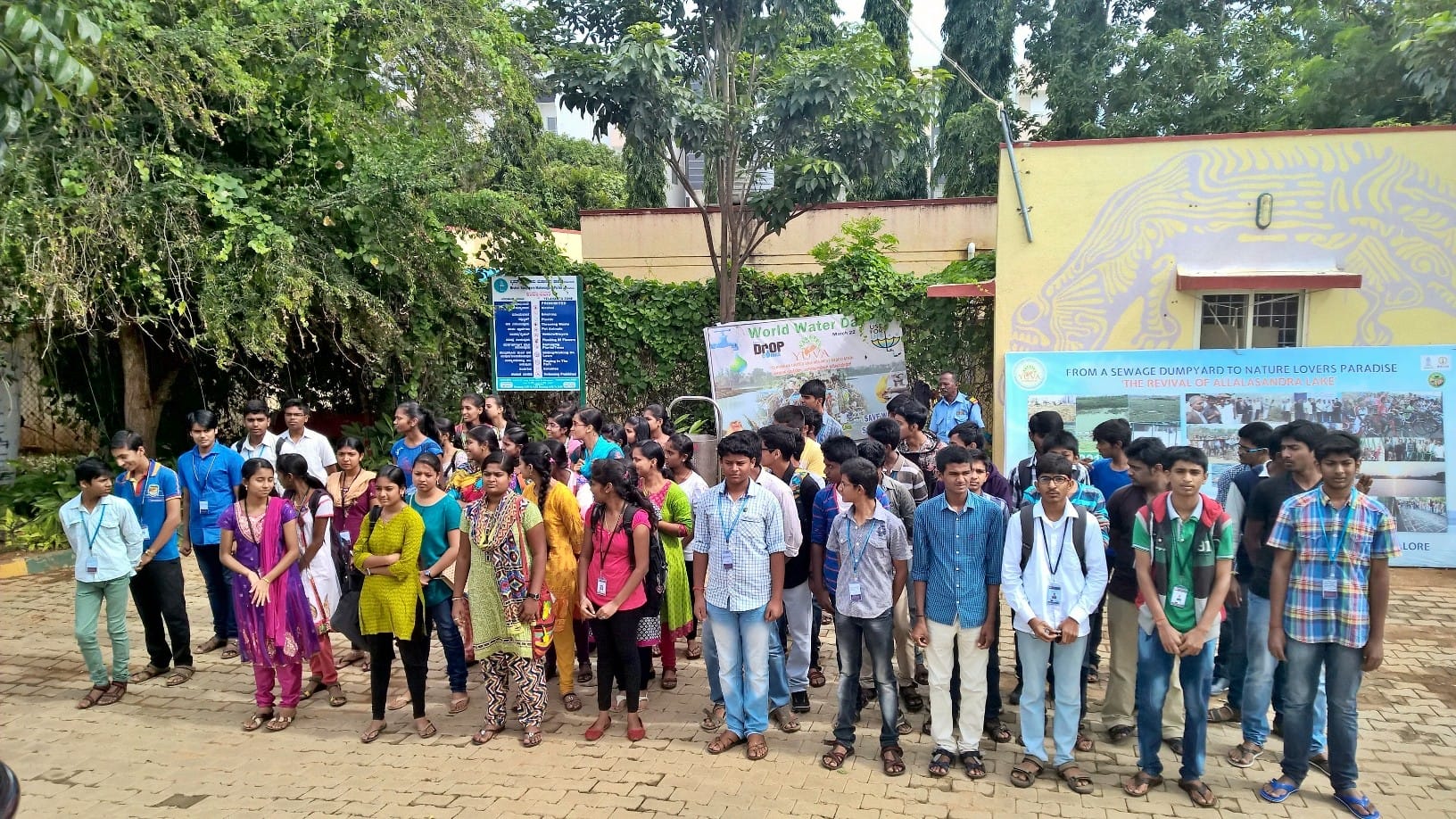
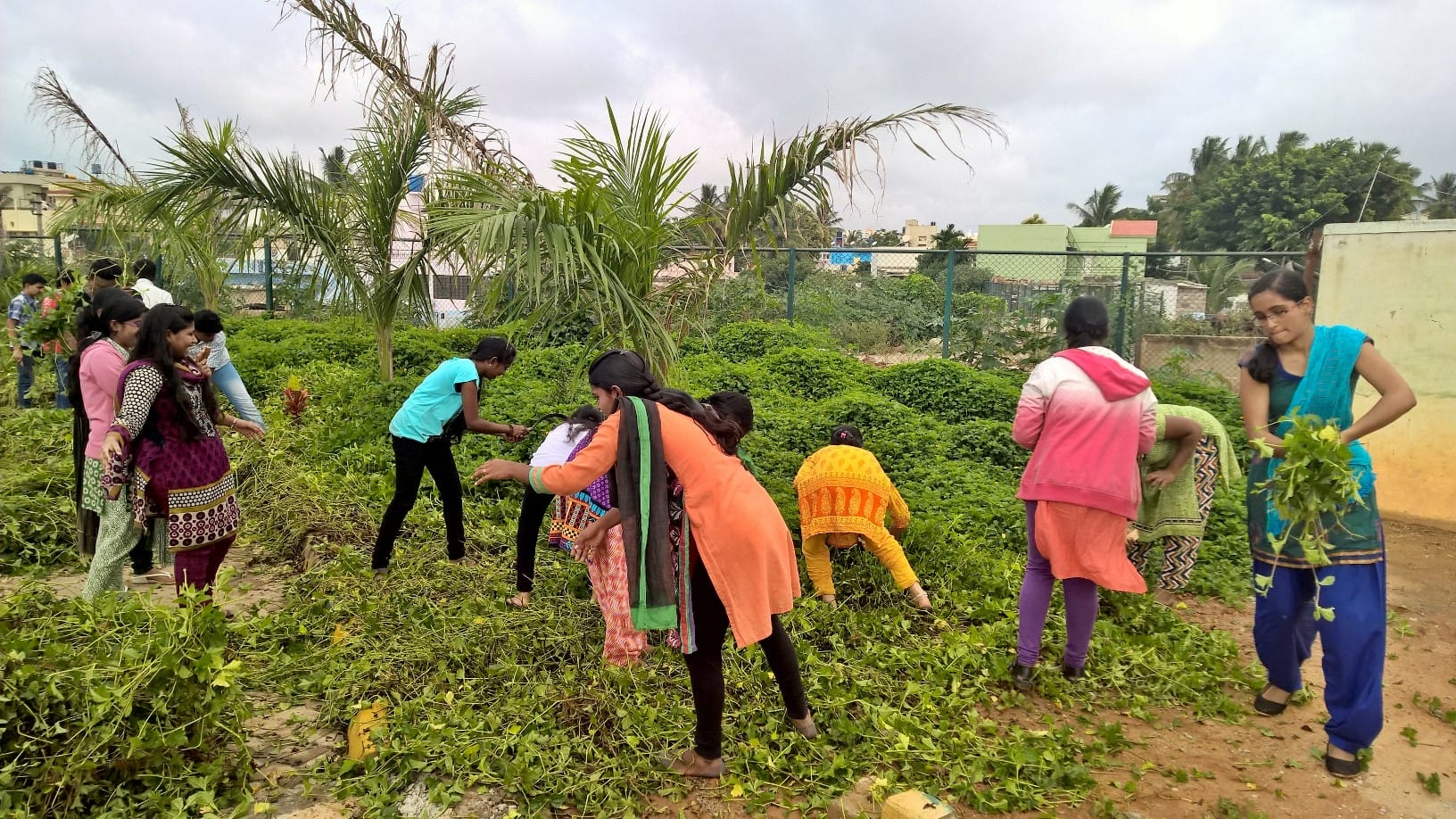
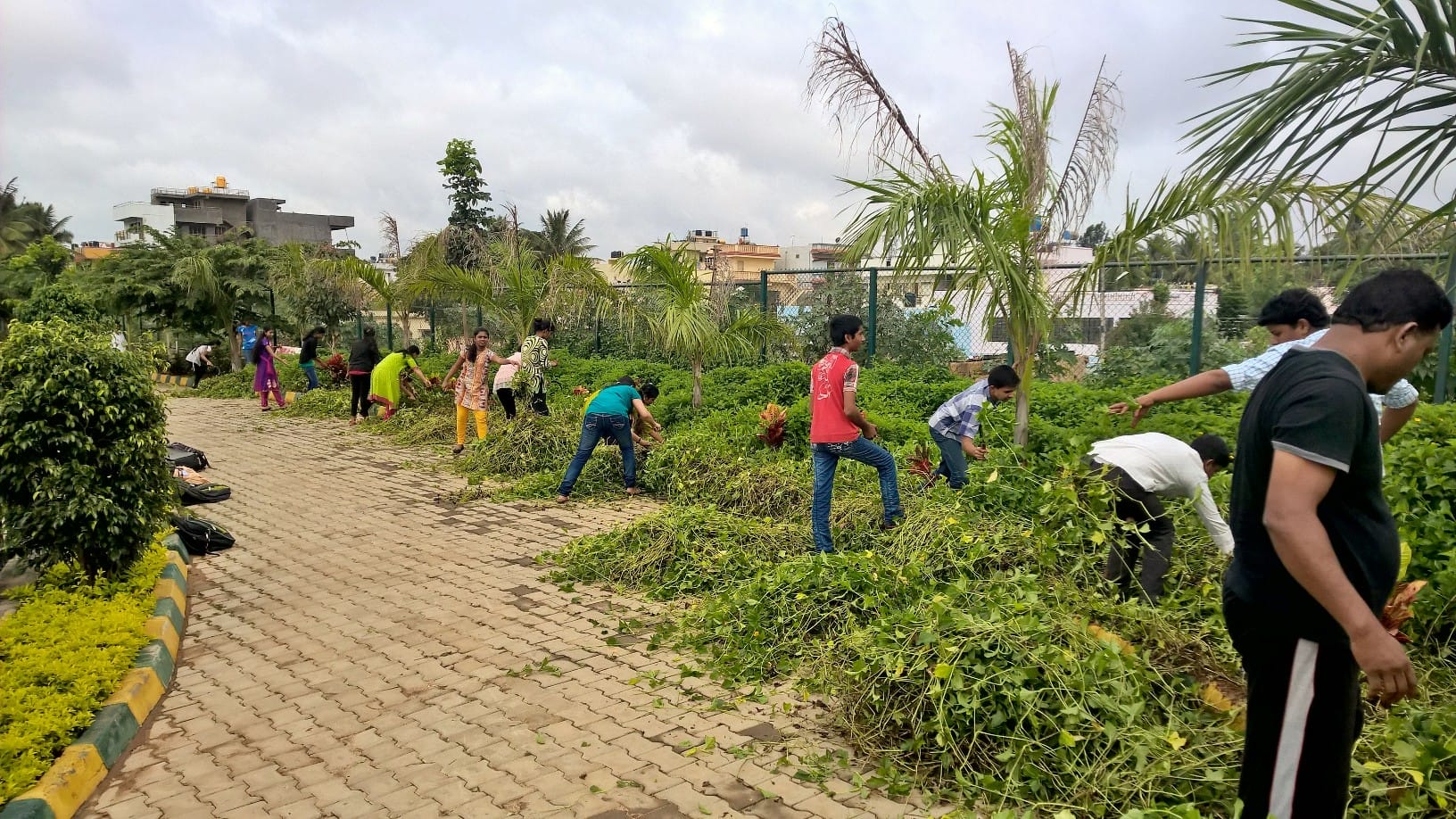
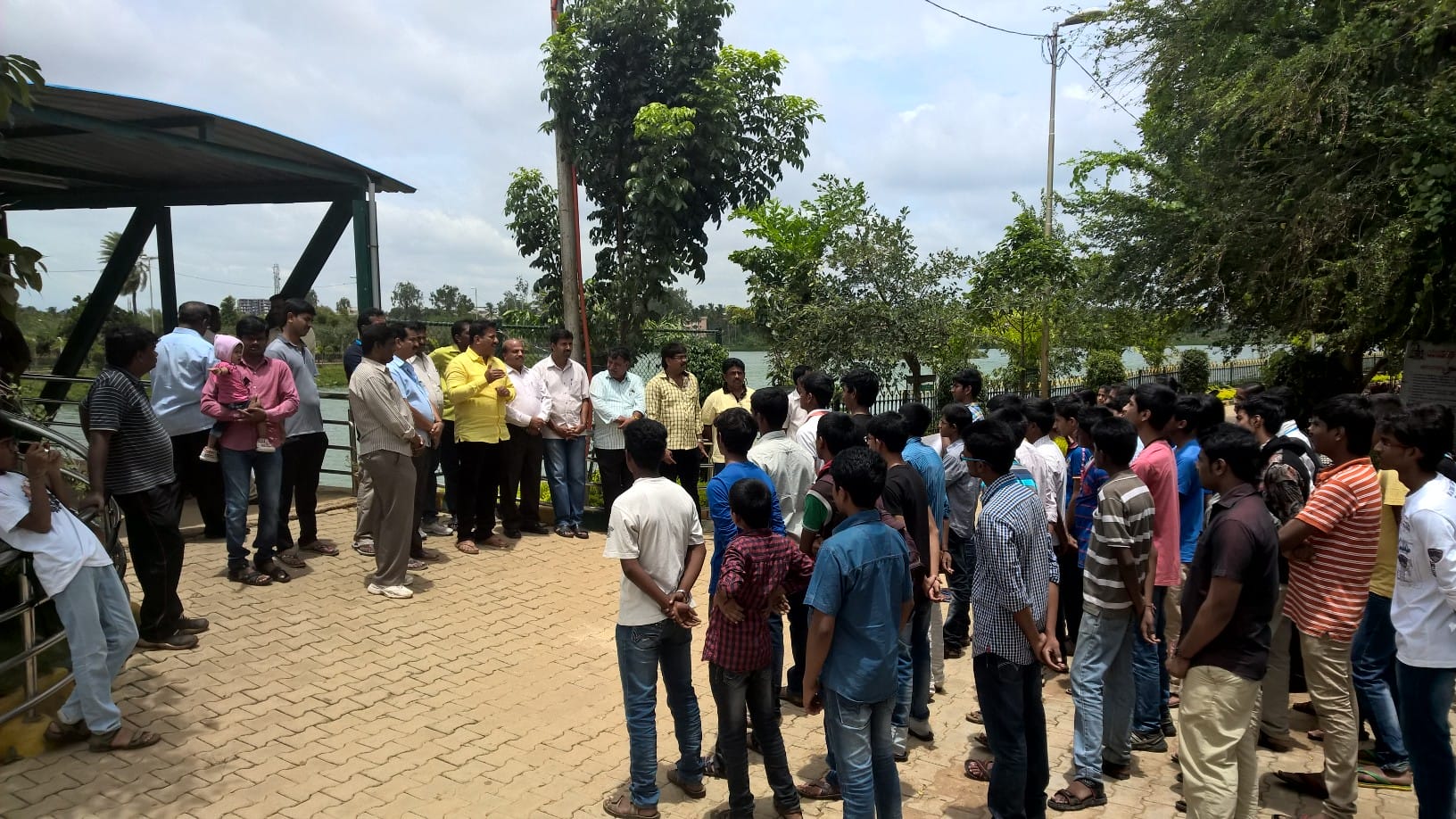
Sunday, 26th July 2015 saw more than 150 students of Seshadripuram PU College, Yelahanka at Allalasandra Lake doing just this. Led by the NSS co-ordinators of the college, Dr Subhash, Mr Shantaveerappa and Dr Mune Gowda, the students spent over fours hours (8 a.m. to 12 noon) working along the walking track, pulling out overgrown weeds and collecting garbage.
The 44 acre Allalasandra Lake in Yelahanka New Town is on its way to revival having been watchfully nurtured over the last 15 months. The lake is under BBMP Yelahanka zone and is currently maintained by it on annual contract basis by an external contractor, renewed each year. The lake is filled with water, thanks to the inflow of excess water from the neighbouring sewage treatment plant, that is regularly monitored. Recently around two acres of encroached land was recovered and here removal of parthenium plants, wild shrubs and thorny bushes is in progress.
Local NGO Yelahanka United Environment Association (YUVA) is playing a key role in the lake’s successful revival, along with the government authorities. YUVA, though not directly in charge of lake maintenance, is the single point of contact for civic officials and the public for anything concerned with the lake. YUVA works with various parties to ensure that ongoing maintenance work, new jobs, etc. are carried out as per the scope decided. YUVA has signed/ will sign tripartite agreements along with the BBMP for a few activities at the lake, where YUVA will take care of lake governance and management of third parties, with no cost outflow or revenue sharing.
According to Mr Jagadeesh Giri, Jt Secy, YUVA, members have been working with the BBMP/ BWSSB to monitor the sewage inflow from two rajakaluves and they have been able to ensure that about 80% of the sewage inflow has been stopped or diverted. Still work is in progress to stop sewage inflow completely – the culprits (mainly apartments) have been identified and notices have been issued to them by BBMP, BWSSB and KSPCB. Volunteer activites are regularly held to to keep the community closely connected to the lake. The activities are usually deweeding and cleaning around the lake bund, and done regularly every month by local citizens, NSS students and others, along with YUVA members. Today Allalasandra Lake is one of the well-maintained lakes of Bangalore. The efforts have resolved the ground water depletion and low-area flooding problems to a large extent.
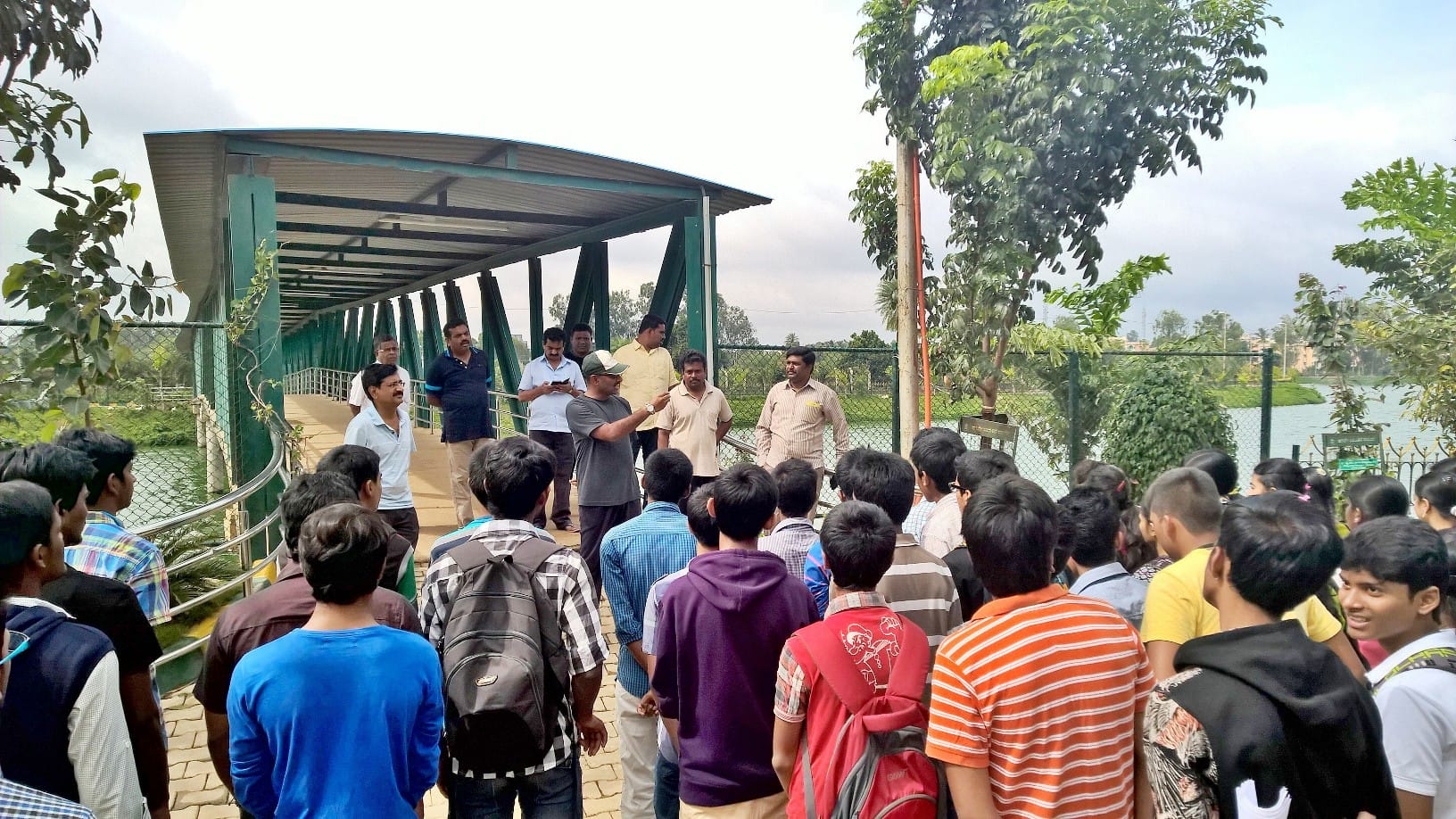
At this Sunday’s event, Range Forest Officer Nizamuddin addressed the students, speaking about the importance of lakes and trees. YUVA Vice President Mr CN Chandru appreciated the students for sparing their time to do voluntary work for society on a Sunday. Yelahanka MLA Mr SR Vishwanath too visited the lake and thanked the students.
Pictures of the event, shared by Mr Jagadeesh Giri, Jt Secretary, YUVA