For someone living in the suburbs along Sarjapur Road, the promise of “public transport and walkable Bengaluru” still feels like a distant dream.
I was once a regular commuter on Bengaluru Metropolitan Transport Corporation’s (BMTC) 500EB (Electronics City–KR Puram) route for nearly six months. But by 2024, I had given up — worn out by unreliable service and unsafe pedestrian crossings, especially at Doddanekundi (Bagmane Constellation). I switched to driving, like most others in my neighbourhood.
On November 7th, 2025, I decided to give public transport another chance.
The morning trial
I started around 8.30 am, optimistic about using the bus again. However, the BMTC app showed a 19-minute wait, which I couldn’t afford, so I took an autorickshaw instead. Not a great start, but I brushed it off. Maybe the evening would redeem the day.
The return from BTM: After some errands, I began my return journey from BTM Layout at 7.12 pm. I boarded a Vajra towards Iblur, and it was a delight. Smooth ride, on time, air-conditioned comfort, all for ₹30. But as soon as I got down at Iblur Junction, the optimism ended.
The Iblur ordeal
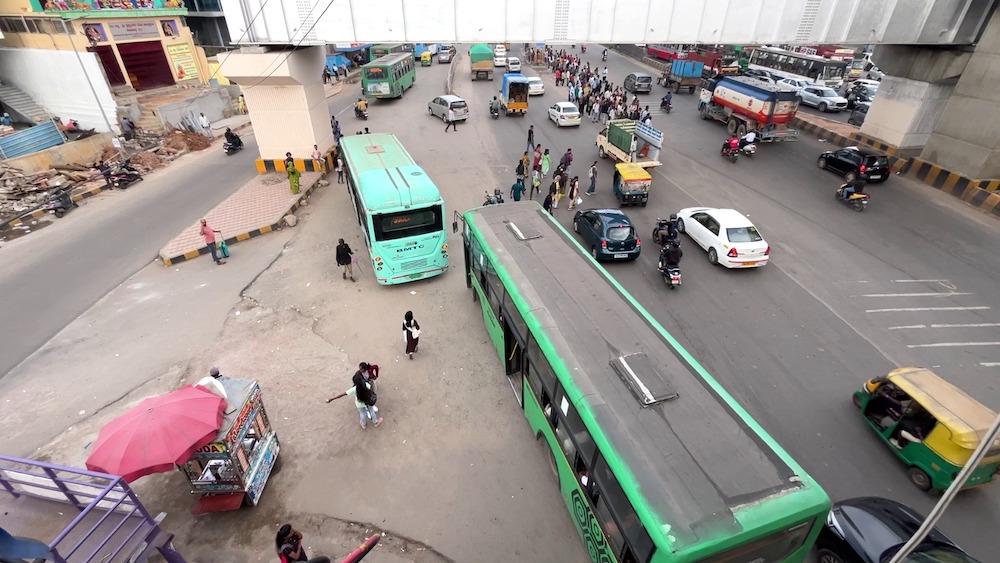
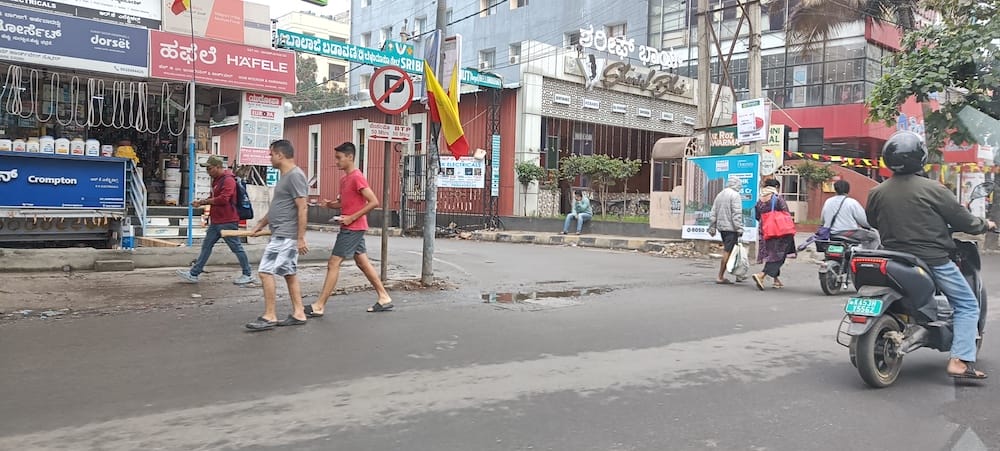
The footpath was in miserable condition, but the pedestrian crossing was far worse. Crossing from the Suncity Apartments (on Outer Ring Road) side to Sarjapur Road took nearly five minutes just to get a green signal. Even then, vehicles from Suncity kept turning, cutting across pedestrians mid-crossing. It was chaotic, confusing, and genuinely dangerous. Expecting seniors or children to cross here safely is wishful thinking.
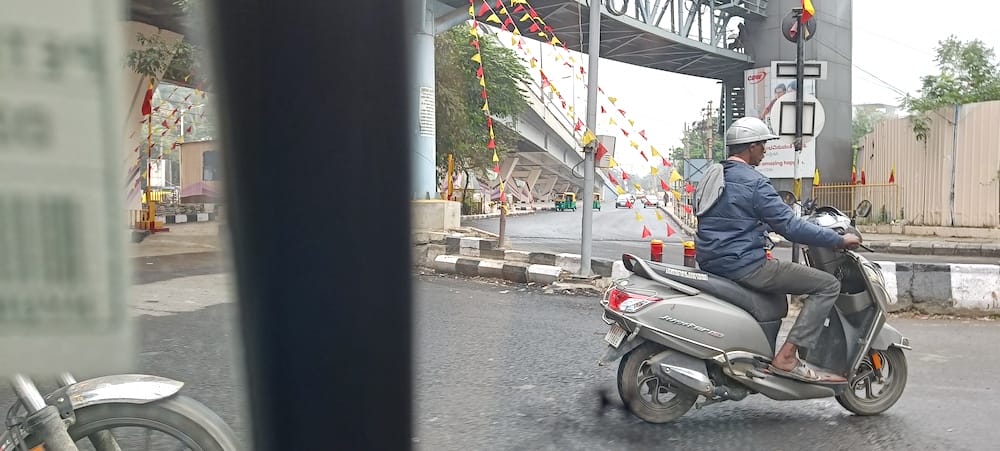
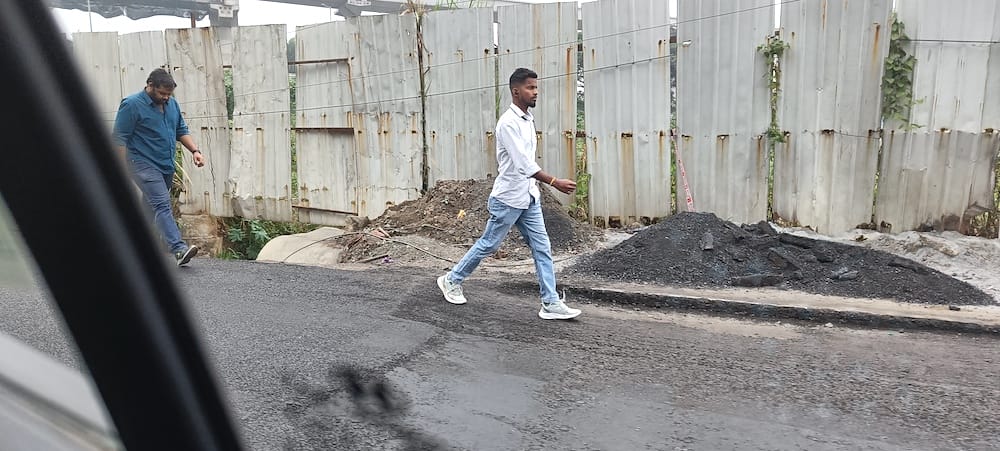
Once on the other side of the road, the nearest bus stop was HDFC Bank, about 250 metres away. A short 20-metre stretch had a three-foot-wide footpath — courtesy of The Ugly Indian initiative — which offered brief encouragement. But after that, walkability vanished completely. From there to Bellandur Gate, not a single stretch of proper footpath exists.
Read more: Workshop takeaways: How to make Iblur more walkable
The walk to Kaikondrahalli
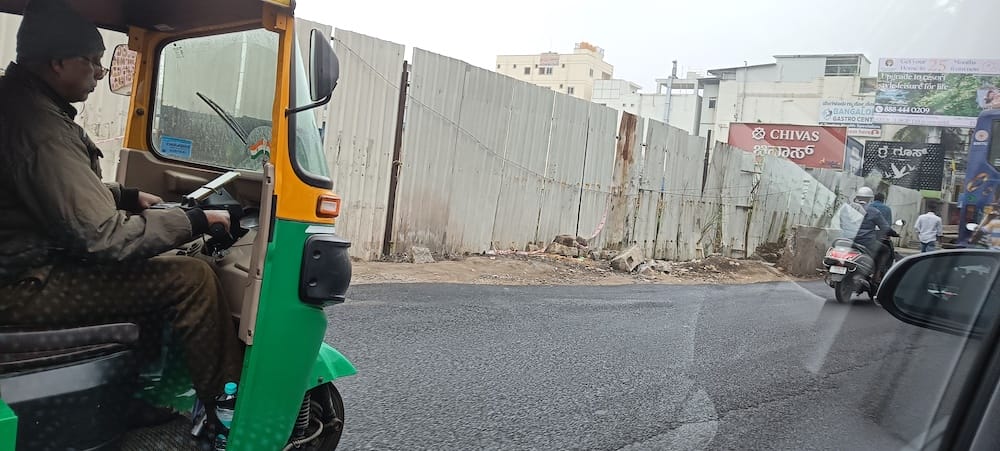
At Bellandur Gate (HDFC Bank stop), I waited 15 minutes for the 500EB, but it never came. So I walked another 300 metres to Kaikondrahalli, hoping to catch it there. The experience was identical; no footpath, only uneven edges, debris, and constant danger from traffic. From Bellandur Gate to the eatery Bharatiya Jalpan, there isn’t even a token strip for pedestrians.
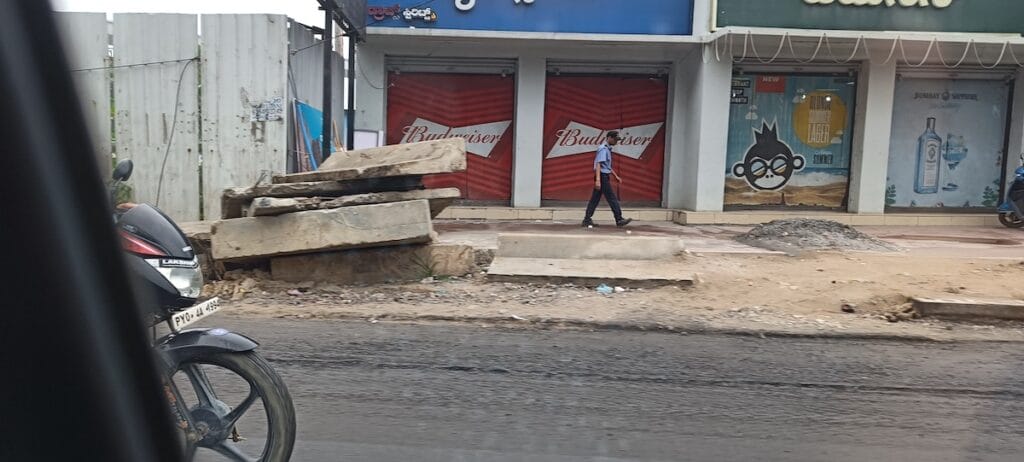
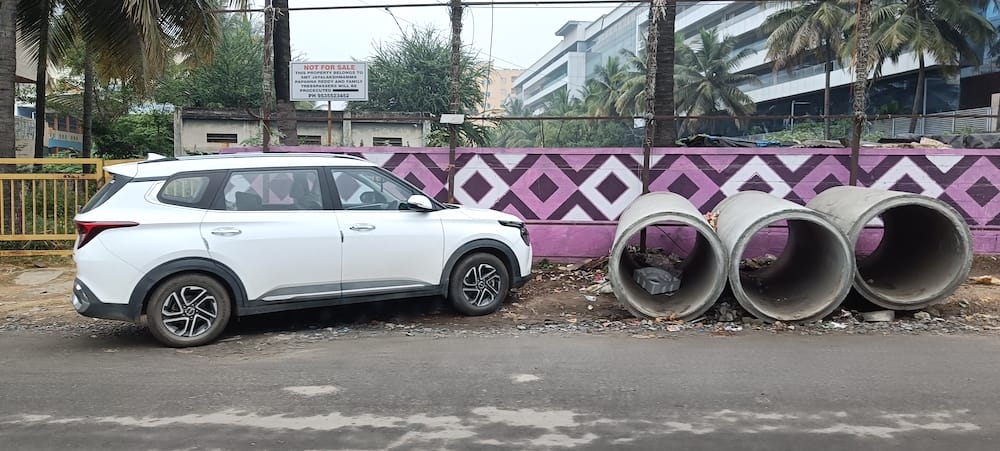
At Kaikondrahalli, I found the High-Raised Pedestrian Crossing (HRPC) at the T-junction blocked with boulders — a well-meaning but absurd attempt to stop two-wheelers by BTP. In doing so, pedestrians have been completely abandoned. The only alternative is an unscientific crossing 100 metres away at Amrutha Bakery traffic signal, where you literally fight your way through speeding vehicles.
I somehow crossed toward Kasavanahalli/Hosa Road and waited another five minutes for a bus. None came. Finally, I gave up and took a taxi for just 1.1 km, paying ₹90.
A journey that should have taken 30–35 minutes ended up lasting 1 hour and 15 minutes with costly options, unsafe walks.
The larger lesson
This wasn’t just one unlucky evening — it’s a snapshot of everyday suburban reality.
If you live along Sarjapur Road, the advice is simple: don’t take the bus unless you have time, patience, and nerves of steel. Until we have reliable 5-minute bus frequency and continuous, safe pedestrian infrastructure, public transport remains a gamble.
Even finding autos or taxis in the evening is difficult. You’re left stranded between broken promises and broken pavements.
Read more: What it takes to get a skywalk in Bengaluru
Why nothing changes!
Here’s the uncomfortable truth about why Bengaluru’s mobility system feels broken:
- BMTC still operates not as a public service institution, but as a politically driven system, responding to whims rather than commuter needs.
- GBA, envisioned as an integrated infra development agency, remains confused and slow to act, unable to make visible improvements at the ground level.
- BTP (Bengaluru Traffic Police) officers are doing their best just to keep vehicles moving, but not necessarily people. Pedestrian safety is an afterthought.
- And as for our elected representatives — the only fitting word is failure.
If anyone disagrees, I invite them to join me — or any commuter — on a Friday evening walk along Sarjapur Road. Find me 25 metres of safe, walkable footpath and a scientifically designed crossing. If you can, I’ll stop my criticism for life.
The final word
Urban mobility is not just about buses and signals; it’s about dignity, safety, and the right of way for pedestrians on the road. Until walkability and public transport are treated as basic infrastructure, not afterthoughts, residents of Bengaluru’s suburbs will continue to choose private vehicles. Not out of comfort, but out of compulsion.
Thanks Vishnu, you have spoken what many others also feel. I am scared to walk and even drive a two wheeler. Footpath infra never gets the attention that it deserves and our politicians keep sabre rattling with failed promises, unmet commitments! Miles to go before we use public transport
I stay in Sarjapur Road and every word you mentioned is true. I am public transport but after I waited for 2hrs due to the app kept showing the false timing and the bus never shown, I gave up and continued using my personal vehicle. This area is nothing but like a third world country having crumbling infra, no streetlights, unsafe for cyclist and pedestrian. Once one cross Anand sweets hardly any parks or functional lakes can be seen where people can walk. This is nothing but a neglected area who hardly cares about.