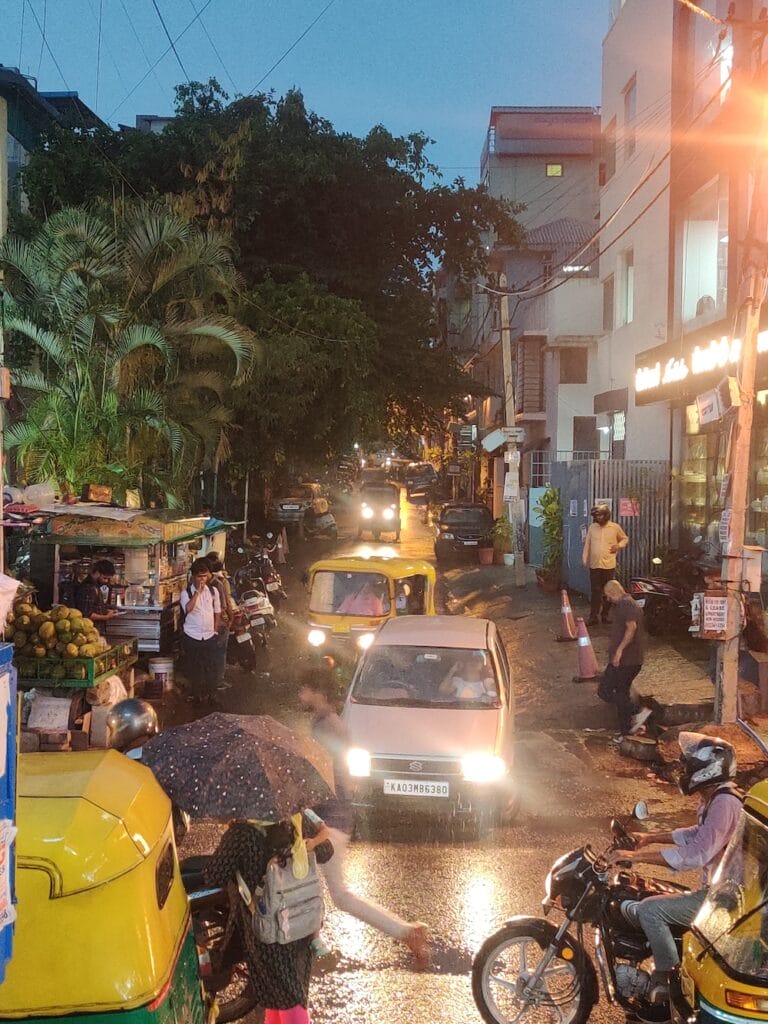
Bengaluru, India’s tech capital, is known for its pleasant climate. Often, when much of the country struggles with heat, rain brings relief to this city. Last year, Bengaluru received 933.8 mm of rain over the year (IMD data). But rain, while welcome, also unravels a host of problems: flooded roads, traffic chokes, and an often futile scramble for autorickshaws on ride-hailing apps like Uber, Ola and Rapido. Despite their algorithmic promises, these platforms collapse during peak demand, making transport scarce and expensive.
A commuter from Indiranagar shares his experience with us: “I needed an auto for just 1.5 km from the metro, but none would take the ride. They let their phones ring and demanded ₹200 for a ₹60 ride. ‘It’s raining, and there is traffic,’ they said.”
Another commuter waited two hours after drivers quoted ₹500 for a 4 km trip.
Though newspapers this month have documented widespread complaints against auto drivers, the bigger question remains: why do they charge such exorbitant fares just when the city needs them the most? This recurring chaos isn’t just an inconvenience—it reflects a systemic failure.
Read more: How ride-hailing apps in Bengaluru compete to meet commuters’ demands
Exorbitant auto rides: Look a little deeper
First, let’s look at the apps themselves. Since the 2010s, aggregator platforms have reshaped urban mobility entirely, using GPS, algorithms, and internet connectivity to match demand with supply. The aim is to ensure seamless, timely rides even during monsoons.
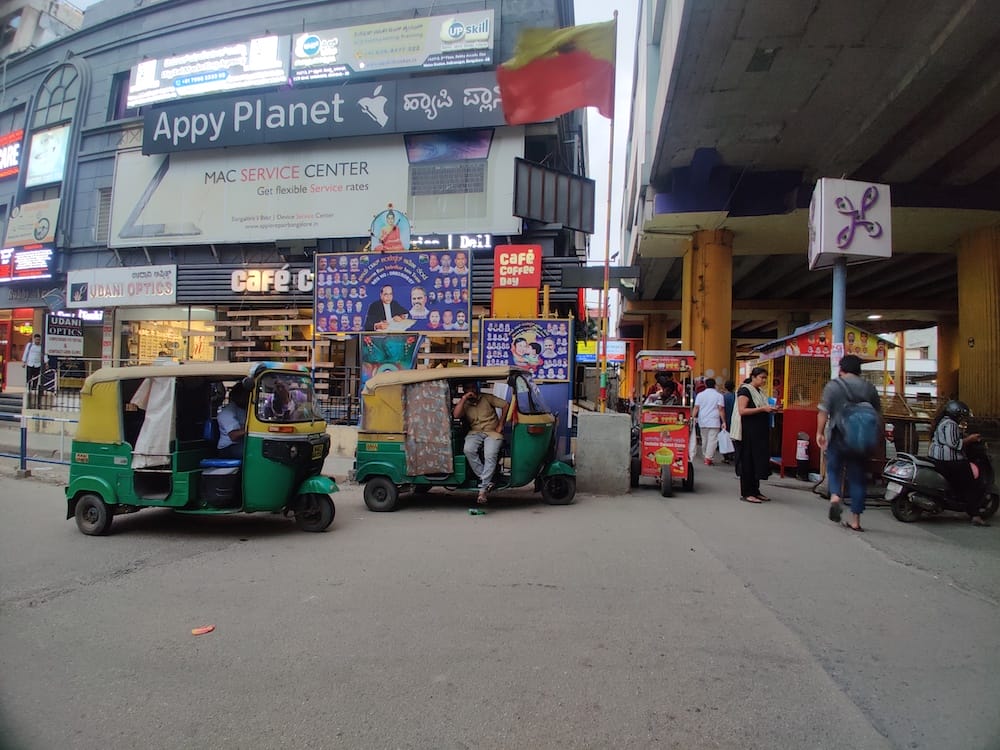
But this promise often falters. As one driver from Assam put it, “When it rains, everyone wants autos. We can’t take everyone, so we choose whoever pays the most.” It’s not mere profiteering, it’s a response to overwhelming demand and difficult conditions: clogged roads, waterlogging, and vehicle risks.
“If water seeps into the auto, it might stop working, so I just stop taking rides when it pours,” says one driver. Others wait and assess before accepting bookings. “Some of us wait to see how bad it gets before deciding whether to accept a booking or not,” they say. Sometimes, it’s necessity, not choice, as routes can be blocked by fallen trees or flooded roads. Therefore, it is not simply about inconvenience or opportunism.
Driving in these conditions involves real risks. In response, aggregator apps deploy ‘surge pricing’ or ‘dynamic pricing’ — an algorithmic strategy designed to incentivise drivers and also balance riders’ demand during high-pressure conditions.
But ground realities complicate this. First, financial incentives often don’t outweigh safety concerns. Second, the bike taxi ban has left the city with fewer last-mile options. Many drivers now bypass apps during high demand, opting instead for offline negotiations or aggressive tipping. This gives them some agency in a system that often ignores their constraints.
In the process, however, the algorithm pushes services toward exclusivity.
Read more: When ride-hailing apps fail commuters, what could be the alternatives?
Bike taxi ban aggravates issues
The algorithm logic followed by ride hailing apps doesn’t account for real-world limitations. Before the ban on bike taxis, rain naturally filtered demand, as people avoided bikes in such times, shifting to autos. Now, that shift is structural, not seasonal. The result: artificial scarcity and inflated fares.
“To me, rain and peak hours feel the same,” said one driver. “There’s traffic, and I have to charge more to meet my daily target.” Yet fare systems rarely reflect this. “Apps may hike fares by ₹20–30, but that’s hardly enough when you account for time lost in traffic during peak hours.”
This exposes a fundamental flaw: fares are calculated by distance, not time. Flooded roads, blocked routes, and rerouting aren’t factored into trip costs when it rains. Though apps include wait-time charges and congestion fees, they barely impact final fares.
What looks like opportunism is thus pragmatism. Drivers are simply adapting to a city that doesn’t work as it should. This goes beyond digital solutions or fare policies, it’s an infrastructural problem.
Also, this isn’t just about monsoon. Complaints of overcharging increased substantially since the bike taxi ban, with fares rising by 50%. In response, Karnataka’s Transport Minister Ramalinga Reddy directed the transport commissioner to act, following which 260 drivers were booked across the city for ride refusal and overcharging.
The government recently revised auto fares: base fare rose to ₹36 for the first 1.9 km (up from ₹30), and ₹18 per km thereafter (up from ₹15). Yet actual fares remain far higher. This raises the question whether regulation or crackdown alone can solve affordability issues. Or do we need to ask why artificial scarcity persists—especially in the rain?
Where’s the alternative?
The ban on bike taxis has reduced competition. With overflowing demand and limited alternatives, fares have surged. It raises a critical question: is the city systematically eliminating affordable transport options? First with the metro fare hikes, and now the bike taxi ban, how are low-income commuters expected to cope?
Public transport now means the metro, buses, autos and cabs. Only the last two provide last-mile connectivity. But cabs have always been viewed as a luxury. Since the ban, traffic congestion reportedly rose by 20% during peak hours on the Outer Ring Road, Silk Board junction, and Bannerghatta Road. Meanwhile, the city’s population doubled from 5.7 million (2001 Census) to 11.5 million (2022 BBMP estimate). Its physical footprint has more than doubled (1992 to 2009) with a 134% increase in built up area (IIHS). Yet the BMTC fleet strength was increased only by 7.89% while the population increased by 32% (BMTC; Voters list 2019; Census report 2011).
Even proposed solutions like tunnel roads, according to IISc, are unlikely to solve the issue. In fact, they may just end up encouraging more private vehicle use instead of strengthening public transit.
A larger view of the problem
During rains, many areas of the city witness flooding. With more built-up and impermeable surfaces, roads often turn into rivers with just one spell of heavy to extreme rain.
But these aren’t isolated events anymore. Urban heat islands cause warm air to rise, leading to dense cloud formation. Slowed airflow in built environments creates more suspended particles, resulting in heavy rainfall events—what scientists call ‘urban wet islands.’ According to an analysis by researcher Ashwin Vishwanath, Bengaluru has become significantly rainier since the 2000s. What happens if this intensifies?
The autorickshaw’s struggle thus reveals a deeper truth: seasons aren’t just weather events, and urbanisation affects not just the ground, but the sky. These stresses remind us how fragile and interconnected our everyday systems truly are.
Thanks for this analysis and suggestions.
I want to highlight a couple of additional important issues which I was hoping for as you started with examples of demand for high-fare by auto drivers. I have also discussed this with a few drivers and they confirm my analysis.
1. I see a flaw in the mental maths done by most drivers.
By asking for very high fares, they end up waiting and wasting time. Their income for the day is lowered. If they went with regular fares, they would usually earn much more due to limited waiting time. Earning per hour would be higher or the same.
2. The peer-group or union pressure to charge high.
This is the reason that many drivers who are willing to go with meter rates end up demanding more as they do not want to face their peers.
This is a vicious cycle. Overall, this current system is a loss for auto-drivers, and not just the passengers.
Thus, apart from incorporating time into the pricing, we also need to change this system dynamic and make it a virtuous cycle. A system of enforcement of meter rates would really help in this shift, apart from educating drivers and unions.