The road accident, in which former Tata Sons Chairman Cyrus Mistry and another passenger, Jehangir Pandole, were killed, was widely reported in the media as it involved a famous businessman. The car was travelling on the state highway in Maharashtra’s Palghar district at high speed and hit a divider.
The accident also severely injured the driver and the co-passenger in the front, but they survived because they were wearing seatbelts, while Cyrus Mistry and Jehangir Pandole weren’t. The importance of wearing seatbelts for rear seat passengers was highlighted in the news as it is a safety precaution that is either neglected or not known by the general public.
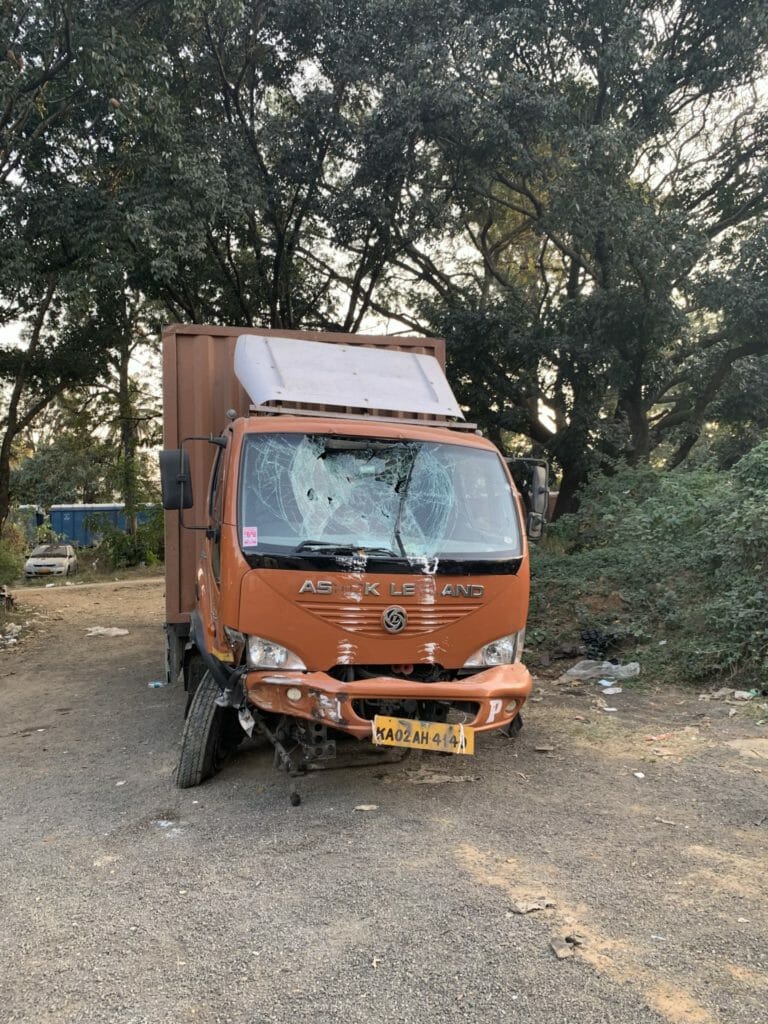
This reminded me of the accident I was involved in, a year and a half ago, in Bengaluru, on Airport Road. I was returning from Hyderabad after a site meeting. It was around 9.30 at night. The plane was late. I reached later than I normally do. I rented an Uber. I was sitting in the back seat without a seatbelt. This ride turned into a nightmare for me. The car was involved in a head-on collision with a truck that had lost its axle.
The truck jumped the divider and hit the Uber I was travelling in. I was thrown forward. I lost consciousness and don’t remember anything after that. When I regained consciousness, I was in the hospital bed and in a lot of pain. My right wrist was completely shattered, and I had fractures in my left hand. I had bruises and cuts on my body. The left side of my face was disfigured. I had deep cuts on my shoulder that required several stitches. I had hairline fractures on the back. I needed plastic surgery to fix my face and eyelid. My right wrist had to be rebuilt using titanium plates and bolts. The glass shards missed my left eye by a few millimetres. Also, the doctors had to remove several glass shards from the body. Some of the glass pieces, which could not be removed, popped up from under the skin, three months after the accident.
Read more: Road accident: What should you do?
I was thrown forward due to the impact of the car hitting the truck at high speed. I had used my hands to shield myself. The Uber driver had a seatbelt on and escaped with minor injuries. He arranged for me to be transported to the hospital in a private vehicle, which was two kilometres away. Some good Samaritans transported me to the hospital in their private vehicle. It took me several months of recovery and physiotherapy to get back to my almost normal state. I suffer from some permanent nerve damage due to the accident. If I had worn my seatbelt in the back, I would not have suffered these severe injuries. Looking back, I am lucky that I am even alive.
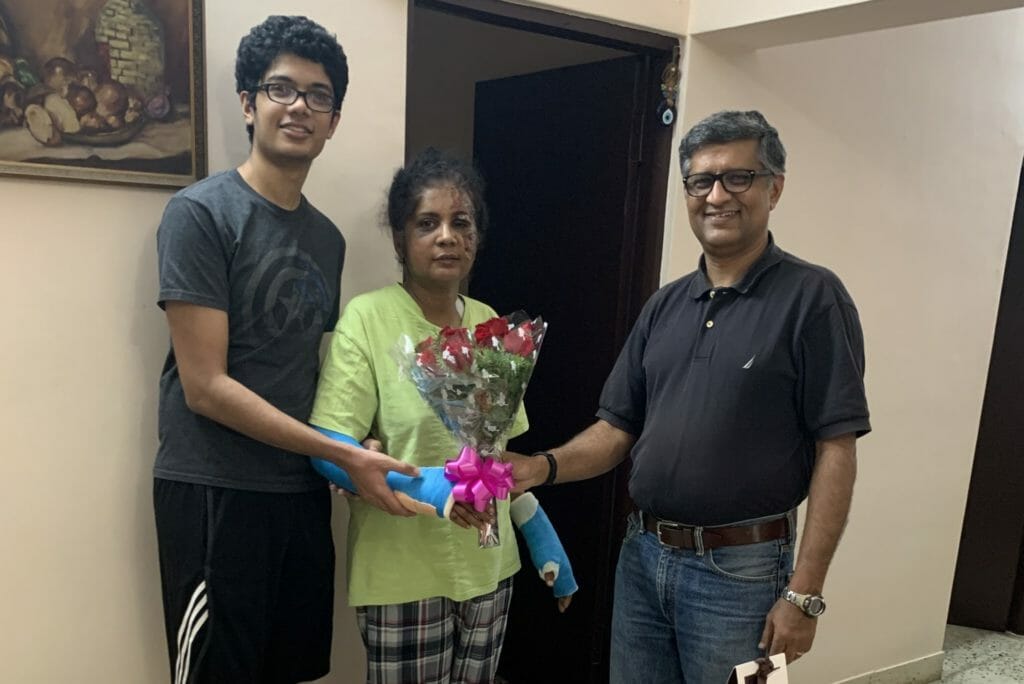
Rekha a month after the accident. Pic courtesy: Rekha Shankar
Increase in road accidents
According to the Ministry of Road Transportation and Highways, Govt of India, 3,66,138 road accidents have been reported by States and Union Territories (UTs) in 2020, claiming 1,31,714 lives and causing injuries to 3,48,279 persons. National Highways accounted for 30.6 % of total accidents and 35.7 % of fatalities in 2019, which increased to 31.8 % and 36.4 % respectively in 2020. (For more information, refer to this report ).
Read more: Simple tips for citizens to ensure safe journeys
The report for 2021 has not yet been published by the government. The number of people killed in 2020 in Cars, Taxis, Vans & LMV was 60,986 and in the same year, the number of people injured was 17,873. Many of these fatalities or injuries could have been prevented if the passengers, who were sitting in the back of these vehicles, were wearing seatbelts.
Seatbelts should be made mandatory for app cabs
Last month, Cyrus Mistry and Jehangir Pandole lost their lives for not wearing seat belts. Every life is precious. All cars should be equipped with seatbelts in the back. The government should make it mandatory for all passengers to wear seatbelts, especially on roads where vehicles travel at high speeds.
Drivers of some of these cabs, from companies like Uber and Ola, remove the seat belts in the back or tamper with them as they think it is not required. The government should also make it mandatory for ride-hailing taxi app companies to provide seatbelts for passengers in the back seat and should fine drivers who tamper with the seatbelts, as it is a life-saving device.
They should also make it mandatory for all vehicles to use tempered glass for side windows. In an event where the tempered glass is hit with something, it shatters into small dull-edged pebble-like pieces instead of shards that may harm the passengers. This is also important as many of the injuries suffered by passengers result from glass shards piercing the skin and the body.
Wearing a seatbelt saves lives. Please take time to put on your seatbelt when you travel in cars, especially on highways and on roads with higher speed limits. If seatbelts are missing in your app cab, please complain to the ride provider.
I actually did get prompted by Uber asking whether there is seatbelt in the cab I took today. I had ignored it. Thank you for this article. I understand the gravity of the situation.