When a family is under quarantine, it means no one goes out. Does this include the pets? Well, as there is no evidence of transmission from pets to humans, does that then invalidate the statement for pets?
I have wondered for a long time what then should be the procedure? After all, pets are trained to do their business outside.
They signal when they want to go outside… Staring at the door, howling, whining, barking, biting, nudging you to take them out; sometimes by tearing things, scratching the door or under the door.
Apartment complexes have very stringent rules, especially when it comes to enforcing government guidelines on COVID-positive houses.
So what does one do?
While I am no expert on COVID, I believe that the first rule, definitely, is to ensure pets and owners during quarantine are not separated. Second, it is equally important to ensure that the pet’s physical and emotional welfare are taken care of in these difficult times, as it is a known fact that a cooped up dog can exhibit signs of depression and lethargy.
How does an apartment floor that is under containment handle this?
- How can we keep the dog mentally and physically active?
- Should we then permit dog-walkers/neighbours to walk the pet, with due care, following all COVID appropriate behaviour?
- What happens in extreme cases, when the pet parents need hospitalisation, and have no time to make arrangements at a shelter?
- Who is responsible if the pet under care with a neighbour or at a shelter runs away?
- Should the apartments open up terrace space to walk the pets under quarantine?
Unfortunately, none of the guidelines including the Guidelines for Resident Welfare Associations During Covid 19, issued by the Government of Karnataka, in June 2020, makes a mention of pet parents under quarantine.
COVID etiquette for handlers
As a first step, here’s some COVID etiquette that can be followed by pet parents along with the essential COVID appropropriate behaviour.
- Dog walkers should take necessary precautions and wash hands before and after touching their dogs
- Dog owners to preferably pick a time when children and other people are not around.
- Dog owners should not allow their dogs to interact with other people and dogs.
- Walk them at least 6 feet away from other people.
- Scoop up after the pet and dispose it in the appropriate bins.
- Clean pet’s paws after coming back from a walk. Ensure that the pet is well groomed at all times.
Prepare Ahead
In the eventuality of the pet owner going into quarantine, it is always good to prepare ahead:
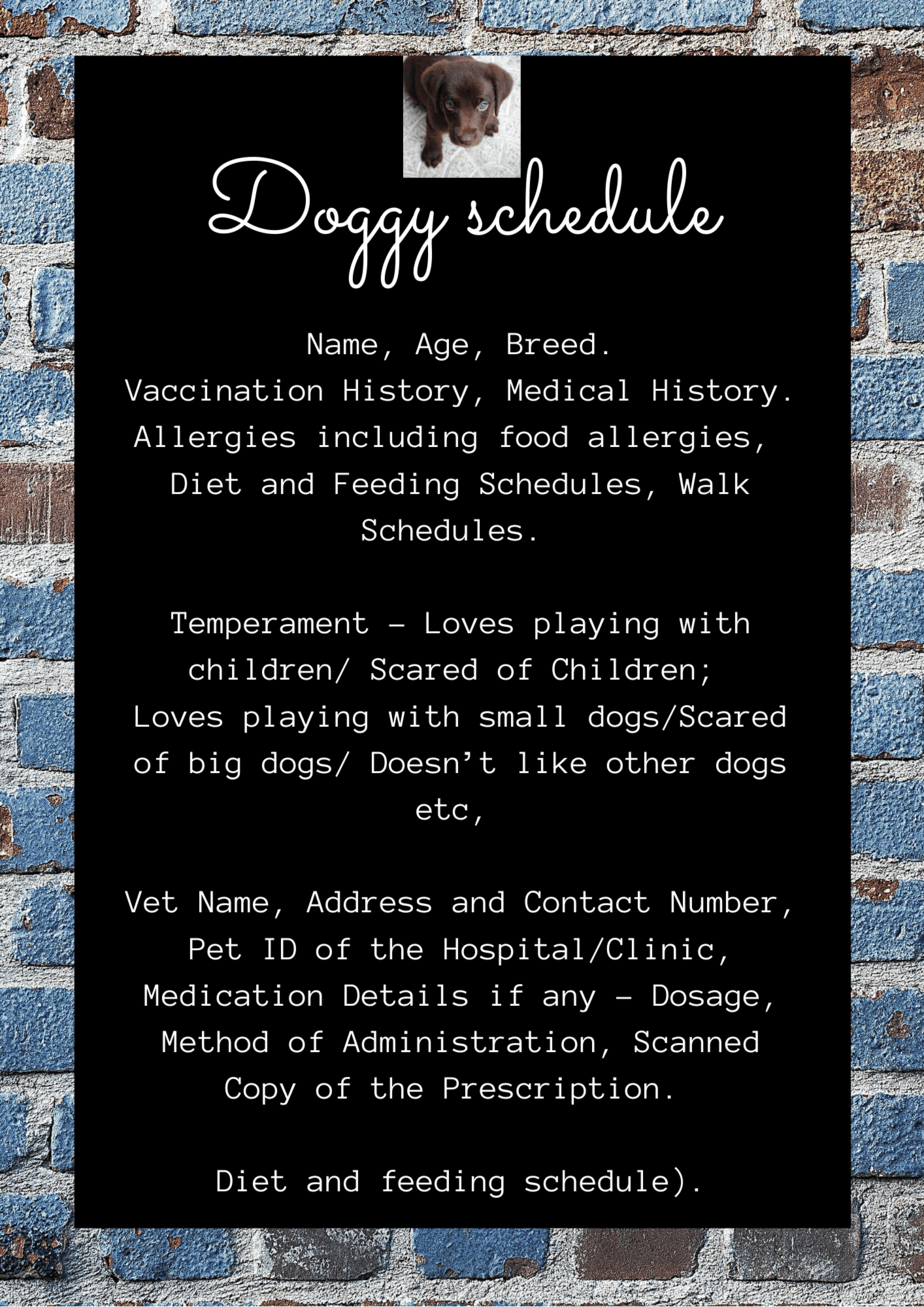
1. Create a pet database with all essential details : (refer to the picture)
2. Ensure that your pets are free of fleas and are dewormed in the last three months.
3. Ensure that all vaccinations are up-to date.
Ensure that you pet has a ID tag with all details – Name, Address, Phone number.
4. Ensure that your pet’s bedding and linen are clean.
5. Pack a fresh pair of linen/bedding along with a separate set of pet’s bowls, and in case of emergency.
6. Reach out in the neighbourhood for volunteers to walk your pet, or house pet in case of emergency.
Pet parent in self-isolation
- Reach out to volunteers so that your pet’s daily routine is maintained.
- Ensure that the leash is sanitised before passing it on. If possible leave the leash outside the door, this will reduce contact.
- Wear a double layered mask, open the door and let your pet out without conversation with the dog walker. Stay as far away as possible.
- The dog walker/volunteer, will also need to wear a double layered mask, and sanitise the leash before and after taking the pet for a walk. The same rules apply as above.
Hospitalisation of pet parent
- Identify shelters/volunteers/family/friends before to care for your pet before hand. That way, the transition of handing over your pet becomes easier.
- If arranging for someone to stay at home with your pet, it is important that they sanitise the place before moving in. Keep a list of vendors offering home-sanitising ready.
Role of apartment associations
Here are a few things that apartments/gated communities could do to ensure that pets are cared for in these difficult times.
- Create a community whatsApp group of all dog/cat owners.
- Ensure that pet-friendly policies are adopted, to ensure that the animal is cared for.
- Identify community volunteers from within the apartment and neighbourhood for emergencies.
- Create an accessible pet database that includes all essential details (Name, Age, Breed, Vaccination History, Medical History, Allergies including food allergies, Diet and Feeding Schedules, Walk Schedules. Temperament – Loves playing with children/ Scared of Children; Loves playing with small dogs/Scared of big dogs/ Doesn’t like other dogs etc, Vet Name, Address and Contact Number, Pet ID of the Hospital/Clinic, Medication Details if any – Dosage, Method of Administration, Scanned Copy of the Prescription).
- Ensure that dog-walking is allowed with assistance for volunteers, with due care and precautions. If necessary a declaration of risks can be made available, that can be signed by the volunteer/dog walker.
- Maintain a list of professional dog-walkers, boarding facilities and neighbourhood canine squads, if any.
Note: There is an element of risk associated, and it is important to use your discretion on a case by case basis. However, do remember that it is equally important the pet’s welfare is kept in mind.
The above information was helpful.
However I encounter such situations every day with residents of the building or in and around the building for their woes for my pets. It becomes difficult to protect then at times.
We have a stray dog that sit regularly outside our home but doesn’t ever come in. Can you please guide us for any precautions we must take during covid times. Also we want to know if they can be carriers.