Over the last few decades, the number of private motor vehicles on the roads of Chennai has increased significantly. The increase in the number of vehicles only contributed towards promoting severe air pollution, which had to be controlled. With this in mind, a Pollution Under Control (PUC) certificate for motor vehicles was made a mandatory requirement as per the Regional Transport Office (RTO) Rules. The PUC certificate is an indicator that the emissions from the vehicles are within the permissible limit.
When the PUC certification rule was first introduced, several centres were opened across the city of Chennai. Over the years the number of PUC centres has dwindled, with only a handful of them still functional.
My recent experience in trying to renew the PUC certificate for my vehicle shed light on what ails the system in its current form.
Read more: Mileage, check. Colour, check. Did you check emissions from your new vehicle?
Quest to find a working PUC certification centre
In November, I received a reminder from the Parivaahan Portal to get the PUC certificate for my two-wheeler renewed before its expiry.
After looking for PUC certification centres near where I live and failing to find any, I visited the Bharath Petroleum Bunk opposite the ESI Hospitals in Medavakkam Tank Road, Ayanavaram with the hope that the outlet would be open. Unfortunately, it was closed. When I checked with the bunk employees, I was asked to visit the following day.
I then went to two petrol bunks on New Avadi Road but both did not have this facility. When I checked with the workers, I was directed to the petrol bunks near Pachaiappas College. When I found no PUC certification centres there, I was redirected to the other bunks near KMC Hospital.
A process that should take less than an hour turned into an ordeal. I was left angry and frustrated at the lack of guidance and the lack of functioning centres. After many failed attempts, I was finally asked to visit the Indian Oil Corporation Petrol Bunk on Spurtank Road where I found a PUC centre that was functional. I waited an hour to get the certificate renewed and the process was finally complete.
Issues with the PUC certification system in Chennai
A chat with the official manning the PUC centre illuminated why there were so few working in the city. The business was no longer lucrative or viable given the very high costs involved. I was told the equipment used for testing the vehicle cost around Rs 7,00,000/. In addition to the capital cost, the monthly rental for the centres worked up to Rs 15,000 on average, along with this came salaries and electricity bills.
With very few people choosing to get their vehicles certified, it was impossible to run a PUC certification centre profitably. The few PUC centres which are still functional are being run by the petrol bunk owners themselves who did not have to pay additional rent or salaries.
I also came across another PUC certification centre at the Bharat Petroleum Bunk at Ayanavaram, where I had gone initially. The operator said that the centre was closed on Sundays but functioning on all other days. They close early on days when there are very few vehicles that show up for checks.
Read more: Ignorance, corruption or lax policing: What ails PUC checks of Chennai’s 54 lakh vehicles?
Little to no checks for PUC certification in Chennai
A vehicle plying without a valid PUC certificate is liable to be prosecuted under Section 190(2) of the Motor Vehicles Act and may lead to imprisonment of up to three months or a fine of up to ₹10,000, or both.
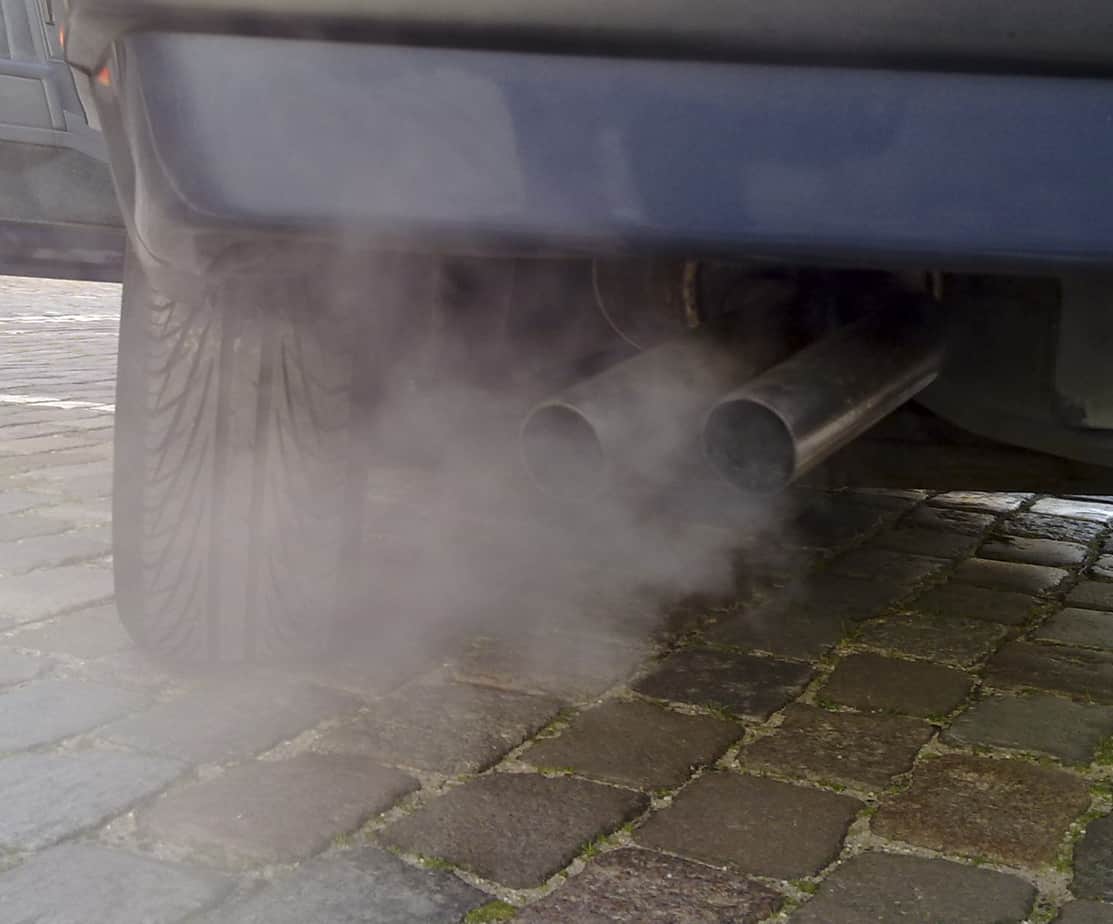
Checking if the vehicle’s tailpipe emissions are within the permissible limits is an important step in combating air pollution. The enforcement agencies who are supposed to check if the commuters have all the documents in place during their routine audits have been very lackadaisical.
While PUC Certification Rules are being enforced strictly in cities like Delhi, there are little to no checks in Chennai. The routine checks being conducted by the Traffic Police or the RTO Officials is limited to looking for licence, insurance and registration.
There is no mechanism for checking whether the vehicles whose PUC certificates have expired are in use. It can be checked only at the time of refuelling the vehicle, renewing the fitness certification or during the enforcement drives which are carried out by the authorities.
A fix for the broken system
It would be advisable to make it a mandatory requirement for dispensation of petrol or diesel at the petrol bunks only upon submission of a valid PUC Certificate for the vehicles which have been fitness certified.
If the Road Transport Authority wishes to enforce the new traffic laws in letter and in spirit, they must first ensure all the required infrastructure is put in place and it’s fully functional. While sending reminders, it would be very helpful if details regarding the nearest PUC certification centres which are still operational can also be included.
It is also important to go beyond the basic PUC test to curb vehicular emissions in the city.
The Road Transport Authority should look at introducing more advanced systems like remote sensing, roadside capture of the range of pollutants from vehicles passing by and better profiling of emissions from different types and ages of vehicles.
Clear policies on this would help save the time and effort of conscientious commuters and also keep emissions from the growing number of private vehicles in check in Chennai.