Public transport in Mumbai has a reputation for providing long, arduous and uncomfortable commute, but some transport authorities in Mumbai have tried to change that.
Without an iota of doubt, we can proclaim that multitasking is a common, inevitable feature of modern urban life. The pandemic has lent further credence to the fact. Instead of being alienated individuals going through the routine motion of daily travel, commuters are now looking to engage themselves to reduce distraction and enhance the enjoyability of their ride to and from the office.
Specifically, in current times, they would love to to utilise their travel time in a “productive” manner too. They prefer public transport over a private vehicle or a carpool if they can use the travel time more effectively, both professionally and personally. For example, the availability of air conditioning, and electric plugs for laptops or tablets helps the commuter engage in productive activities.
There are multiple empirical studies demonstrating the potential of multitasking proclivity to reduce the disutility of travel time. A study done by Malokin et al in 2021 revealed that young adults are found to have a lower value of time travel (VOTT) than older adults for both in-vehicle and out-of-vehicle travel time, and a higher willingness to pay (in time or money) to use a laptop, and the propensity to multitask. NITI Ayog’s perspective paper on Transforming India’s mobility also talks about commuters’ demand for seamless travel experiences. KPMG’S report on Reimagining Public Transport in India highlights changing trends in consumer preferences.
The Navi Mumbai Municipal Transport (NMMT) seems to have woken up to this reality and facilitates a commute that is inclusive and personally gratifying. They recently introduced two initiatives that make travelling an enjoyable experience for the common public, and one that is comfortable for people from all social strata.
Read more: Why are Mumbaikars averse to AC local trains?
A reimagined public transport experience
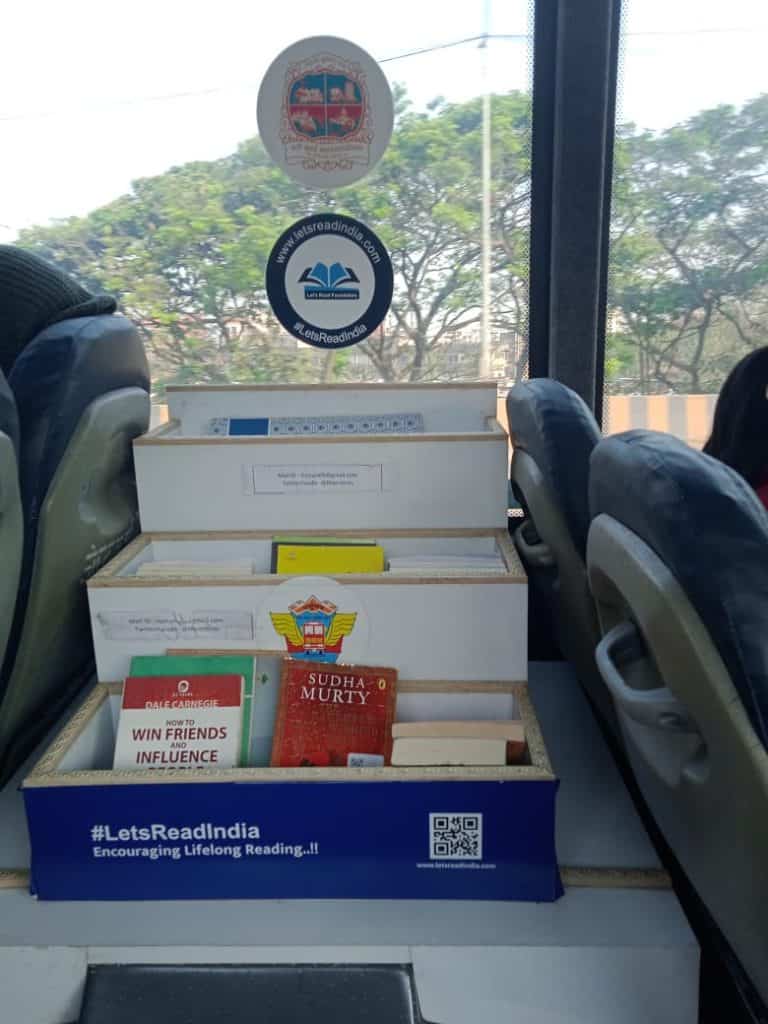
NMMT has collaborated with Let’s Read Foundation to offer mobile library service in Air Conditioned Buses plying from suburbs/ nodes in Navi Mumbai to Mumbai City, so that commuters can pick up their favourite book and read during their journey. The foundation is proposing to add a QR code which passengers can scan to read their favourite book or to hear audio books. I read a few books personally during my journey such as Ikigai: The Japanese secret to a long and happy life by Hector Gracia. I found this particular journey to be quite satisfying.
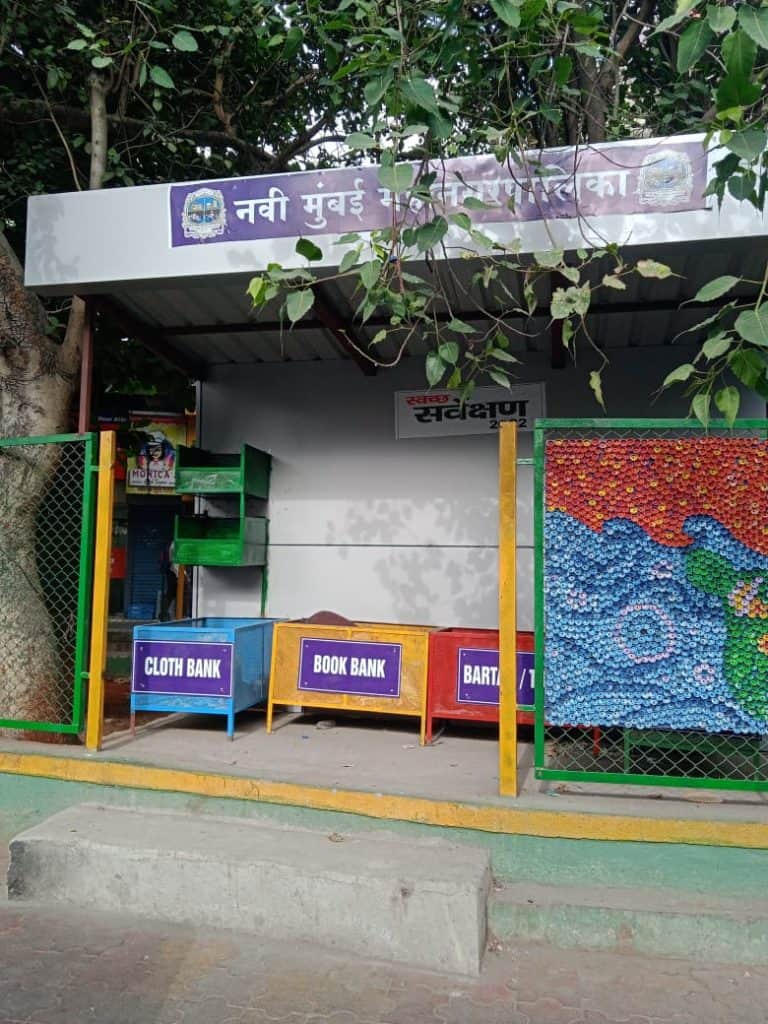
In certain bus stops such as Nerul LP, NMMT has installed facilities for commuters and the general public to deposit used/new clothes, books, food and other items which can be used by anyone who needs it. Several passengers who are socially conscientious use this facility and participate in the social outreach efforts of the municipal transport. This makes their ride not just productive, but also purposeful.
Such initiatives are most likely to become more organised and relevant in the years to come. The amount of time previously spent while waiting for transport or actual travel will now become meaningful through such planned services.
Transport planning has been a state responsibility and the services are entirely planned and delivered by the state transport agencies. However, public/commuters engagement in the planning process will help in designing a participatory plan.
This context also underlines the need for opening forums to invite participation from commuters and making sure that their evidence-based and valuable recommendations are utilised in transport policy and engagement planning. This will help establish public transport which not only ensures safe, reliable and comfortable experiences, but also productive and purposeful journeys.