The term of the municipal councillors of the Brihanmumbai Municipal Corporation (BMC), India’s richest civic body, came to an end in March 2022. With elections delayed, control of the corporation fell into the hands of Commissioner IS Chahal. With him at the helm, BMC had its second administrator in decades.
It has been nearly a year now since the elections have not been held and Chahal continues to run the corporation without a body of public representatives or a mayor. This meant that the municipal commissioner not only drafted the 2023-2024 civic budget but also personally presented and approved it as the administrator.
Read more: Party offices in BMC headquarters sealed, but why were they there at all? – Citizen Matters, Mumbai
With a number of crucial infrastructure projects in the pipeline, some of which were controversial, and a display of mistrust in him by former corporators, what is certain is Chahal’s tenure as an administrator has not been an easy ride.
In his book The Cousins Thackeray, author Dhaval Kulkarni explains how the Congress government, in March 1984, introduced a bill that granted them the authority to override the elected representatives in the BMC and appoint the municipal commissioner as the administrator instead.
The bill was pushed through in spite of the opposition from politicians across party lines. And, on 1st April, 1984, DM Sukhtankar became BMC’s first administrator in the 107-years existence of the civic body.
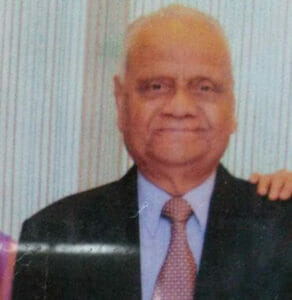
Below is an edited interview with him:
You were the first administrator in BMC’s history. How was that experience?
For me, not having an elected body, its committees or individual members (Corporators) was an unprecedented and unusual situation that ought not to have happened. It was brought about by short-sighted politicians who believed that if elections were held, their party, the Indian National Congress, would not secure a majority. They wanted to buy time in the hopes that their party’s popularity would recover.
However, they did not consider the backlash from failing to hold elections. The BMC at the time was an exceptional municipal body with a decades-long tradition of holding elections as scheduled.
How did you ensure the smooth functioning of the municipal corporation during your tenure as administrator?
When the elections were eventually held, the Congress party suffered a loss. Their calculations proved to be disastrously incorrect. I foresaw the consequences of not holding elections on time and acted in an objective, neutral, and non-partisan manner in absence of elected Corporators.
I remained accessible to all the former Corporators as and when they wanted to meet me to convey any grievances or suggestions of their voters. I refrained from making any decisions regarding changes to the existing municipal tax and service charges rates. I also avoided making any decisions with long-term financial or other consequences.
My goal was to provide basic civic services to Mumbaikars in an uninterrupted and efficient manner till elections were held. I was transferred after seven months.
Today, the BMC is again functioning under an administrator. It has been about a year that we do not have elected representatives. How does it impact lives of Mumbaikars?
I don’t think there has been any noteworthy difference or change in the daily life of Mumbaikars under the current BMC administrator. His tenure, I believe, will be relatively short as elections will be held sooner than later. To my knowledge, many still approach their former corporators to intercede with the municipal administration on their behalf to address their grievances.
Read more: Understanding Mumbai’s municipal corporation
There is a lack of trust expressed by former corporators on the decisions taken by the current administrator. Did you face such a challenge? How did you ensure transparency?
To the extent I can recall, I did not have to face any such situation where former Corporators expressed lack of trust in the decisions I took as an administrator. This was mainly because those decisions were of a routine nature and in the normal course of things. In any case, the lack of trust expressed in the decisions of the present administrator appears, to my mind, to be having political overtones and is more imaginary than real.
In my interaction with some of the officials within the BMC, there is a sense that the higher ups do not feel the necessity of municipal councillors. How do you respond to this?
If one has trust in the democratic system of functioning, as one should, how can they wish away the existence of municipal councillors and the important role they play as elected public representatives? Let us not be carried away by whatever may be the wrong or improper acts of elected representatives in the past. Can one say that all officers/bureaucrats are angels and always do everything right and proper? We are all human beings, with our own failings as well as good attributes/qualities.
How difficult is it to frame the budget without a standing committee and how do you look at BMC’s call for public suggestions on budget?
The framing of the Budget Estimates is essentially an administrative exercise routinely performed every year and the Standing Committee has no role in it. BMC’s initiative where calling for suggestions from the public is a welcome and praiseworthy.