Mumbai’s slum residents will be able to buy a house for Rs 2.5 lakh
The Maharashtra government will provide housing to slum dwellers residing in Mumbai who live in hutments built before January 1, 2011. They will be charged a sum of Rs 2.5 lakh in return. A government resolution (GR) regarding this was issued on May 25th. According to the existing laws, individuals residing in slums built until January 1, 2000, are legally protected and cannot be evicted without being provided a free tenement.
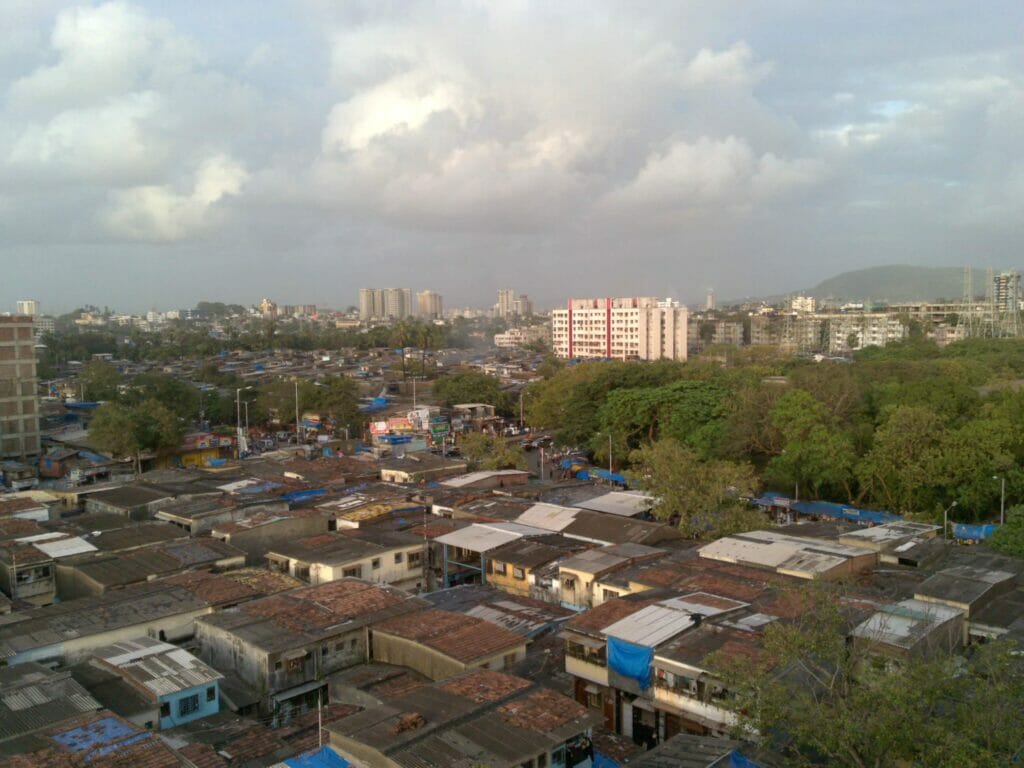
In 2018, the previous Devendra Fadnavis government made the decision to offer housing to eligible slum dwellers by charging them the construction cost. When Uddhav Thackray assumed office, a committee was established to determine the construction cost. In March this year, the committee concluded that the final amount would be Rs 2.5 lakh. Officials state that there are only 2,500 “ineligible” slum dwellers in Mumbai.
Source: Hindustan Times
Building a wall on 812 acres of reserved forest land in Aarey
A boundary wall will be constructed by the state public works department around the recently designated 812 acres of reserved forest in Aarey Colony. This wall, measuring 1.9 km in length, will serve as a separation between the reserved forest and other areas of Aarey.
The height of the wall will range from 1.5 to 2 meters, and its construction cost is estimated to be Rs 3.3 crore. The wall is meant to protect the forest from encroachment by humans. Officials believe that it will not impede the movement of leopards. The land is currently managed by the forest department, and four guards have already been stationed there.
Source: Times of India
Read more: Aarey: Did you know this forest also has a film city, garden, hospital and more?
Illegal posters along the route of metro line 7 and 2A
Political posters welcoming Chief Minister Eknath Shinde and Deputy Chief Minister Devendra Fadnavis, alongside non-political ones, have been illegally pasted on the pillars of metro lines 7 and 2A. According to the Metro Railways Act of 2002, this is an offence punishable with a six-month imprisonment or a fine of Rs 1,000.
Since the start of metro line 1, the issue of illegal stickers on metro corridor pillars has persisted. It reaches new heights during festivals and removing such posters and stickers proves to be a challenging task due to the strong adhesive used.
Source: Mid-Day
Mumbai hospitals to start preparations for monsoon diseases
The BMC health administration recently conducted a meeting during which a decision was made to allocate 3,000 beds in BMC’s super-speciality and suburban hospitals for patients diagnosed with monsoon-related illnesses such as dengue, malaria, leptospirosis, fever of unknown origin, and others. The civic body has instructed hospitals to establish a monsoon out-patient department by the first week of June.
Over the past 10 years, civic officials have been setting up dedicated monsoon wards due to the significant surge in patients seeking medical care in Mumbai’s hospitals between June and September each year.
Source: Times of India
Read more: How BMC takes care of public health when it rains
KEM to construct new 16-floor diagnostic facility
Mumbai’s KEM Hospital is planning to construct a new 16-floor building that will provide all the diagnostic facilities under one roof. The new building will also have a demonstration room, lecture hall, visitor’s room, theatre, and medical and general stores.
At present, diagnostic facilities within the current premises are scattered and patients have to run around from pillar to post for sample collection and report retrieval. Many from across the state visit hospitals like KEM in order to receive quality and affordable treatment. However, this has also led to the facility being overburdened with long waiting lists for a variety of tests. Instead of waiting and spending further on living expenses, patients who have travelled long distances end up getting their tests done at private facilities that have cropped up in a large number nearby KEM.
Source: Mid-Day
Compiled by Eshan Kalyanikar