They run into multiple pages. The “lockdown relaxation” notifications that greet citizens of Karnataka every week or other. But even with this prodigious verbiage, they fail to impart any clarity on what is sought to be conveyed.
This lack of clarity can be observed in local WhatsApp groups being full of questions like “But does this mean I can’t do this ?” in the days following publication of the notification.
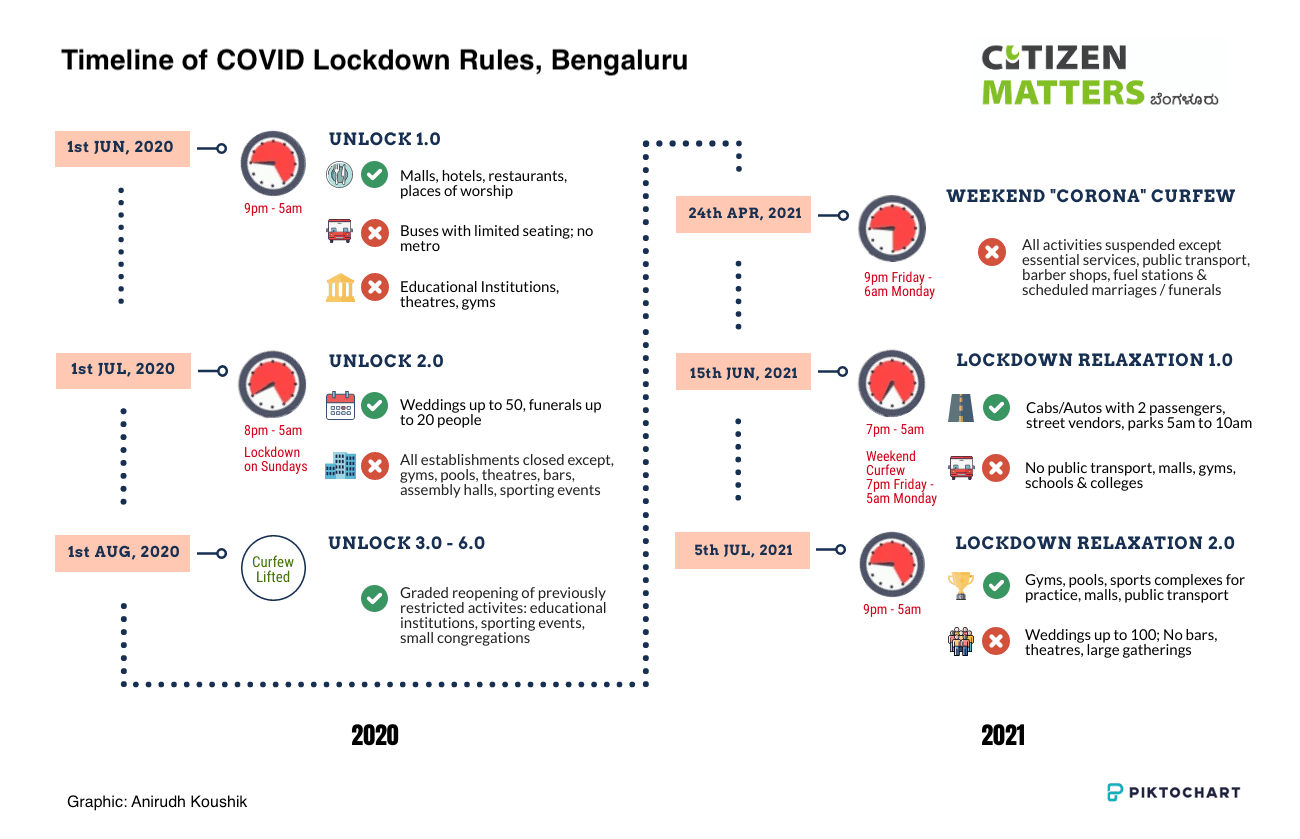
The problems in these notifications can be divided into four main categories:
- The “Spock” category (“Illogical, Captain!” for Star Trek fans)
- The “Unenforceable” category
- The “head-scratching” category (Or “what the heck does this mean?”)
- The “deliberately woolly” category (can mean anything you want it to mean).
Let us take some concrete examples:
No logic please – we are the government!
In the latest circular titled “Guidelines for ‘Surveillance'(sic), Containment and Caution” (GO No RD 158 TNR 2020 dated 03-07-2021) we have the following list of prohibited activities:
Theatres/Cinema Halls and Pubs. – The strange part of this prohibition on pubs is that “Restaurants” have not been prohibited. Neither have “Bars”. According to Karunakar Hegde, the Vice President of the Federation of Wine Merchants’ Associations of Karnataka quoted in ‘The Hindu’, CL Line license holders are now permitted to serve hard liquor and bottled beer up to 9 pm in the night but RVB license holders like pubs and microbreweries are not allowed to open. This results in a bizarre conundrum – the only way to justify this logic is if we presume that draught beer spreads Covid-19 while bottled beer does not.
Another strange item was the weekend curfew, which luckily has been withdrawn now. The Government has consistently resorted to a “Weekend curfew” from Friday evening to Monday morning. Permitting a set of businesses to work five days a week but not the 6th day does not appear to add any Covid-19 protections while hobbling the ability of these businesses to operate effectively. Since when have we all adopted the 5-day week?
How do the poor police enforce these kinds of laws?
In previous circulars, many offices were allowed to function with “50% attendance”. Some earlier lockdown versions mentioned “Essential industries”. The list of such Essential Industries was revised every other day largely in response to some lobby group or the other pushing for their industry to be exempted from lockdowns.
So how is a police officer on the road supposed to know whether you are part of the “50% allowed” or whether you are part of the 50% that should be home? How is he/she supposed to figure out whether the Industry you are working in is “Essential” or not?
Whatever it may mean – it is up to you. Or the cops!
In the latest July 3rd Circular, there is this gem about Religious places – “Religious places are allowed to open only for Darshan. No Sevas allowed”.
Setting aside the obvious illogic toward specifying norms only for Hindu religious places since the words “Darshan” and “Seva” are uniquely associated with temples, the following questions arise.
- Is an ‘Arati’ a ‘Darshan’ or a ‘Seva’?
- What are the rules for, say, a Church ? Is a Mass a ‘Seva’?
- What are the weekly Friday prayers at a Mosque to be considered as?
The desire to over-specify and over-control has resulted in a fine mess.
Deliberately left woolly – and as woolly as possible
In previous versions of the lockdown restrictions, the words, “essential shops”, or “shops selling essential items” were used liberally. Yet the word “Essential” itself was left undefined. Consider this:
- Some stationery shops were functioning freely on the grounds that stationery is essential.
- Shops selling inner wear chose to open and challenge police trying to shut them down by arguing that inner wear was ‘essential’ too!
- Large supermarket format stores that have ‘essentials’ as well as ‘non-essentials’ were open – how do you restrict purchase of non-essentials from these stores?
- The restriction on ‘Essentials’ was also applied to e-commerce operations in order to provide a level playing field between physical stores and e-commerce platforms. Needless to say, in addition to being woolly, it is practically impossible to enforce such restrictions on e-commerce platforms.
So what is the answer?
There is simply no excuse for continuing to produce poorly drafted communications that do not serve the purpose for which they are issued. Some steps that Government needs to adopt include:
- Simple tables listing what is allowed and not allowed.
- Fewer exemption categories, and exemptions to be unambiguous and clear.
- Citizens groups, RWAs, Trade Associations, Chambers of Commerce etc to be involved in drafting – not to lobby but to clean up language.
- Avoid unscientific prohibitions just because some people in the government have their own pet biases.