KAVERI 101 – calculating water sharing based on actual inflow

  1. See the map to Identify the 4 major reservoirs in Karnataka : Hemavathy, Harangi, KRS and Kabini. Inflows and Outflows to all 4 reservoirs are monitored and known and this forms the basis of all calculations
  2. The river flows into TN and at Biligundlu there is a measuring station that tells you how much water flows into TN from Karnataka
  3. The water that flows into the river downstream of KRS and Kabini is measured at Biligundlu, is expected to flow in from about 22,000 sqm and in an average year can contribute about 80TMC.
  4. About 740TMC is the total water that is expected to flow into the river (from all states)
  5. Of this the following allocations have been made (the states are entitled to the following volumes of water
    1. Kerala: 30TMC
    2. Karnataka: 270TMC
    3. TN : 419TMC
  6. The total inflows into the river from Karnataka is 462TMC. Of the 462 TMC, Karnataka can keep 270TMC for itself and has to give TN 192 TMC (this is measured at Biligundlu). For the purpose of this post, we assume that the basis of this split is agreed upon (270 keep, 192 give)
  7. So if you see the only real numbers that matter are, irrespective of rainfall across the catchment, based on the total inflows in Karnataka,
    What Karnataka keeps                                           270
    —————————–                          =              ——
    What Karnataka gives TN                                      192
Hence if the total inflows in Karnataka was 100TMC, Karnataka can keep 58.44 TMC and send to TN 41.56TMC. Hence one would not need to base it on the % rainfall deficit/surplus – but on actual inflows. The inflows can be measured on a daily basis, the corresponding keep and give numbers calculated and released at some predetermined/useful frequency. It seems fair? And simple?
 
Now the inflows to/from all reservoirs are known, the additional inflow from 22,000 sqm at Biligundlu is also known. This should make the actual sharing numbers even in a deficit year – a reasonable and clear calculation.
 
Thanks to zenrainman’s FB post on the same topic for a slightly more elaborate description. And if you ask whats TMC ? That for another post 🙂
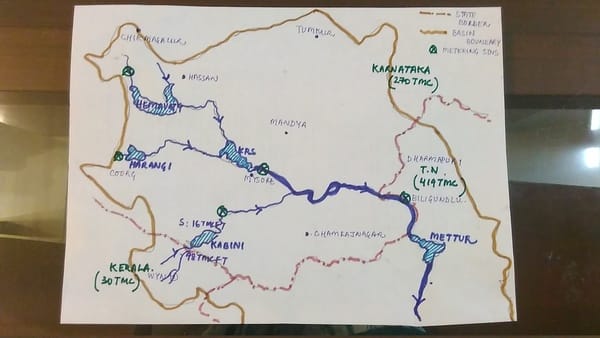
The flow of the Kaveri till she reaches Mettur

The flow of the Kaveri till she reaches Mettur

Leave a Reply

Your email address will not be published. Required fields are marked *

Similar Story

Information for voters in Virugambakkam constituency

Voters in Virugambakkam, find details about your incumbent MLA, past constituency voting patterns, and candidates this year.

Table of contentsPolitical Representation 2021 polling snapshotPrevious Results: 2021Previous Results: 2016Incumbent MLA: AMV Prabhakara RajaMLA in the mediaKey citizen demandsAlso read Located in south-western Chennai, Virugambakkam Assembly constituency is majorly a residential neighbourhood. A fast growing area, it is also home to one of the largest fruits and vegetable markets in Asia, Koyambedu Wholesale Market Complex, and the Chennai Mofussil Bus Terminus (CMBT). The constituency has a mixed urban profile, comprising middle-class households, daily-wage earners, and members of the film industry. Virugambakkam was formed in 2009, carved out of Villivakkam and Alandur constituencies. B Parthasarathy of DMDK became the first MLA…

Similar Story

Information for voters in Anna Nagar constituency

Voters in Anna Nagar, find details about your incumbent MLA, past constituency voting patterns, and candidates this year.

Table of contentsPolitical RepresentationCandidates for 2026 PollsTop candidates2021 Polling snapshotPrevious Results: 2021Previous Results: 2016Incumbent MLA: MK MohanMLA profileKey citizen demandsAlso read Located in the north-western part of Chennai, Anna Nagar was named after former Chief Minister CN Annadurai. Formerly known as Naduvakkarai, the residential was developed by the Tamil Nadu Housing Board in the 1970s. Characterised by a grid-layout of seven major avenues, this area boasts wide roads and designated green spaces.  Populated by the majorly upper-middle class, this constituency contains planned neighbourhoods. It also has three major metro stations, and is proximal to Koyambedu and CMBT bus stations. As…