Patriotism has 3 colours – and green is one of them! So let our celebrations be green!
That is the key message of the introductory poster of the #GreenPatriot series we put out this week through Beautiful Bengaluru – a citizens’ initiative which focuses on clean, green, safe living. Our extended name Beautiful Bharat for campaigns of national relevance brings more focus to an important subject for the whole country.
With each passing festival and event, there is an urgency to focus on what we can simplify, do better, how we can go greener, and most of all, how our celebrations need not be ones that burden an already stressed planet further. Yes, we must honour our Mother India, but without forgetting our Mother Earth!
Independence Day is a time when Indians across the world celebrate the greatness of our nation. So it is the perfect time to bring ‘green’ back into patriotic celebrations with this series.
Message 1 of the series: What not to use
No plastic flags, plastic buntings which are banned, nonbiodegradable and no question of their harm to the planet. No balloons either, though they are not banned, they are still not good for the environment. And worst of all huge waste generated at events that include snacks in disposables. So the call to action is: No plastic flags, no balloons, zero waste.
Worse still, discarded flags in mixed waste in dustbins which bring disrespect to the nation and disregard for the planet, ironically in an attempt to display pride in our national flag!
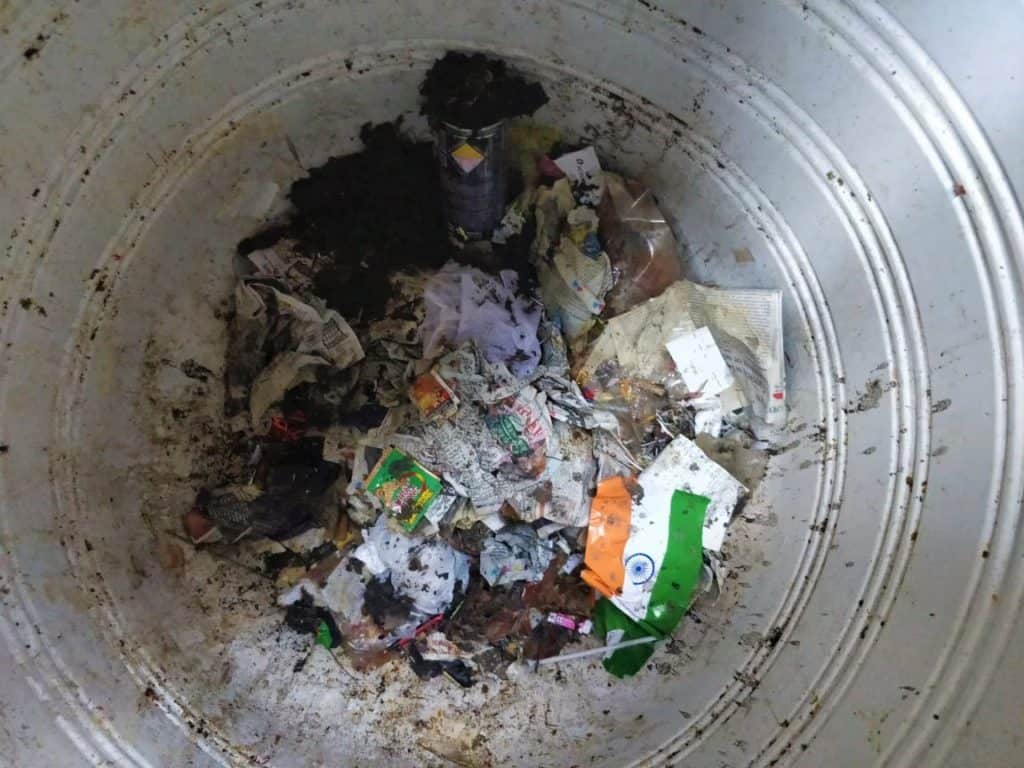
We launched our #NoBalloonPlease campaign with this series, because we realise there is a need to create awareness so that more people realise not just that balloons are not popular to use anymore, but that there are amazing alternatives to these.
Which brings us to Message 2
If you are telling someone what not to use, there needs to be an alternative given and that was the remainder of the series with simple, amazing ideas. Strings of flowers (we even encouraged local flower sellers to sell such tricolour strings) so more people would find the shift easy.
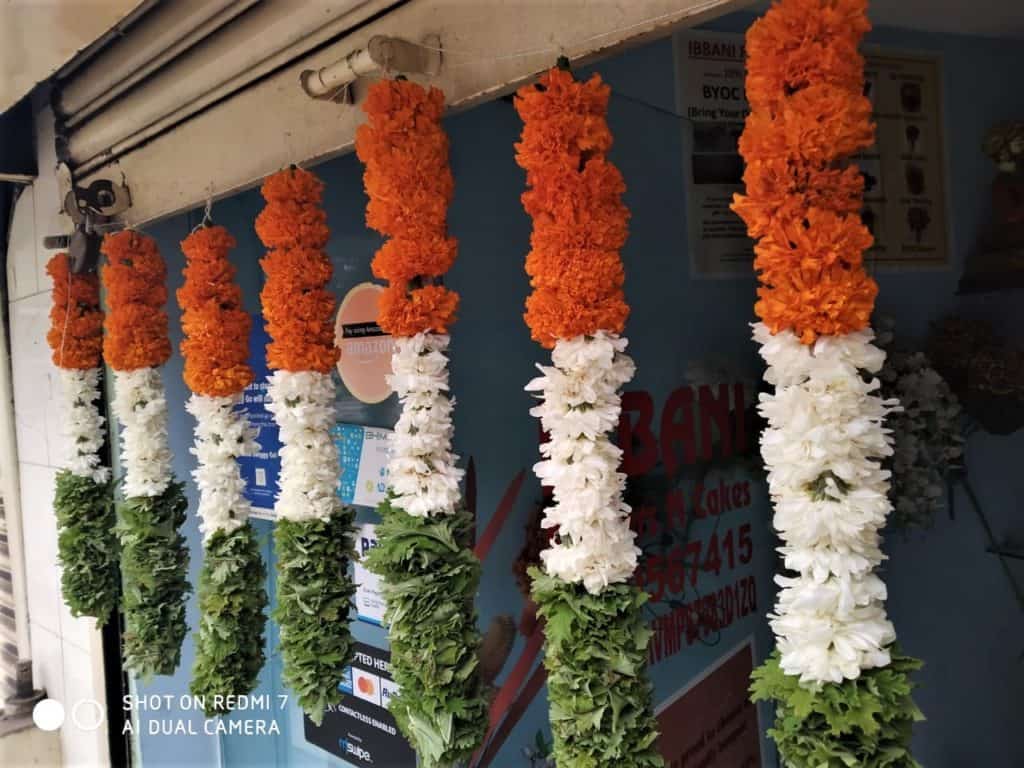
Every citizen in any part of the country can show a picture of such flower arrangements to local flower sellers – and ensure that by January 26th next year, we make strings of real flowers as popular at national events as they are at weddings.
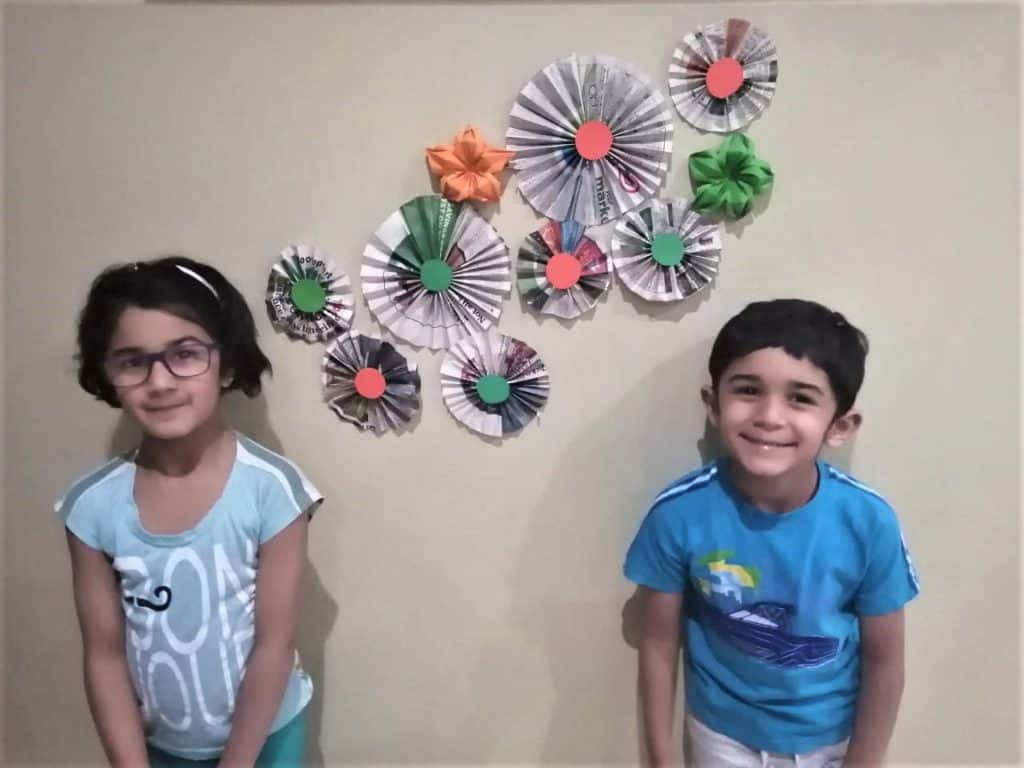
Decorations again can easily be made from newspaper – but ideally carefully stashed away to be reused. If not being reused because they are damaged, they need to be careful segregated in Dry Waste so that they can get recycled. Our posters featured two kinds of newspaper decorations, simple triangle newspaper buntings, or circular wheel decorations.
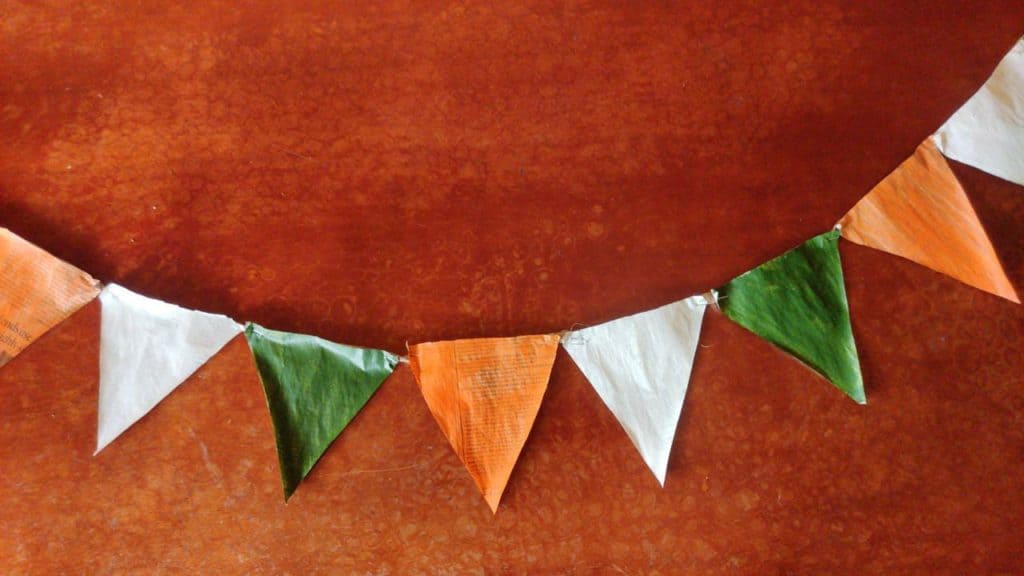
One poster in the set includes simple steps on how to make these. To our delight, within an hour of our message going out, a young boy Anirudh Kamath of Bengaluru made his set and one step better, also made a video that is helping hundreds of children learn how to make it.
You can watch his video here.
We also have pictures coming in from across the world – this is a picture of two children Caitlyn and Chris from South Africa with their handiwork!
My personal favourite for reusable decorations or what I call ‘Sustainable buntings’ made with waste tailor cloth scraps.
First of all, they are reusable; they have a low carbon footprint as they are made from waste which otherwise goes to landfill, plus they prevent waste from disposable flags. Lastly, they are eventually of a biodegradable material, so all factors put together, they are the best kind! It is therefore a wonder why we do not see these being made and used from tailor scraps!
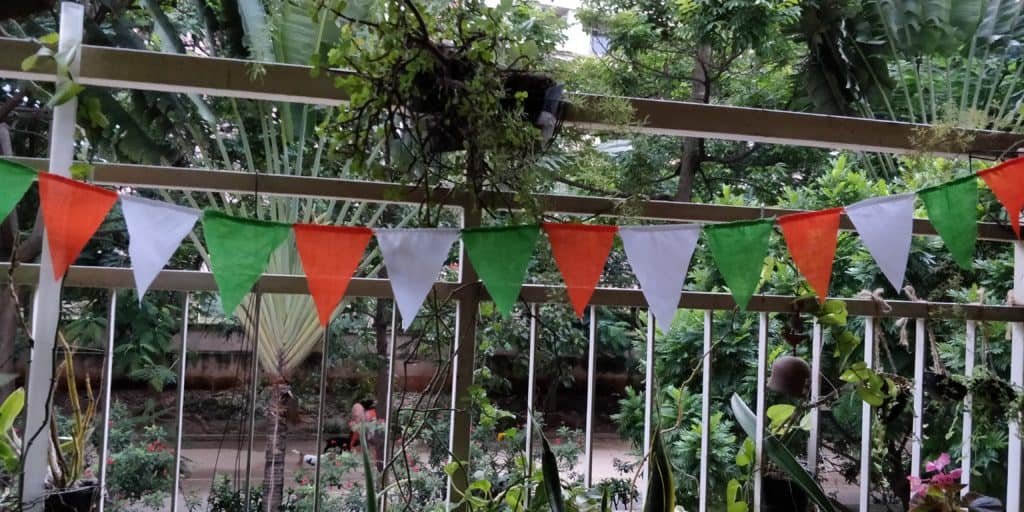
My personal favourite for reusable decorations or what I call ‘Sustainable buntings’ made with waste tailor cloth scraps. The bunting featured here was made by Padmashree Mahesh.
Here’s what you can do – wherever in the country you live, please contact local tailors, get them to make these or give you the scraps and get underprivileged women involved to impact livelihoods as well. Or elders or anyone interested in a sustainable business.
It is a shame that huge heaps of such fabric are wasted by virtually every tailor across the country – whereas we now have a great option of how they can be used. Besides the tricolour flags and buntings, we could also encourage different colours for birthday parties or other functions as well.
To sum up, we need to remind ourselves to celebrate but with minimal waste. If using flowers, compost them after they have brightened your flag post. If using paper, reuse or recycle. But best to shift to cloth because it is reusable and sustainable, so fold and put it away for the next time.
Let’s be proud citizens of our country every Independence and Republic Day. Let’s also be proud inhabitants of a planet that we ensure to care for by leading simpler lives that are kinder to the planet.
We welcome further ideas on how celebrations can be made greener; please mail us at bebeautifulbengaluru@gmail.com