Dear Sir,
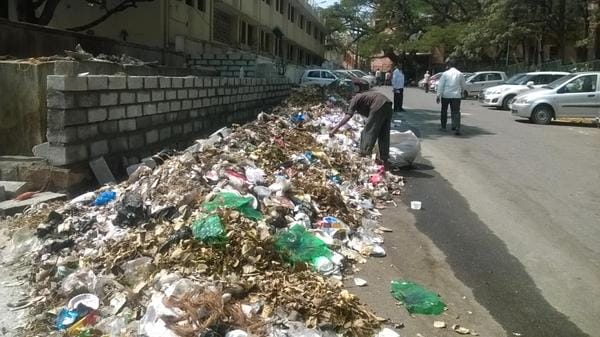
Greetings from CIVIC Bangalore! You have promised the citizens of Bengaluru that you will solve the garbage problem at the earliest. Attached please find recent photos that were taken of garbage being littered in government office campuses in the heart of Bengaluru where the highest officials of government sit.
The first picture was taken in the campus of the MS Building, where many Secretaries to government sit.
The second was taken in the campus of the Sarva Shiksha Abhiyan where State-level officials of the Education Department sit.
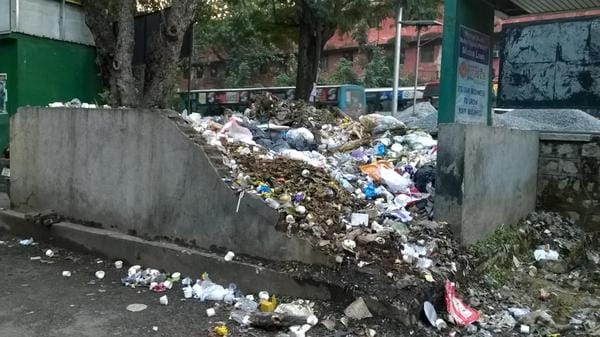
The High Court has issued a directive that all government offices should first start segregating their garbage and collect it and store it as per the Ministry of Environment & Forest Rules of 2000; that garbage should always be collected in a closed fashion; that it should be collected in secondary storage containers at collection points when it is not directly transported to the processing units; that it should not touch the ground and be exposed to the environment. The KMC Act has been amended to say that any one littering should be fined and even arrested. As per this, who should be arrested for this gross violation of the Act, Rules and Court directives in these government offices? The Secretaries to Government and officials of the Education department? Against whom should we file Contempt of Court petitions?
If Education Department officials cannot segregate their own garbage and collect it and store it as per the Act, Rules and Court orders, what will they teach the 70 lakh children in their 40,000 schools across the State about garbage management?
Hoping you will take stringent action to ensure that all government offices in all urban areas of the state become models in following the Acts, Rules and Court orders regarding solid waste management before they try to ask citizens not to litter, fining them and arresting them for littering.
With best regards,
Related Articles
High Court orders Bengaluru to ‘divide and conquer’ the garbage problem
check here how much Bengaluru could be losing because of the Open Garbage dumps decorating the city everywhere
http://forabetterbengaluru.blogspot.in
and why it makes ton of business sense to eliminate them by spending a few 100 crores NOW!
https://docs.google.com/document/d/1Wo2dHVIIuEnTVJPyfG1YBWbRXJnI-k8JDACkDSC9fYQ/edit?usp=sharing