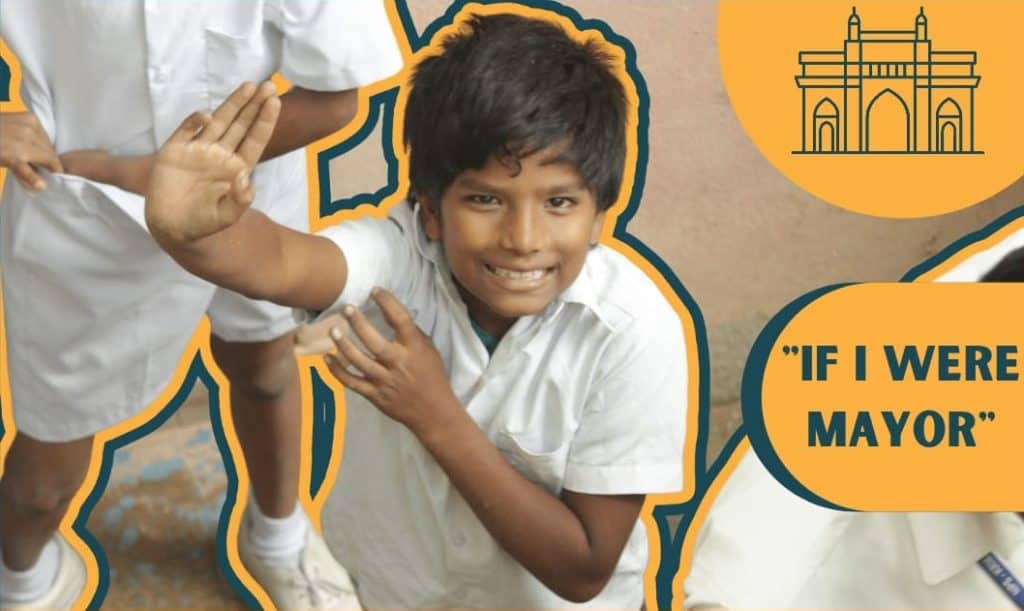
On July 15th, Citizen Matters hosted a City Townhall for participants of the ‘If I were the Mayor‘ contest, held over the months of April-May earlier this year. The contest had been hosted in collaboration with Kuviraa, an initiative that aims to increase political engagement in young girls across India, and Reap Benefit, an organisation that is trying to build a cadre of young people who are problem solvers in their localities through skill building. The contest encouraged children to imagine themselves as the Mayor of Mumbai and highlight key issues they would address.
By May 2022, over 50 entries had poured in from children between the ages of 14 and 19. Entries were encouraged from people of all linguistic and social backgrounds in the form of videos and essays. Students discussed changes to infrastructure and environment, among other issues, and offered detailed strategies for mitigation and implementation.
While winners were announced on May 6th, the July townhall gave all the contestants a platform to voice their opinions and ideas on governance in Mumbai before an elected representative. Ward Corporator Surekha Patil of the R-South ward was present to address the children and engage with them based on her experiences. She spoke about initiatives she had carried out in the Lokhandwala Township in Kandivali and went on to discuss some ideas that the contestants had about improving Mumbai.
Read more: Skill India initiative in Kandivali is helping women become financially independent
Children’s perspectives on being the Mayor of Mumbai
Tanisha Agrawal from Jamnabai Narsee School highlighted the issue of noise pollution in Mumbai, which is more prevalent in some areas than others. She spoke about its harmful effects and suggested ideas to mitigate the problem by introducing infrastructural changes, like more open spaces, installing noise meters in parts of the city which are prone to noise pollution, and generating awareness through social media campaigns and school/college workshops.
Saira Manihar suggested solutions to the education system, which according to her, has failed a lot of students belonging to underprivileged backgrounds. She thinks there should be more schemes and services for students outside of academic institutions, that contribute to their holistic development. She also spoke about the role of communities in providing support to children, as well as their mental and physical well-being.
Some attendees had questions about pursuing a career in politics and political journalism, to which Surekha Patil provided anecdotes from her own journey of becoming a ward corporator. She shared her experience of carrying out initiatives for the welfare of women and children through Skill India initiatives and supporting local anganwadis.
The City Townhall concluded the ‘if I were the Mayor’ contest, which actually sensitised children to the importance of becoming active participants in the development of Mumbai, and taking the initiative to solve issues in their own neighbourhoods. The goal was to engage more youth in civic issues, towards making Mumbai a better city for all.
You can watch the Townhall discussion here: