Tridisha Goswami, a 2021 film school graduate from Deviprasad Goenka Management College, a college in Suburban Mumbai, has now started to apply to social media manager positions at small startups as a way to generate pocket money. All this, thanks to cancellations of film shoots and her having to move to her hometown in Guwahati.
Tridisha is one of thousands of young students who graduated in an economy deeply affected by the COVID-19 pandemic. For such students, a grueling battle lies ahead.
Many find it hard to find their desired jobs, compelling them to look for work other than their preferred careers. For instance, aspiring journalists are searching for copywriting or content writing jobs that are not necessarily satisfying for them but are financially stable.
Graduating online during a pandemic has meant that students have had to balance mental health with work, and many have taken work more seriously to keep busy. Without a doubt, students have been in vulnerable positions, and at the mercy of companies looking for more hands on board.
Read more: Mumbai civic body initiative to help school kids cope with mental health issues
Are Companies Taking Advantage?
Companies that had the hiring capacity to recruit fresh graduates and pay them in the past, don’t anymore. “Most of my classmates are either currently unemployed, or are doing unpaid internships they found through online apps like Internshala,” said Anjali Singh, a 2021 graduate from Mithibai College. “This was not the case when my brother was graduating in 2018; he and his friends got great opportunities to gain real life industry experience.”
Some students do unpaid or lesser paying internships to get started in their careers, because right now, there are too many students and not as many jobs, so companies can get away with not meeting the standard pay slab, due to the lack of competing companies, who generally pay better.
“Even in 2018, many people got jobs through personal networks that they built throughout college, or through help from their parents, but the level of exploitation was evidently lesser as compared to now” Anjali added.
According to common belief, said Dolly Awati, a former professor and industry expert in marketing and public relations “a gap in your CV looks worse than a lesser salary; this feeling is so deeply established in fresh graduates, and understandably so.”
This makes students fall prey to pressure of working a job they don’t enjoy, as they think not working would take away prospective job opportunities.
Finding jobs made accessible to all
However, it isn’t impossible to find good opportunities. During the pandemic, many young artists and concerned folk decided to curate work opportunities for those interested in the creative industry. Pages like Open Call India (Instagram), Freelance Writers of India (Twitter) and Bound India (Instagram) turned into important platforms to share, discuss and learn of work opportunities that are ethical, but not necessarily paid. “It started because I found that not many people were giving artists and creative people easy access to jobs and opportunities online for free. Instagram was an easy platform to navigate because anyone with an account and internet access could use it.” said Sanah Rehman, founder of Open Call India.
Each platform garnered the attention of recruiters, companies and independent artists looking to hire and share their expertise, making it accessible for young students from different socio-economic backgrounds to navigate the creative industry, especially since many new jobs are now remote.
For many people, remote working has brought a better work-life balance, higher productivity, and a more equal organisation design. But, it has also proved to decrease collaboration amongst workers, which is unfortunate for people starting out in their careers.
Students may feel isolated and left out since they’re now expected to navigate remote working without any physical engagement with an in-person work environment, which is especially crucial for careers that are more physically demanding. Going from online education to online working, the pandemic has left a gaping hole in the holistic development of our youth entering the workforce.
Networking made difficult
College provides an environment for like-minded individuals to work together and build relationships that could be beneficial professionally, something that a virtual format does not facilitate.
“There is no official placement department for film students, just alumni Whatsapp groups sending details about gigs like Assistant Directors, Production Assistants etc. for commercial projects. Or it’s mostly students socialising and making contacts while in college itself which hasn’t happened much for my batch especially due to the pandemic,” said a student from Whistling Woods.
Unlike Engineering and Medical Colleges, most Arts and Commerce colleges under the Mumbai University don’t have a very active placement cell, suggesting an unequal distribution of opportunities. It is understandable however, that STEM jobs have a higher demand, but for students that dare to choose careers in the Arts it is much harder to feel secure of one’s skills when there are no opportunities to exercise your knowledge in practical frameworks.
Advertising revenue fell by over 60% as companies cut back on marketing and ad spends. Publications like Scroll.in, The Wire, Hindustan Times and others had to observe lay-offs, furloughs and pay cuts because of decreased funding and losses. Performers whose work was physical in nature had to depend on relief packages introduced by the government for artists.
Theatre artists couldn’t execute plays, so some turned to online productions. Kommune, a city based performing arts platform, has been working to bring elements of drama in the form of dramatic readings and theatre online. The performing arts industry was clutching at the straws to remain afloat during the pandemic.
Premier institutions unfazed
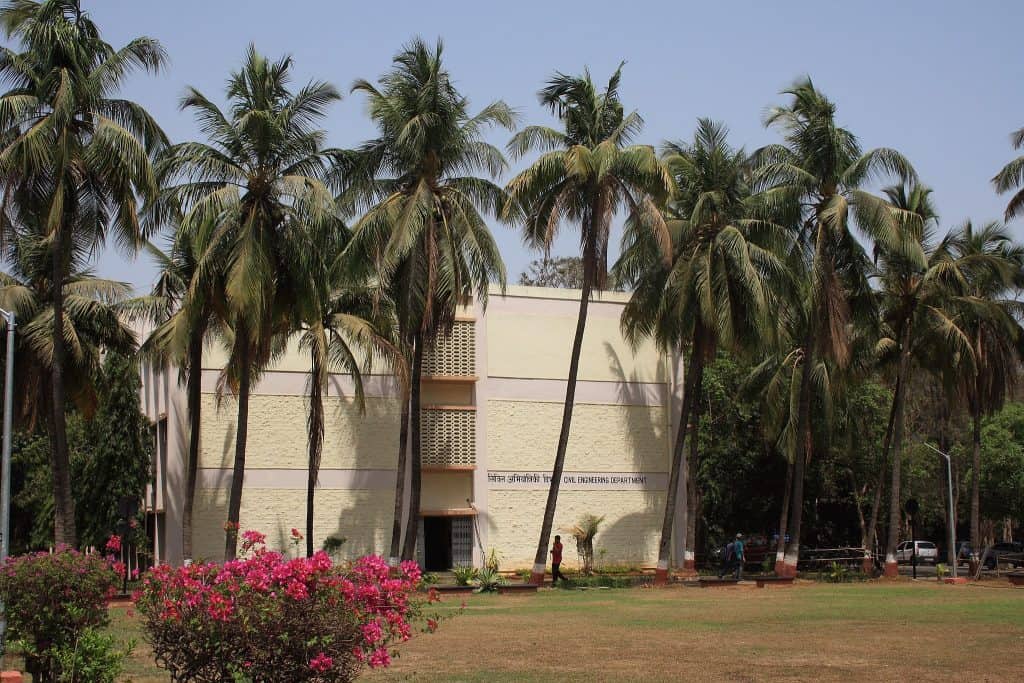
Pic: Arne Hückelheim from Wiki Commons
For premier institutes like IIT Bombay however, the situation is a little different. “To our surprise, there was an increase in the number of companies that registered with us to be a part of the placement process. Going online removed the mobility aspect out of the equation. Associates usually had to fly down from Bangalore or the States to conduct interviews, which was a hassle, and going virtual made recruitment easier and more accessible,” said Rishi Tak, a placement coordinator at IIT-B for the year 2020. “In 2020 there was an increase in the number of participating companies, but the number of hiring companies roughly remained the same. Since everybody did not have the hiring capacity and simply could not meet the expectations of the students in terms of salary.” he added.
Around 1800 students from all disciplines, ranging from Core Engineering, Software Development, Analytics, Product Management to Design and its subsets registered to the placement portal. Roughly 90% of BTech students got placed and 70% of MTech students got placed, rounding up to an average of 80% placement rate. For Design, in the year 2020, the placement rate was 88%. All of these were consistent with statistics from preceding years.
Despite these statistics, the pandemic introduced new challenges even for students from these institutions. “For students that got placed in the year 2019, and had to join work in 2020, life took a hard hit, since for some, joining was pushed to six months from the original joining date, and for a few others, their jobs were revoked altogether due to huge losses incurred by companies due to the pandemic,” said Ishan Azad, placement coordinator at IIT Guwahati for the year 2019.
One such company that suffered massive losses was SHELL; a big recruiter for core engineering jobs like Chemical and Mechanical Engineering. The pandemic, the oil trade war and consistently low demand left their mark on the industry giant, in turn affecting students.
Some jobs in higher demand in the pandemic
Some professions continue to stay in demand despite the pandemic. There is an all time high demand for software developers and UI, UX designers, with over 100% placement rate as people from other specialisations also managed to secure such roles. This is because, it is predicted that a majority of the Next Billion users will be from India. Next Billion Users is a theoretical user economy that will come from large swathes of Africa, East and South Asia, who are still majorly disconnected from the Internet. But the biggest subset of this huge target audience is in India — with over 600 million people who are slowly trickling into the digital world.
But not everyone is fortunate enough to learn these specialised skills. The graduating batch of 2020 and 2021 will enter what will become an extraordinarily terrible labour marker, particularly worse for freshers and those not professionally established yet.
Many offices are understaffed, and the employees that have stayed are overworked, causing severe health issues. The youth will seemingly bear the brunt of this for many more years to come.