With private schools making education unaffordable or inaccessible for many, public or government schools are becoming instrumental in laying the foundation for literacy, numeracy, and engagement for students.
Despite this, there are still issues about their accessibility and reach.
The question of safe access to schools, even within a kilometre’s distance, needs to be addressed. “While we do have schools within a radius of one or two kilometres, the question is how many of them are government schools and accessible to the urban poor? Especially for parents from poorer backgrounds, who cannot take time off to drop their children off or afford transportation,” questions Nomita Sikand, director of Gubbachi Learning Community.
Further, sometimes the roads are unsafe for children, so how do primary school children with siblings in tow navigate them? questions Nomita.
Primary, upper primary education crucial
According to the Unified District Information System for Education (UDISE) report 2020-21, Karnataka had 1.2 crore students enrolled in its 76,450 schools. The state also witnessed a dropout rate of 1.1% among upper primary students and 14% among students enrolled in secondary levels of education, both of which were higher than the national average.
There were reports of dropout rates as well as enrolment being on the rise in India. However, the UDISE report is for pre-pandemic numbers and experts opine that it doesn’t provide a contemporary picture now. “After the pandemic, in Bengaluru, we have seen that enrolment has increased, especially among children who are on the spectrum of learning disability, we have witnessed a higher share of them transitioning to public education from private schools. This is perhaps because either their parents cannot afford it or the schools refuse admission,” says Nomita.
“Typically, while children get enrolled in primary classes, dropouts by the end of Grade 8 is more than 45%, at this stage, the number of girls dropping out is higher due to puberty and location of the high school,” Nomita says. “There are fewer and farther high schools compared to primary schools, so parents might perceive the distance as a threat to the girls’ safety,” she points out.
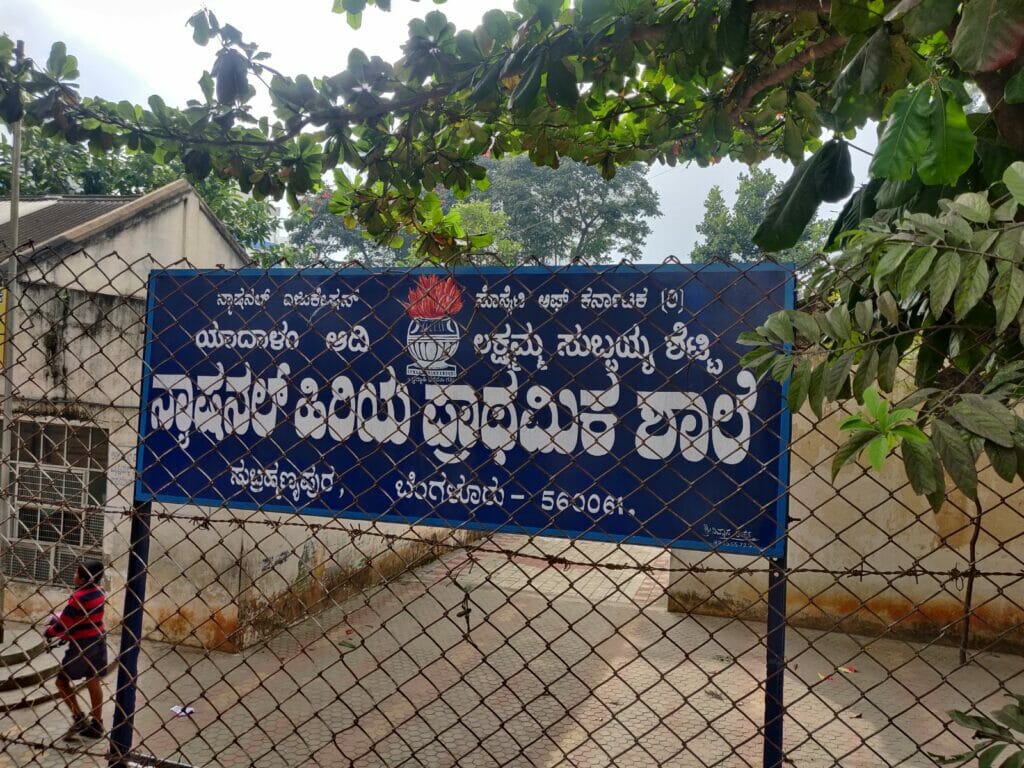
Umadevi N, headmistress of YAS National Higher Primary, a government-aided school in Subramanyapura, claims the dropout rate among students of primary and upper primary classes might be due to the pandemic. “After two years of stilted and discontinuous learning, students in second grade suddenly find themselves in the fourth grade, which makes it hard for them to cope with the newer syllabus,” she says, causing the students to opt out of education.
Read more: The reality of online learning in Bengaluru’s govt schools
Absentees or dropouts?
For the academic year 2022-23, 522 students are currently enrolled from classes 1 to 8, according to Umadevi N. “We don’t have any dropouts as such, they are absent for a few days and then they come back,” she confirms. But how true is this?
Lately, Shruti TM, has registered a lack of interest among her students. “There has been a spike in irregularity. We are trying to contact the parents of students who are irregular by visiting their homes and calling them up,” says the assistant teacher at a government high school in B. Narayanapura. She says the parents are off at work, and the household chores fall on the students. Echoing this, Nomita also says that sibling care is another reason why children cannot make it to school, as the care burden of their younger siblings falls on them.
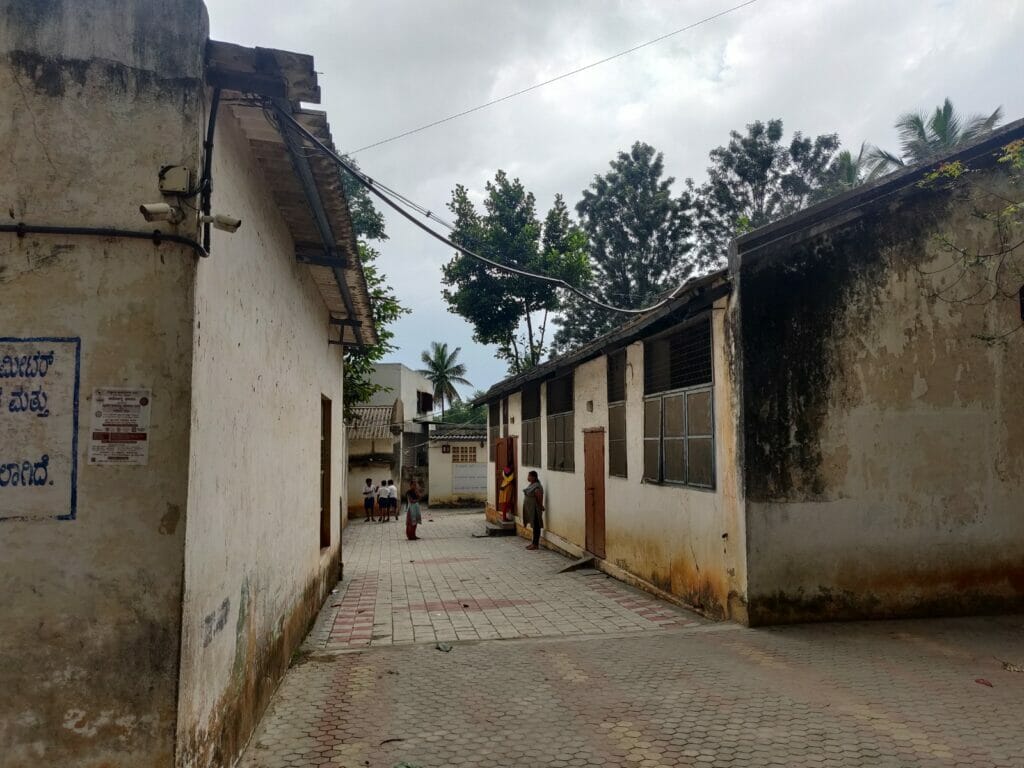
Nomita also flags the increase in absenteeism due to children falling sick due to the city’s changing weather. “The health conditions are worsening, and they are contracting the flu very easily these days,” she adds. These leaves often translate to a week of absence, and when they do come back, there is a gap in their learning schedule.
Long-drawn impacts of COVID-19
Post the pandemic, the dropout rate has reduced by a small margin in the current 2022-23 year, Shruti says. She recollects how, in the past year, more than ten of her students shifted out of Bengaluru and started working. “Once they get used to having an income, they will not come back to class,” she rues. These students end up working in garages, selling vegetables alongside their parents, and a few are also influenced by the money in the city’s hotel management sector.
Read more: What ails Bengaluru’s government schools?
“We are trying to stay vigilant of these irregular students, who will eventually end up being dropouts,” says Shruti. She often finds her students lagging behind while reading and writing and chalks it up to the lessened learning rate in the aftermath of the pandemic.
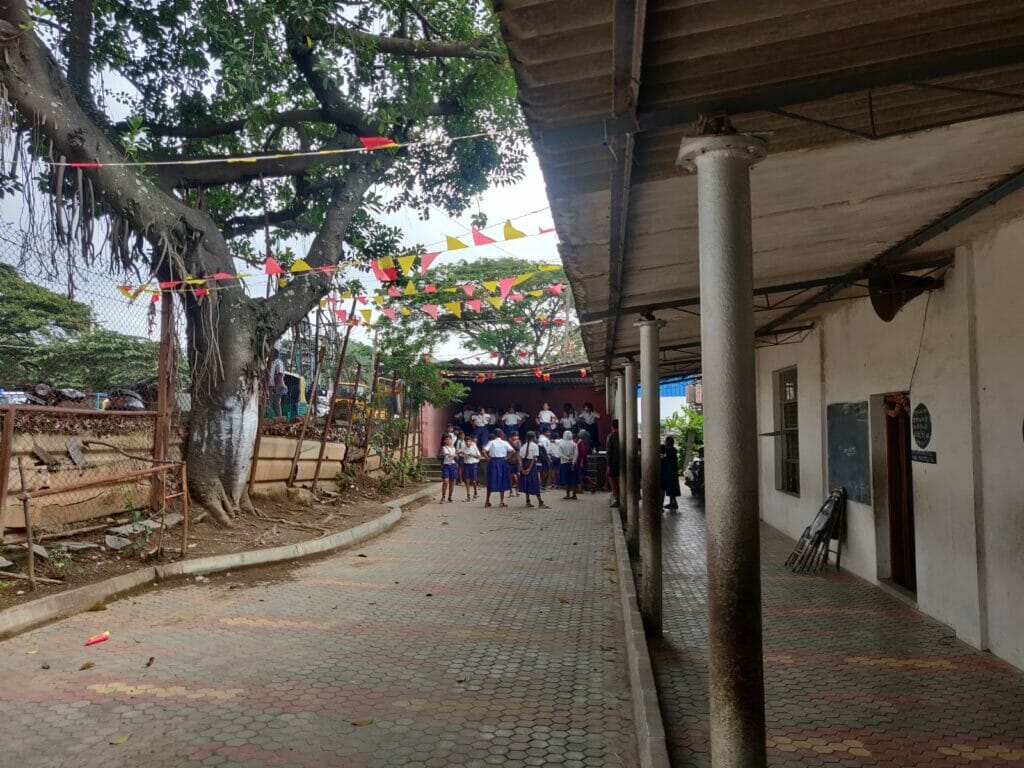
“We had an increase in enrolment of children in the years 2020 and 2021, who were coming from private schools because their parents couldn’t afford the tuition after the pandemic,” says Umadevi.
While the trends have been worrying, teachers are having a hard time retaining students in school. The lack of data and the tendency to shut down schools with fewer students, as Nomita points out, only compounds this.