The much awaited vaccination programme against COVID-19 will begin all across Karnataka on Saturday, January 16. To start with, four lakh healthcare and frontline workers will get vaccinated against COVID-19 when the process begins.
Health minister Dr K Sudhakar informed the media that the state is fully prepared for the mammoth task. Corona warriors including police personnel and rural development department staffers will be administered the vaccine in the initial phase.
As many as 16 lakh people will be covered in the initial phase of vaccination across the State, said Sudhakar, through an audio recording released by his office.
On Tuesday, the State received its first consignment of the vaccine Covishield, as part of the Centre’s vaccination programme. As many as 54 boxes of vials, adding up to 6.47 lakh doses of the vaccine arrived in the city on board a Spicejet aircraft from Serum institute of India, Pune, a press release from the Bengaluru International Airport Limited, said.
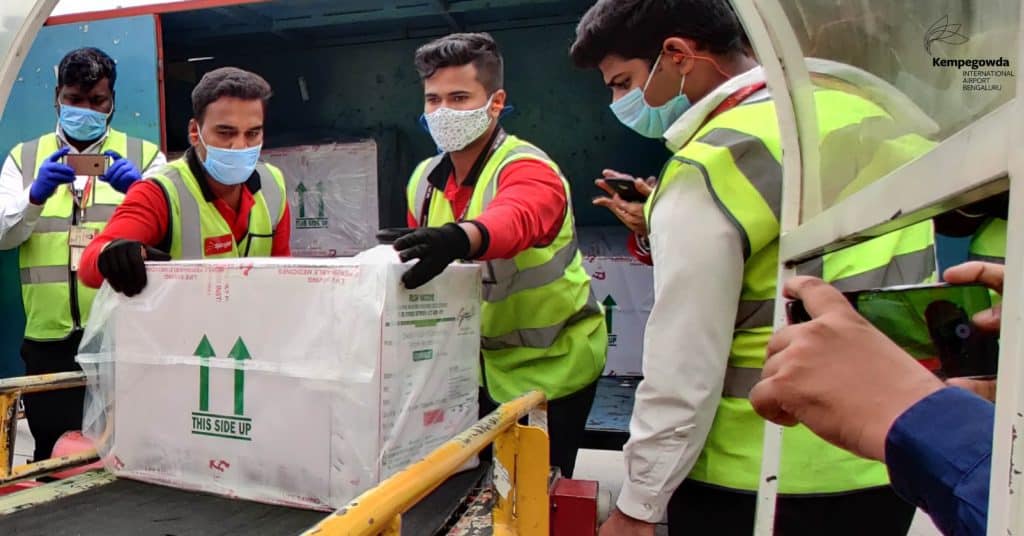
A smaller second consignment of 1.5 lakh doses is expected to arrive in Belgaum before the vaccination programme begins on Saturday.
Four lakh people are expected to be vaccinated with the 8 lakh doses. The vials, are marked ‘not for sale’ and meant only for healthcare workers and those fighting corona on the frontline.
Vaccine in two doses
One vial contains 5 ml, and can be administered to 10 people, Sudhakar revealed. The dose per person is 0.5 ml. A second dose of the same quantity will be administered 28 days after an individual receives the first dose. This will trigger immunogenecity within 45 days of the first dose, Sudhakar, a trained medical practitioner, said.
Immunogenecity is the ability of a foreign substance, such as a vaccine/antigen, to provoke an immune response in the body.
Assuring that clinical trials have ensured the vaccine’s safety, he said the Centre has issued guidelines to watch out for side-effects. Any side-effect would be documented. Those receiving the vaccine will be kept in an observation room for half hour after vaccination, he said.
The Centre had purchased 1.1 crore doses of the Drug Controller General of India-approved Covidshield vaccine, he said after attending a video conference addressed by the Prime Minister. Together, the two vaccines, Coaxin and Covishield would be given free of cost to 3 crore people in the initial phase and the cost will be borne by the Centre.
In the second phase, the vaccine will be administered to people aged above 50 years and other vulnerable groups, the minister said.
Also read: