Viral fever spreads in Chennai
With the spread of viruses like Respiratory Syncytial Virus (RSV), Adenovirus and Influenza virus in Chennai, many residents continue to fall sick with fever, body ache and sniffles.
Officials have said that cases of Dengue and Chikungunya have been lower in comparison to December and January.
However, as other viral diseases have been spreading, some patients see a sudden drop in platelet count that requires hospitalisation, while others require rest and antibiotics. Most of the patients continue to have a cough even after ten days after the symptoms of fever subside.
As this is not common during February when summer temperatures begin to set in , the officials attribute the increase in cases of of viral fever to low temperatures at night and misty mornings.
Source: The Times of India
Read more: Chennai’s mosquito problem needs permanent solutions over temporary fixes
GCC collects over 75,000 kgs of sanitary waste in three weeks
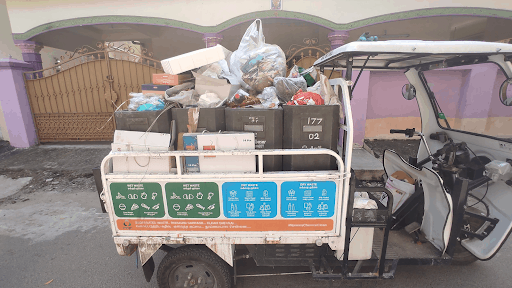
While the Greater Chennai Corporation (GCC) usually instructs the public to segregate household waste into biodegradable, non-biodegradable and harmful electronic waste, the civic body has now started collecting sanitary pads and diapers separately.
Over 75,000 kgs of the sanitary waste has been collected between January 27 and February 15. This includes 23,140 kg in Tondiarpet (Zone 4), 10,960 kg from the Valasaravakkam (Zone 11) and 10,450 kilograms from the Thiruvottriyur (Zone 1).
The segregated waste is taken to the incinerator plants located in Kodungaiyur and Manali. GCC has also appointed Animators of the Clean India Project to explain the importance of segregating the waste to the residents.
Source: DT Next
Mild tremors felt in Chennai
Occupants of some private buildings in Anna Nagar and parts of Anna Salai experienced mild tremors on the morning of February 22.
The occurrence of the tremors was confirmed by the National Center for Seismology, a government body which monitors quakes.
While the speculation was that the tremors could have been a result of Metro Rail work in Anna Nagar, the Chennai Metro Rail Limited (CMRL) took to Twitter to denying the same.
CMRL statement said, “In connection with the tremors felt in Anna Salai, it has been confirmed that the tremors are not caused by Chennai metro rail project works, as no such activity is currently taking place in the area.”
Source: DT Next | NDTV
Read more: Chennai Metro: Future of public transport or white elephant?
GCC data on stray dogs called into question
Discrepancies in the data on number of stray dogs, number of dog bite cases and number of sterilisations has called into question the Greater Chennai Corporation’s strategy to deal with the issue of rise in stray dog population in the city.
A news report pointed out that a total of 9,039 dog bite cases were reported in Chennai in 2021. Of this, there has not been a single dog bite case in five zones of Chennai in 2021, while over 3,000 dog bite cases have been reported in the Madhavaram zone alone in the same period.
Residents also allege that the dog catchers engaged by the GCC pick up stray dogs from one area for sterilisation and leave them in another area. They also point out that the dogs which were supposedly sterilised were also reproducing.
Source: The Times of India
World Bank to fund Chennai’s new transport road map
As part of the project ‘Chennai City Partnership – Urban Mobility and Spatial Development in Chennai Metropolitan Area’, a new transport roadmap for the Chennai Metropolitan Area (CMA) is to be prepared.
The aim of the plan is to develop an integrated city masterplan and neighbourhood plans leveraging on mass transit investments besides developing CUMTA’s capacity for coordinating, planning and funding urban mobility.
A $400 million grant from the World Bank is to be used for this purpose. Clearance from the Department of Economic Affairs has been obtained for the same recently.
Source: The New Indian Express
[Compiled by Shobana Radhakrishnan]
Stray dog population has increased so much in vyasar nagar area ,shanthi nagar vyasarpadi chennai 39
Inspite of complaints no action is being taken