Chennai has many nature enthusiasts; talk to any of them and the one topic that comes up every single time is the systematic and continuous destruction of the city’s existing natural wealth.
Actions by government and citizens have been equally responsible for the plundering of nature and the resulting erosion of native flora and fauna. It therefore comes as a pleasant surprise when a governmental organization sensitises the public, consults them and is willing to listen to ideas and implement them.
Even more warming is the fact that this dream body is working on the restoration of the Chennai rivers, especially the Cooum river, which according to a World Bank-sponsored study was found to be 80% more polluted than treated sewage.
That is what the Chennai Rivers Restoration Trust (CRRT), a conglomerate of members representing senior executives from many departments of the government, does.
This body was formed as a single function body in 2006, to restore the Adyar creek and estuary, which then, was nothing more than a sewage drain for the densely populated Mandaveli and Triplicane areas. The CRRT aimed to restore the estuary to its natural glory and in the process, create a model mechanism that could be replicated across other depleted and dilapidated water bodies.
The first phase of the project was focused on restoring the 58-acre storm-drain turned sewer area near the Greenways Road. The water body was restored to its original form and the area converted into a nature park maintained by the CRRT.
After the success of Phase I, Phase II involved restoration of the floodplain covering a whopping 358-acre tract of land that had been destroyed or encroached by human activity. This was completed only recently.
A bio-diverse oasis in the city
The Adyar Eco park, or Tholkappia Poonga, created through the above efforts is now a public park albeit with restricted and limited access, subject to prior booking. One can visit the CRRT site at www.chennairivers.gov.in to schedule a visit online.
The park houses, apart from an arrival and orientation area, an interactive learning space, a nursery centre with medicinal and indigenous saplings, an environmental education centre complemented with the usage of green energy, and a waste-water treatment plant for educational demonstration. Since inception, the park used to remain shut on public holidays and weekends but due to its growing popularity, it is now open to visitors on Saturdays as well.
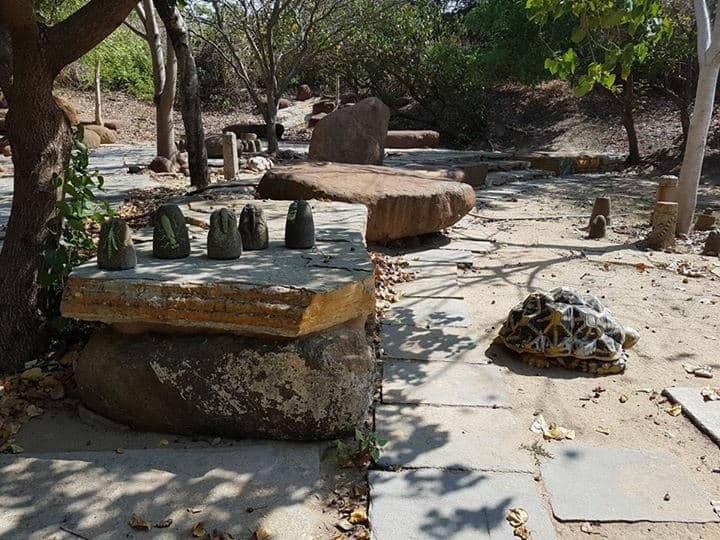
Can you spot the tortoise? Pic: Sam Ponraj
Apart from being an educative and recreational park, Eco Park has also successfully demonstrated that suitable restrictions on human activity and restoration of the park to its natural best will increase the biodiversity of the plain. In 2007, the biodiversity at the park was 65 species, which increased to 159 in 2012 and is estimated to have crossed 300 now. Along with this, it also acts as a natural tidal sink which will absorb high tides, preventing coastline erosion.
A casual visit to the park will acquaint you to a world of diverse fauna — from about 100 species of butterflies, 25 types of birds, tens of amphibians and reptiles and a sizable number of mammals including jackals!
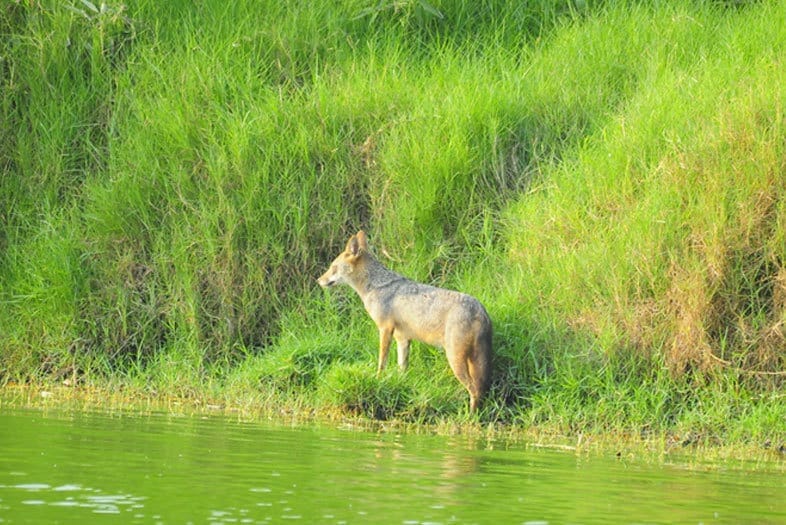
Pic: chennairivers.gov.in
Let that sink in for a couple of seconds. Here is a park, in the heart of the bustling Chennai city covering about 400 acres, and we have jackals living in the neighborhood. Sam Ponraj, who recently visited the park along with this family was surprised!
“Most of us pass this place every day but never knew there is such an inviting green space inside. A great place for kids too. Of course, entry is strictly regulated, but I feel that is good, it will prevent misuse or abuse of this oasis,” says Ponraj. However, he also pointed out that Cyclone Vardah has damaged a significant number of trees inside the park, making it hotter.”
Adyar Eco Park is thus not just a nature reserve in the heart of a city, but also the story of an amazing transformation brought about by a governmental body. Despite the cynicism and contempt that we are prone to displaying whenever we talk of governmental institutions in the country, this shows that public funds can be spent well, and that hope and perseverance can triumph against the biggest odds.
But what about the road ahead for the Chennai Rivers Restoration Trust? What can citizens look forward to from them? In the concluding part of this story, that is what we shall explore.
Once we could not cross creek with out closing our nose. It is really a wonderful work, which proved there are good and efficient govt officials still in service even though the top is completely a rotten.