A clean, well-maintained OSR park lies next to the Main road in Elcot Avenue of Shollinganallur inviting the nearby residents for a stroll. Krishna and Lakshmi are the caretakers of this park and like them, there are other caretaker families looking after the four other OSR parks in the locality.
Krishna and Lakshmi are one of the many families appointed by the Corporation to look after the OSR parks. They live in the park, where the day begins at 5 AM for them as they start trimming the bushes, cleaning the park and watering the plants.
“We seldom water the plants these days due to water shortage, we have to manage with whatever we get. The rains helped us last week,” they say. “We take care of everything. If any equipment gets damaged or broken, we report to our supervisor to get it fixed. It is important for kids to enjoy this place in safety.”
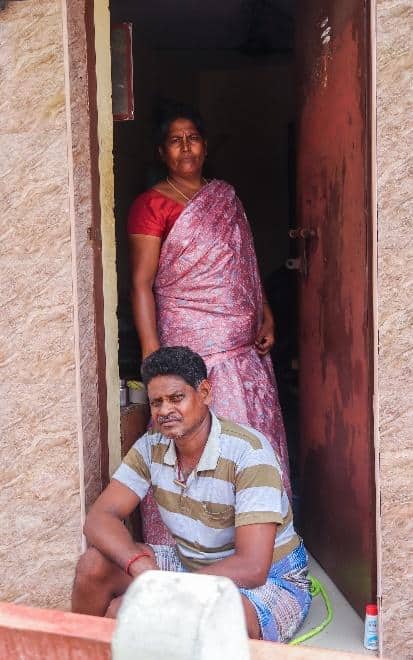
Lakshmi and Krishna stand outside their room.
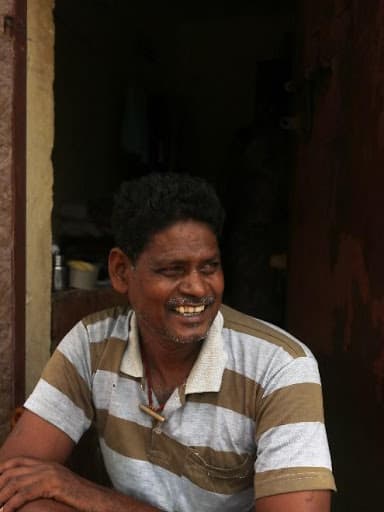
Krishna, the caretaker of the OSR park.According to CMDA’s development and control rules, 10 per cent of an area should be reserved as community and recreational open space before the actual approval of any layout under the provisions of the Town and Country Planning Act. These are called Open Space Reservation, or more commonly, OSR parks.
The work of maintaining the park is allocated through tenders. Many contractors apply for the tender and whoever wins it gets the job of maintaining the park. “Our supervisor maintains all the four parks here. He comes for surprise inspections, so we need to be always available here in the park, even if we do not have any work.”
When I ask them about leave and medical benefits, they say they don’t have any. “We have to manage with our monthly salary,” says Lakshmi. “The money is deposited into our bank accounts on the 6th of every month. By the evening of the 6th, it is done and we use ATMs to withdraw it from the 7th of the month,” she adds.
But why don’t they take some other work during the day, such as domestic work in the nearby apartments or work as a watchman to earn additional income? “There are options, but it has to be done discreetly; we don’t know what will happen if it is discovered. So we avoid it,” they say.
“The money we earn is barely enough for the two of us; space is also a constraint, so we have sent both our children to live outside.” The room where they live is a small 10×10 accommodation which is all the space they have to carry out their daily chores. “I am happy though that a rest-room comes with the accommodation,” says Lakshmi, with a smile.
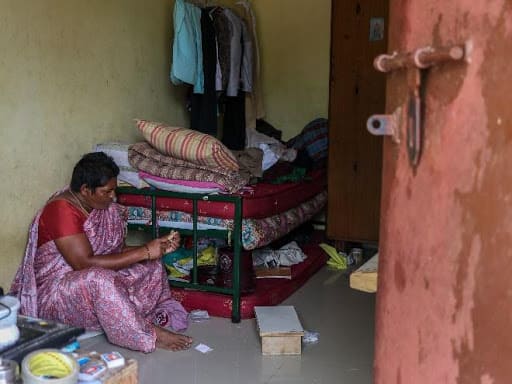
Lakshmi is seen sitting at their 10×10 accommodation.
The park I visited is used by 50 odd residents on a daily basis for recreation. From joggers to walkers, from kids to elderly residents – all of them are regular users. A karate school nearby also benefits from the park as the kids first warm up here by jogging around the park, before they start their practice.
“You come after the water issues are resolved. You will see the park in full bloom,” says Krishna and signs off.
Given the importance of many such OSRs for citizens in the neighbourhood, I believe that it is only fair to pay more attention to the health and life of these caretakers. They are not aware of social security life insurance schemes such as Pradhan Mantri Jeevan Jyoti Bima Yojana (PMJJBY) and Pradhan Mantri Suraksha Bima Yojana (PMSBY) that gives them a risk cover in case of any eventuality. More than monthly deposits, they look for a better quality of life for themselves and their children. After all, who wants to send their children away for lack of space?
(All pics by the author)