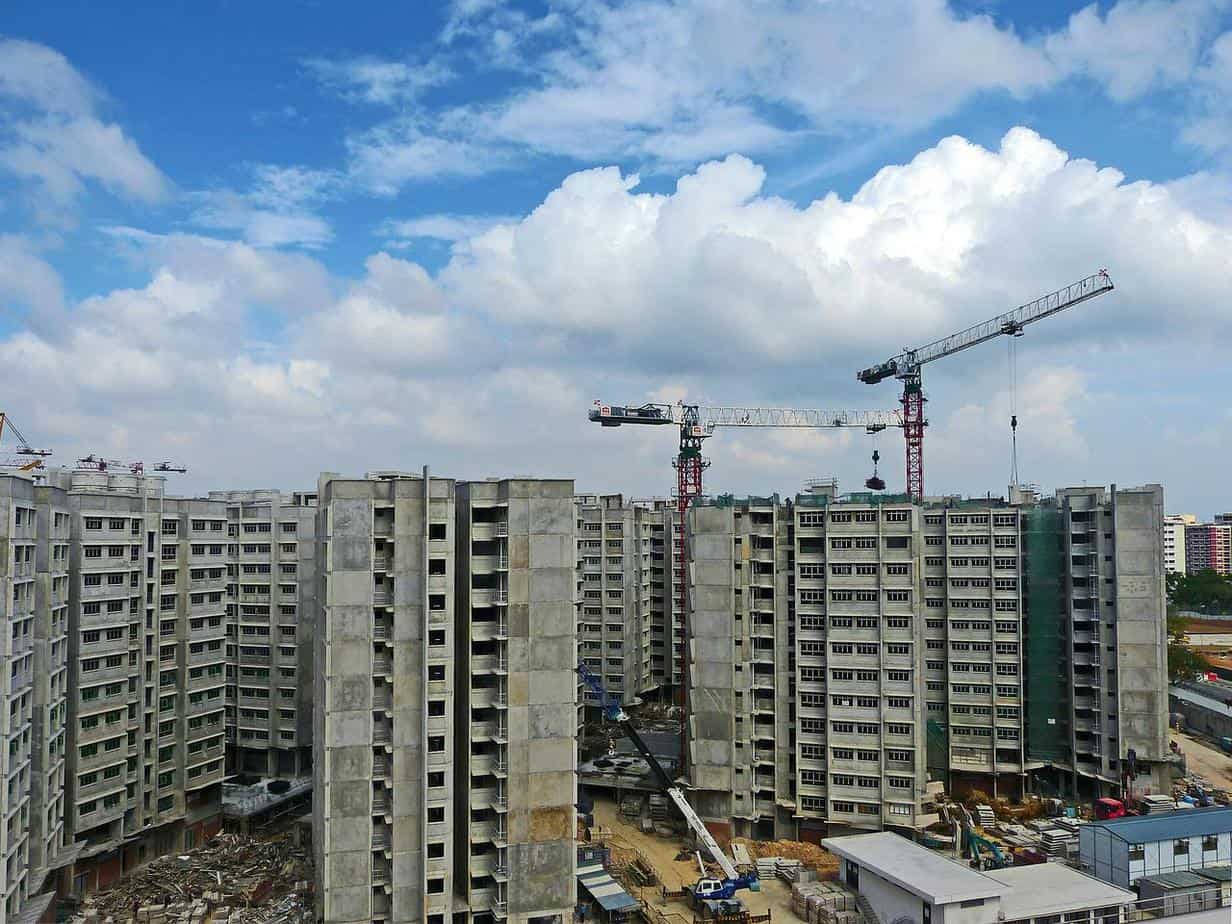
The growth of Chennai has been fuelled by the construction of new buildings and the expansion of the city in all directions. The mandate of the Chennai Metropolitan Development Authority (CMDA) is to keep erring builders in line and control illegal construction. However, collusion by builders with officials of the CMDA and civic agencies results in unauthorised construction mushrooming across Chennai.
Recognising the need to regulate such development and prevent illegal construction, a Monitoring Committee was appointed by an order of the Madras High Court almost two decades ago. But in all these years of its existence not even a list of erring builders and officials is available to the public.
Read more: Shaping the future of Chennai through the Third Master Plan
Creation of the Monitoring Committee
On 23 August 2006, the Madras High Court delivered a judgement on a writ petition filed by Chennai-based NGO Consumer Action Group (CAG). The writ petition was filed to stop the spate of regularisation amendments passed by the State Government of Tamilnadu, at various times through the 1990s and 2000s.
In the extensive order, the HC derided the sorry state of affairs prevailing in the matter of unauthorised and illegal constructions in Chennai city. The HC observed that “builders have violated with impunity the sanctioned building plans.”
The judgement also said that “both CMDA and Corporation have submitted elaborate charts to show that provisions of the Act and rules have been grossly violated by the builders and buildings have been constructed in total violation of the Rules.”
Therefore, the HC ordered the constitution of a Monitoring Committee (MC), with members from both government and independent activists/planners.
The judgement tasked the Committee with the following role (among other responsibilities):
– The Committee shall identify the officials in CMDA and Corporation who are responsible for the failure to enforce the planning laws and make appropriate recommendations for disciplinary action
– The professional builders of illegal multi-storied and special buildings should be identified for the imposition of heavy penalties.
The composition of the Monitoring Committee:
- The Vice Chairman, CMDA
- The Commissioner, Corporation of Chennai
- The Managing Director, Chennai Metro Water Supply and Sewerage Board
- The Chairman, Tamil Nadu Electricity Board
- The District Collector, Chennai
- The Director of Fire Services
In addition to this, the Monitoring Committee comprised eminent architects and urban planners, educators and retired IAS officials.
Working of the Monitoring Committee:
From 2006 until 2020, the Monitoring Committee has conducted a total of 63 meetings.
However, the working of the committee has become lax over the past decade.
The frequency of the meetings has dwindled. The Monitoring Committee started strong with around 26 meetings in the year 2007 alone. But the meetings then petered out to one or two through 2017, 18, 19 and finally, in 2020, the last meeting was held.
A perusal of the final meeting minutes (63rd meeting) shows no indication that this was to be the final meeting. The minutes show that the MC planned to continue, but no more minutes are found available after 2020, and the MC set up by the HC can be considered to be defunct.
Read more: CMDA’s public consultation on Third Master Plan leaves little room for residents’ voices
Action taken by the Monitoring Committee
As for the key mandate of the Monitoring Committee which is identifying erring officials and builders, the Committee seems to have taken this aspect seriously. We can find in the minutes (all of which are available here) repeated attempts by the Committee to get a list of officials and builders.
Minutes of the 32nd meeting item 8 mentions the existence of the list of builders. The records read, “The Monitoring Committee perused the list of erring builders and suggested to complete the list and place the same in the ensuing Monitoring Committee meeting.”
Minutes of the 42nd meeting item 4 once again mentions the existence of the list of officials. The records read, “With regard to para 32(vii) of the High court order, the Committee observed that both CMDA and Corporation of Chennai should take disciplinary action against officials responsible for allowing the illegal buildings to come up and those who failed to take enforcement action.”
In fact, in most of the meeting minutes these two agenda items,
– the list of erring builders; and
– the list of officials in CMDA and Corporation who allowed these unauthorised constructions to continue is discussed repeatedly.
However, despite all the repeated mentions of the list of officials and builders, there seems to have been little progress made in actually identifying them by name for penal action.
After discovering that the MC had stopped meeting in 2020, I filed an RTI in March 2023 to CMDA asking for these two lists. On the first appeal, the response by the CMDA states, “The Monitoring Committee has not identified any specific list of officers.”
On the list of erring builders, the response by the CMDA states, “The Monitoring Committee has not identified any builders as having put up illegal buildings.”
Note that a list of accountable officials and erring builders is mentioned in the meeting minutes, but the RTI denies the existence of any such list.
The original HC order’s intent, to hold builders and officials accountable for the city planning mess has thus never been realised.