Changemakers: Lessons from the 25-year journey of Environment Support Group (ESG)

The organisation has been vocal in speaking for public commons and has fought several legal battles to prevent destruction of natural resources.

Citizen Matters, Bengaluru, is gearing up for an exciting conversation with the Environment Support Group (ESG) as they turn 25 this year.
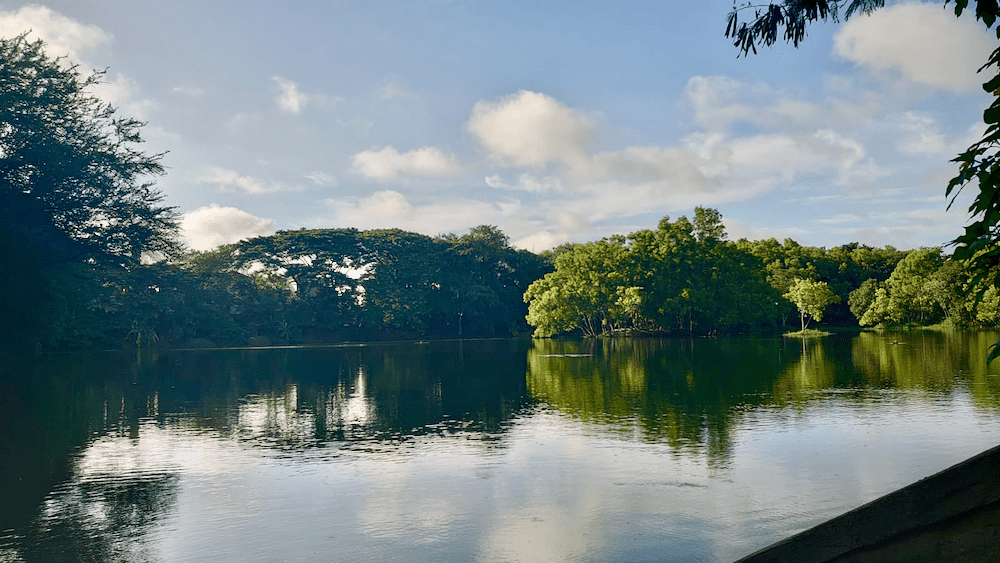
Water and trees in the lake. Trees surrounding the Lower Ambalipura Lake.
Representative image. ESG works to mainstream the rights of local communities and voiceless ecosystems. Pic: Kavitha N Kishore

ESG is a pioneering environmental organisation that was pivotal in creating awareness on environmental issues plaguing Bengaluru. Over the years, ESG has fought to stop destructive roads projects and pushed for preservation of lakes and our vanishing greenery.

The organisation has been vocal in speaking for public commons and environmental justice and has fought several legal battles to prevent destruction of natural resources in the city. Senior reporter Bhanu Sridharan will be in conversation with trustees Leo Saldanha and Bhargavi S Rao, on April 3rd, to learn more about ESG’s journey, challenges,victories and failures. We will also try to understand how Bengalureans can engage with critical issues of environment and justice.

About ESG

Environment Support Group [Environmental, Social Justice & Governance Initiatives], is an independent not-for-profit organisation that works to mainstream environmental and social justice in decision making through research, documentation, advocacy, training and campaign initiatives. They work to mainstream the rights of local communities and voiceless ecosystems taking into account contextual complexities, especially their socio-cultural histories and traditional knowledge and practices.

Leo is the founding trustee and co-ordinator of the Environment Support Group. He is a keen environmental campaigner with experience in environmental law and policy, decentralisation, urban planning and human rights and development related issues. He has led many campaigns pushing for environmental and social justice, not just in Bengaluru but across the country.

Bhargavi is a Senior Fellow and Trustee at ESG as well as an independent researcher and writer. She has 30 years of experience in environment and social justice advocacy, research and education, and teaching work. She leads a wide variety of research and educational projects and campaign initiatives at ESG. She also coordinates educational and training programmes to increase awareness and engagement on social and environmental justice issues.


Read more: Beloved neighbourhood lake designated as a CA site, leased to a private trust


Event details:

Date: April 3rd

Day: Monday

Time: 6 pm onwards

To be livestreamed on YouTube

Also read:

Leave a Reply

Your email address will not be published. Required fields are marked *

Similar Story

Reviving the Cooum: Need for innovation, enforcement and shared responsibility

An analysis reveals how this Chennai river is affected by sewage dumping, encroachment of buffer zones and unchecked urban growth.

The Cooum River, once a sacred river that shaped the history of Madras, has now become a sad sign of urban degradation. For the millions of residents in Chennai, it has transformed into a malodorous, polluted, and stagnant channel, burdened with solid waste accumulation and extensive encroachments along its banks. During a recent datajam organised by Oorvani Foundation and OpenCity, we used Geographical Information System (GIS) datasets and population analytics to investigate the underlying causes contributing to this crisis. The results show that rapid urbanisation, inadequate provision of essential civic infrastructure, and the absence of coherent policy frameworks, along with…

Similar Story

Pallikaranai at a crossroads: Expert warns of irreversible damage to Chennai’s last great marshland

In an interview, naturalist Deepak V says the government must publish ecological maps marking wetlands and waterbodies to boost public awareness.

The Pallikaranai Marshland, one of Chennai’s last remaining natural wetlands, has long been a site of ecological tension. Its designation as a Ramsar site brought national and international recognition, along with renewed expectations for strong conservation measures. Yet the marshland continues to face intense pressure from urban development, infrastructure projects and real estate expansion.  Recently, Arappor Iyakkam, an anti-corruption organisation, alleged that state agencies illegally cleared environmental and construction approvals for a large high-value housing project within the Ramsar boundary. As the matter unfolds, it reveals how regulatory gaps and political inaction make the marsh vulnerable. Meanwhile, residents of Tansi…