It was one hectic morning for the twenty or more volunteers who came to the lake on 9th June, a Sunday. Coming from South City, Brigade Millennium, Brigade Gardenia, Ramaiah Apartments (behind Sobha Tulip), J.P. Nagar 7th Phase, 24th Main, etc., they reinforced the meaning of the “Neighbourhood” in our Puttenahalli Neighbourhood Lake Improvement Trust. Meera coming from Banashankari extended the “neighourhood” some more! It is indeed incredible how concern about and involvement with the Puttenahalli Lake is bringing everybody together. Transporting the dead tree from South City to the lake bed proved this amply.
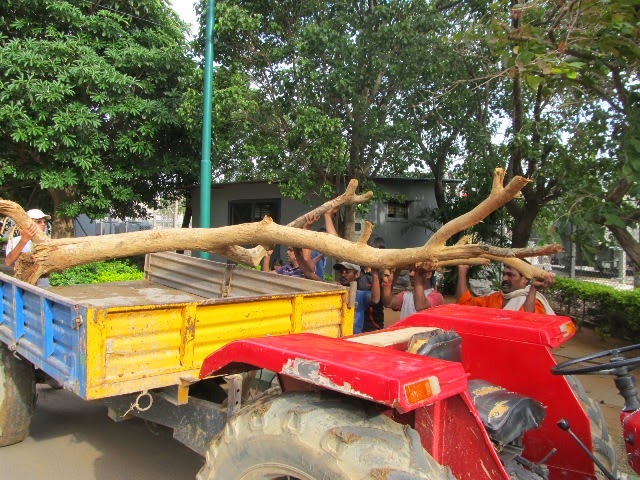
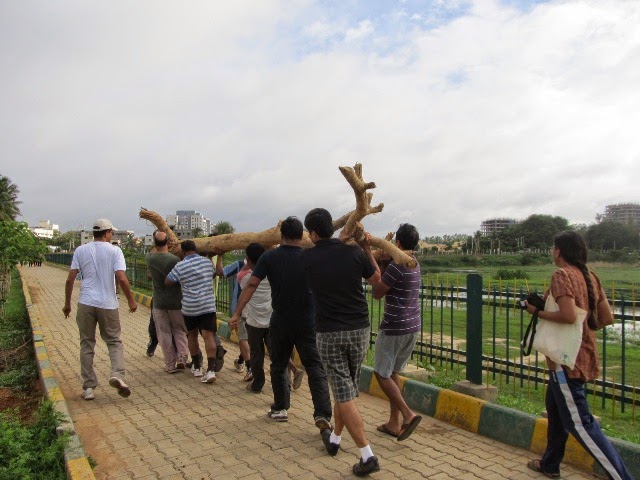
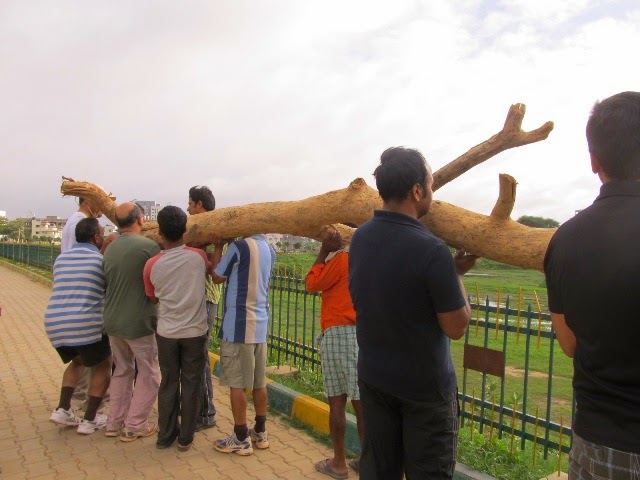
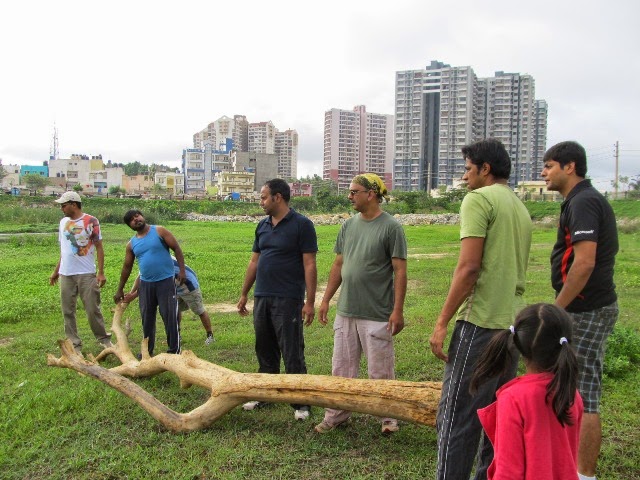
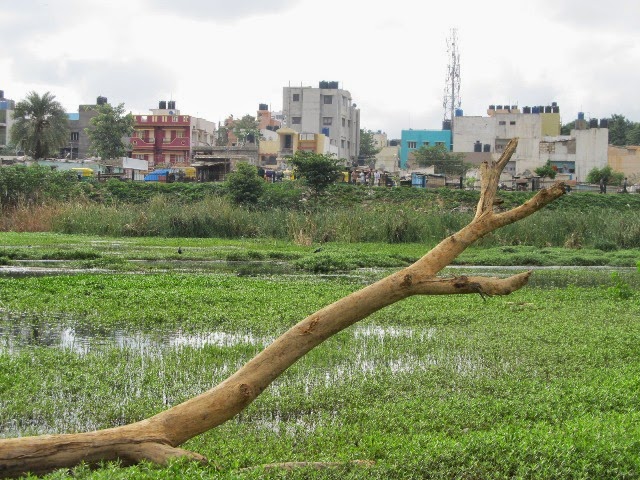
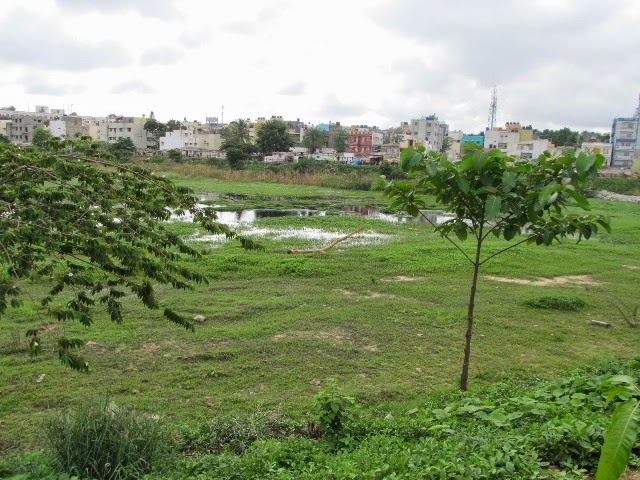
Four or five men volunteers walked down to South City to size up the tree. It was a little too heavy for them to carry. Fortunately though, just as we were returning to the lake, we saw a tractor unloading soil at the lake entrance. The driver very kindly brought the tree in his tractor thus saving us a great deal of trouble. Our volunteers carried it from the tractor along the walking path and, at the assigned spot, heaved it over the grill and down the slope. The tree tumbled and landed neatly at the lake bed still intact. From there to the waterline was another short stretch but it still took some effort all right. Within 15 minutes we’d accomplished our mission – provided aquatic birds with a beautiful perch. According to veteran ornithologist, Dr. S. Subramanya, it is like offering chocolate cake to children.
🙂

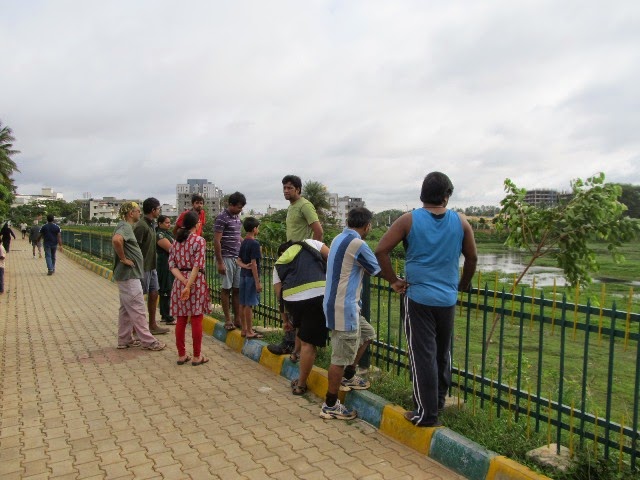
While this set of volunteers was busy with the dead tree, others were busy sprucing up the space on either side of the new picket gate. By 9 a.m., the ground was cleared of plastic to the extent possible and rich red soil spread. Gardener Kumar began putting in stakes and by evening he will cordon the area. Next weekend, we’ll complete planting here and move on to the next step towards transforming our neighbourhood, people’s lake. We are looking to plant a flower border with three plant species in different colours and heights – Rasna (Alpinia calcarata Rox), a medicinal herb which grows up to 1.8 to 2.5 m in height, Tincture plant (Collinsia tinctoria), a low level plant in gorgeous shades of purple and multi-coloured Lantana.
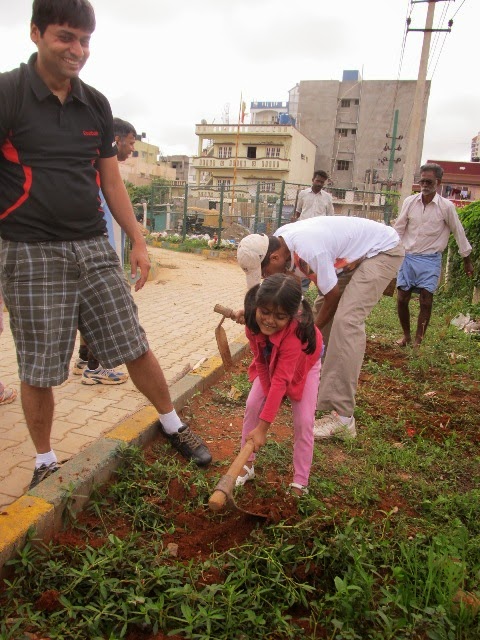
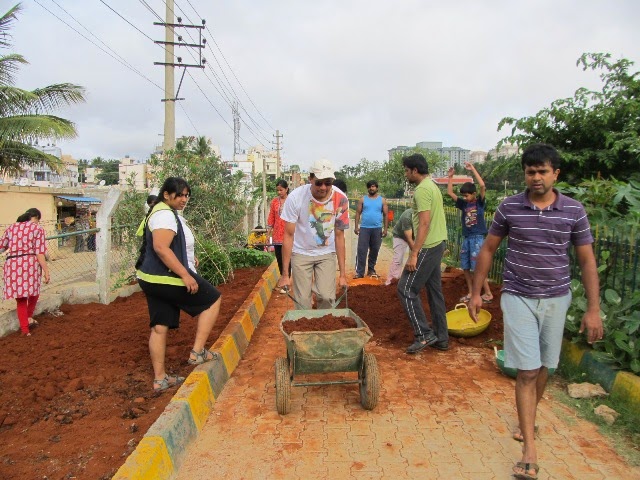
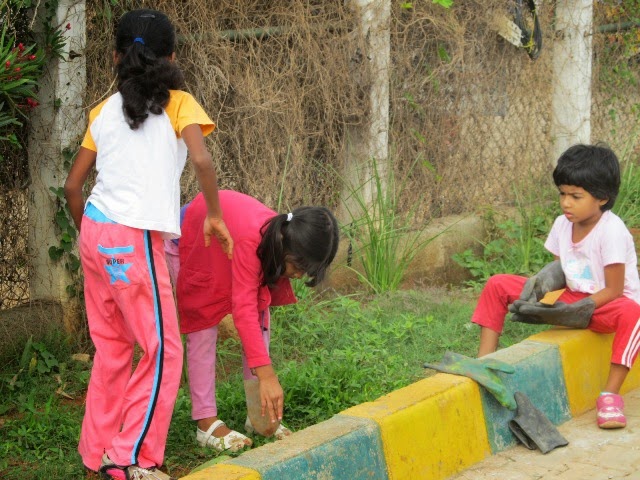
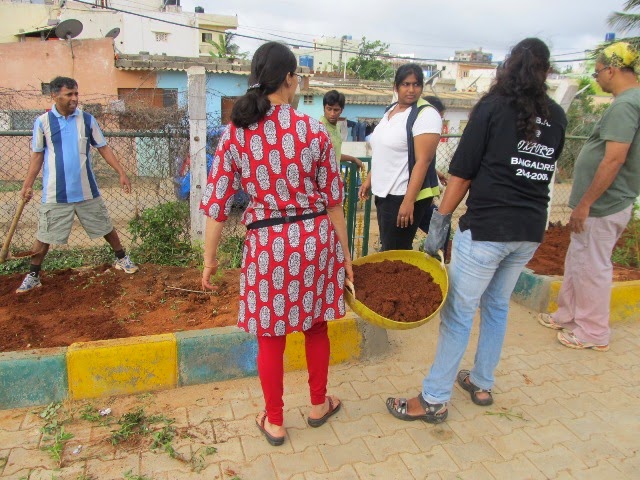
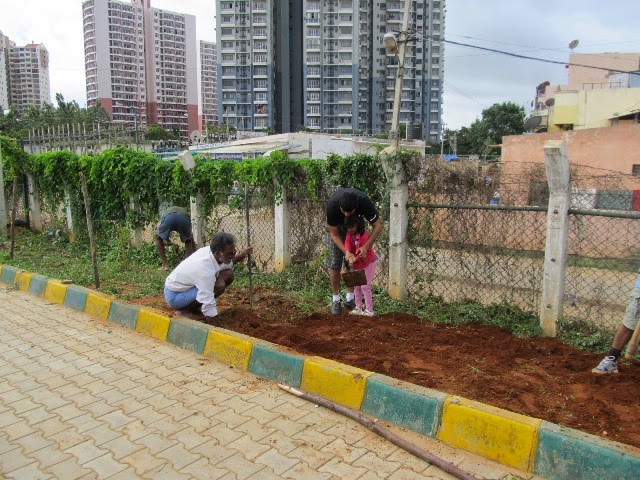
A big thanks to all especially to 14 year old Kanha who cleared the dirtiest part of the area, right behind the garbage dump showing not the least trace of revulsion. As long as there are children like him and volunteers like all those who slaved with him, there’s every hope that our neighbourhood will soon be a better, cleaner place!