The Brihanmumbai Municipal Corporation (BMC) is on a mission to recover arrears of property taxes worth about Rs 20,000 crore. The BMC is auctioning articles like helicopters, cars and air conditioners, seized from a private company in 2020, to recover Rs 4.1 crores. They’ve sent notices and acted against 11,661 defaulters.
Though the BMC always had the power to disconnect water and/or electricity connections, seal lifts and entrances of properties, they’ve rarely executed this authority. Now, owing to COVID-19, the richest municipal corporation in the country is feeling the pinch.
However, the focus has been on wealthy defaulters, and the common man has been exempted. The property tax rates were not increased in 2020-21 to minimise burden on common citizenry.
BMC’s financial stress
Though the BMC managed to recover Rs 5135 crores in 2020-21 as compared to Rs 4161 crores in 2019-20, they’ve been facing huge revenue stress. While the pandemic did impact the budget, the exit of the direct revenue source of Octroi, which accounted for about 37% of BMC’s income, became the main reason for the stress.
Ravi Duggal, from the People’s Budgeting Initiative, suggests that a more efficient revenue collection system could easily bring in an additional Rs 6000 to 8000 crore annually, which would be more or less equal to the amount collected each year in property taxes. “In 2019–20, the total receivables accumulated were Rs 27,486 crore (MCGM 2020-21 budget), which was 109% of the revenue income for that year,” he said.
From 2019, the BMC granted complete exemption of property taxes for houses smaller than 500 sq ft in Mumbai. Those with houses between 500-700 sq ft were also granted about a 60% slash. They also granted a 10% rebate in the general tax component of property tax to incentivise housing societies that compost wet garbage and segregate dry waste.
As a precursor to the 2017 Mumbai municipal corporation elections, almost all major political parties had promised either exemption or a slash in property taxes, as many slum dwellers were shifting into Slum Redevelopment Authority (SRA) buildings.
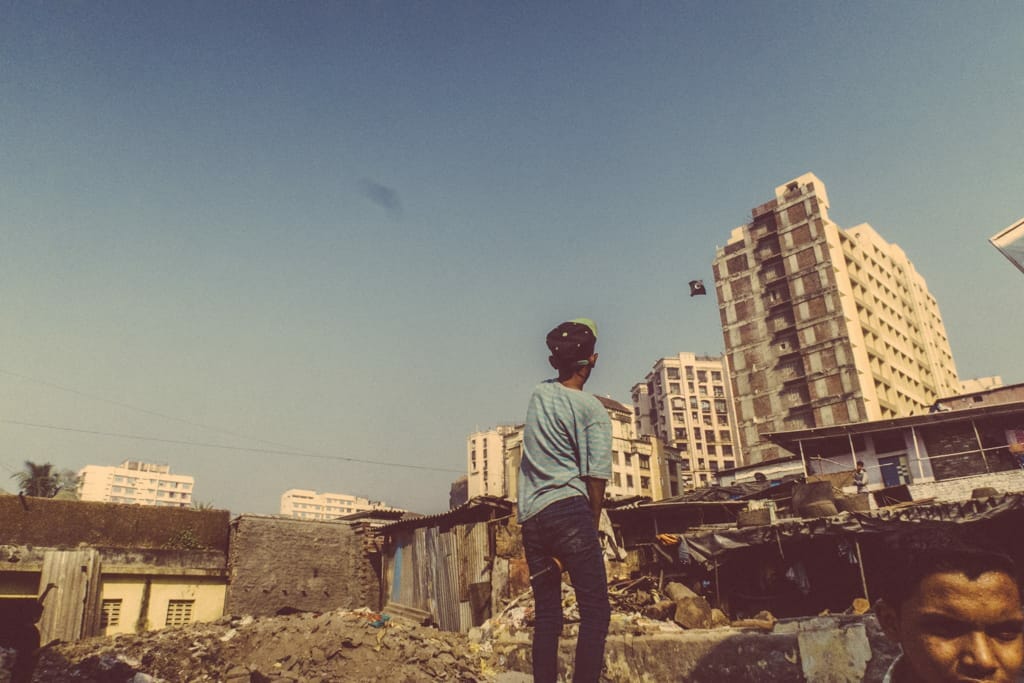
“Since many residents of slums, cess buildings, MHADA redevelopment projects, etc. were allotted flats in redevelopment buildings with an area between 180 – 450 sq ft, it was found that most of these residents could not afford to pay the property taxes levied on the flats, thus forcing them to sell flats and move out of Mumbai. Political parties hence promised to waive off property taxes entirely for flats below 500 sq ft to provide relief to such families,” said Ramesh Prabhu, chairman of the Maharashtra Societies Welfare Association.
What political parties promised
Shiv Sena’s manifesto, apart from waiving off property taxes, also stated that co-operative housing societies that execute measures like vermiculture, segregation of garbage, solar energy and rainwater harvesting will also get relaxations in their property taxes. The Bharatiya Janata Party (BJP) promised that property taxes will be kept stable for five years. They also promised to levy property taxes on an individual basis and offered to implement a relaxation for those with property tax arrears. The party additionally offered tax benefits for buildings older than 15 years, such as no hikes in their water or property taxes. They also promised to scrap sewerage taxes for buildings that have not been connected to the city’s sewerage network, and promised a waiver of street tax till the roads were cleared of potholes.
Read more: An apartment complex saved 187 houses from going dry. Here’s how.
In their manifesto, the Congress promised no hikes in property taxes for houses of up to 700 sq ft and also promised a 50% cut in property taxes for houses above 700 sq ft.
The Nationalist Congress Party (NCP) promised to usher in a friendly tax collection regime and introduce digital tax payment systems. They also promised to introduce housing insurance for all property tax payers, and concessions for those buildings that implement garbage segregation, rain water harvesting, solar energy, fertiliser development, sewage water treatment facility etc. The party promised to reduce the gap between the high property taxes paid by those in the suburbs and low property taxes by those in the Island city, as well as a system of levying individual property taxes based on their property valuation. It also promised concessions in property taxes for original residents of koliwadas and gaothans.
Promises fulfilled
Most of these promises have been fulfilled. In 2019, two years after the Shiv Sena-Bharatiya Janata Party alliance returned to power in BMC, the BMC completely wiped off property taxes for flats below 500 sq ft. Similarly, the BMC has already started property tax payment at an individual flat level rather than a lump sum for the entire housing society. They’ve also managed to introduce payment of property taxes online, thus providing a huge relief to citizens.
So, how does this impact the functioning of the BMC?
Economists feel that waiving off property taxes for an entire section of the population is an unhealthy practice and could be harmful in the long run. “Property taxes are the only sustainable source of revenue for an urban body, especially when the option of Octroi is no longer available. All Urban Local Bodies (ULB) need funds to sustain themselves and anything done to reduce resources is bad. Such gimmicks invariably harm the poor in the long run since it affects the efficiency, functioning and the quality of services delivered by a Corporation. Taxes should be simple, transparent and easy on the payer,” says Dr Abhay Pethe, a senior resident fellow of the Mumbai School of Economics and Public Policy.
Ravi Duggal concurs that any person who can afford a house in Mumbai, should pay some tax. “Globally, property taxes are the main source of revenue for ULBs. Hence, not charging such taxes is problematic and harmful in the long run. This could end up pushing the ULB towards dependency on state governments. This would in turn affect the autonomy of the BMC, since it ends up making the executive head ie. the municipal commissioner, a state appointed officer, strong, and weakens the political wing. In Maharashtra, the BMC and probably the Pimpri Chinchwad Municipal Corporation are the only cash rich ULB, which are not dependent on the state for their resources.” he says.
He further questions the existing discrimination in taxes between those in the Island city and those in the suburbs. Currently, those in the suburbs pay higher property taxes, while those residing in old properties of island city pay very low taxes.