Calling all avid cyclists who believe cycling makes cities safer, better, cleaner and happier. Do you have what it takes to join the league of Bicycle Mayors across the globe and transform transportation in Bengaluru?
The initiative, coordinated by ESAF, an NGO, a part of the Bengaluru Coalition for Open Streets (BCOS) will nominate a Bicycle Mayor in Bengaluru to evangelise cycling and put cycling on the city’s agenda. It is a voluntary position for a period of two years.
The Bicycle Mayor is the public face of cycling in the city, and brings different stakeholders – both citizens, civil society groups and governments together to raise awareness on the economic, health and environmental benefits of getting more people on the cycling bandwagon. The Bicycle Mayor Program is a global program by ByCS, a dutch non-profit, to accelerate the progress of cycling in cities and help the next billion people on to bikes.
Bengaluru’s own Bicycle Mayor
Bengaluru’s selection of the Bicycle Mayor will conclude on May 10th before the state assembly elections, by shortlisting five candidates by May 1st. “A committee of five transport experts and activists will take a final call based on background and prior interest in cycling,” explains Manju George, founder of ESAF – Bangalore chapter. The criteria for selection specifies that potential candidates must have no endorsement obligations and must be a resident of Bengaluru with excellent communication skills.
Apply before 23rd April 2018 to become the Bicycle Mayor for Bengaluru. Click here for more details.
“We plan to facilitate communication between Bengaluru’s Bicycle Mayor and the others at an international event soon,“ says Manju George. The chosen Bicycle Mayor will get an opportunity to work with Government of Karnataka and contribute insights towards policies related to public transport.
India’s first Bicycle Mayor is Nikita Lalwani based in Baroda. Her two-year tenure to serve as an example for adopting environmental friendly transport started in 2017.
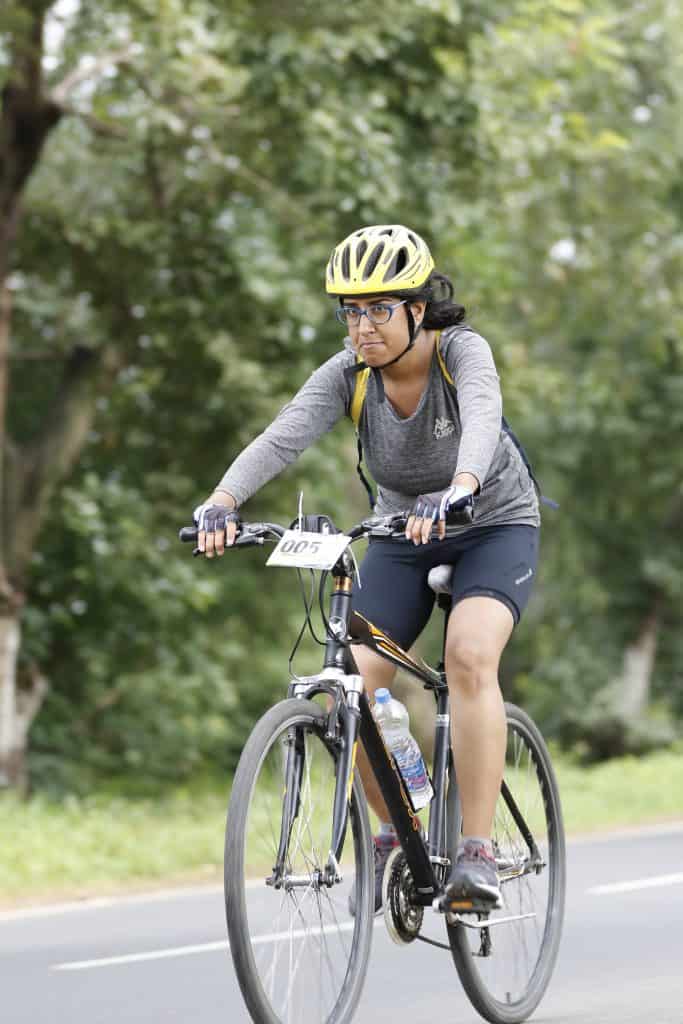
Nikita Lalwani, India’s first bicycle mayor, based in Baroda. Pic courtesy: bicyclemayorofbaroda.wordpress.com
Nikita was voted in by the cyclists in Baroda who were impressed with her passion. She was later selected by the Amsterdam-based ByCS. The organisation’s mission statement is ‘50 by 30’, implying a target of 50% dependence on cycles for commuting by the year 2030.
India’s first Bicycle Mayor is a cycling enthusiast like no other. She is determined to galvanize huge groups of people into adopting this eco-friendly method of transport for the last four years. From ‘Baroda By Bicycle’ heritage rides to starting Cycling Cities, her own platform, she actively communicates the message she represents. On her blog, she shares the experience of a 90-km long bicycle expedition she undertook in a group inside the boundaries and beyond of Pachmarhi Biosphere Reserve. The post chronicles the four day long journey of pedalling from Ramakona Village to Tawa Reservoir in Madhya Pradesh.
First Indian #BicycleMayor @nikitalalwani7 leaves for Summit in #Amsterdam and #VC2017 in to represent #Indian cities as @BicyclMyrBaroda ?? pic.twitter.com/n1phXLcRdV
— Bicycle Mayor Baroda (@BicyclMyrBaroda) June 9, 2017
International reach
The concept of Bicycle Mayor Programme came from ByCS headquartered in Amsterdam. The dutch NGO is determined to make 50% of commuters around the world rely on bicycles entirely by 2030. A network has emerged across five continents through their relentless advocacy of human-centric cities. Bicycle Mayors are currently spread in Sydney, Amsterdam, Sao Paulo, Keene (USA), Rio de Janeiro, Mexico-City and Baroda.
Sarah H Imm, Bicycle Mayor in Sydney, has written a book on the subject, ‘How to Bicycle to Work-A Guide for Women’. Majority of the bicycle mayors are women across the world. There is a special chapter on dressing in comfortable work and travel attire while cycling to Sydney’s main commercial district, especially in stilettos. The book provides a few pointers that can be incorporated into the daily travel routines of women.
Bengaluru’s cycling evangelists
If the city’s traffic growth remains unchanged till 2022, it is likely to have 1.08 crore vehicles on the streets according to the Transport Department. Proposals to decongest the city with non-motorised transport have not seen the light of day. Among them is the proposed cycle lane running through 27.5 kms in HSR Layout.
Meanwhile, civil society groups and cycling enthusiasts have taken it upon themselves to make a difference. For past 5 years, Cycle Days have been held on Sundays in different localities by the Bengaluru Coalition for Open Streets (BCOS). Many organisations like WRI, ESAF and Praja RAAG are part of this initiative. This is part of the Open Streets concept of the Directorate of Urban Land Transport (DULT) a department under Urban Development Ministry, Government of Karnataka, working on sustainable mobility for cities. “We have completed 380 events till date since starting in 2013 and 38 communities have participated in them,” says Manju George, Program Officer, ESAF.
Bengaluru’s own Bicycle Mayor will help amplify the voices of cycling and push to make non-motorised transport options more viable and sustainable. If you are cyclist, why not make use of this opportunity?
Also see:
How to organise cycle days in your neighbourhood
Cycling to work: how do you get started?
Full disclosure: Citizen Matters is the media partner for the Bicycle Mayor Program conducted by ESAF in Bengaluru.