This neighbourhood in Electronic City is choking!

Residents of Basapura suffer from persistent cough and breathing issues as garbage dumped in the immediate vicinity of apartments and offices is burnt day in day out.

The people of Basapura, a growing neighbourhood in Electronic City, face a serious health hazard as tons of mixed waste including plastic are burnt every day, right in the heart of a residential area.
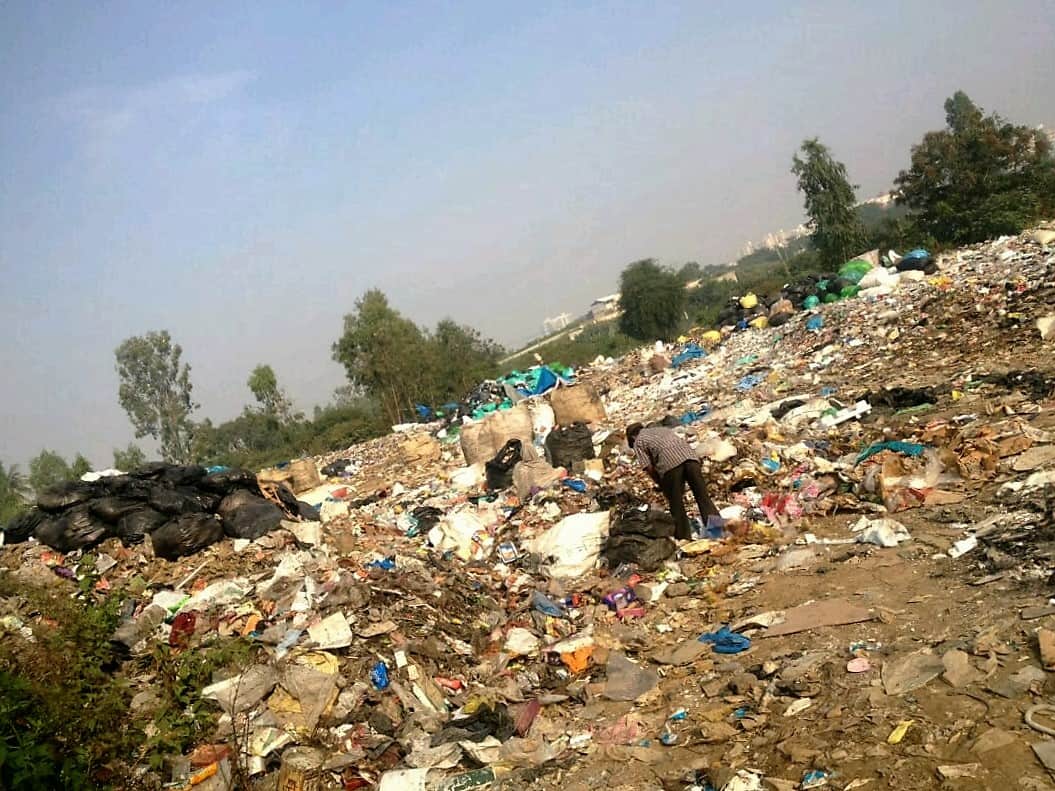

The garbage dump that is set to fire everyday. Photo courtesy: Basapura residents

At the root of this is an open area surrounded by many apartment complexes & major offices which has been converted into a dumping yard. The piles of garbage deposited here are set to fire everyday, creating thick smoke. The fire is usually seen in the wee hours of dawn and again in the evening around 5 pm, but the smoke fills the surrounding areas throughout the day.


Tonnes of mixed waste including plastic are burnt regularly. Photo courtesy: Basapura residents

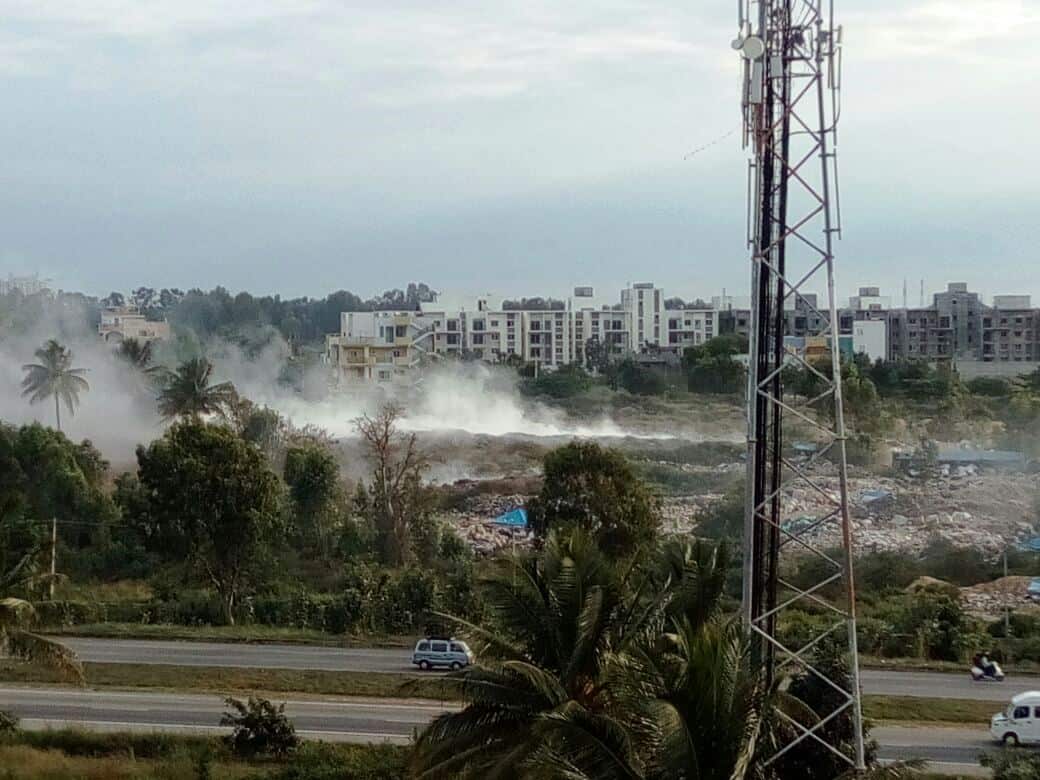
Residents in the neighbouring apartments complain of persistent cough and breathing problems. The dense smoke also causes low visibility, raising the risk of accidents on Nice Road which runs right next to this dumping yard.
Worst hit by this smoke and poisonous air have been the kids who can’t play outside anymore and keep coughing inside their houses as well. As parents, we are helpless and many of us have resorted to wearing masks even inside our homes.
 
When the fire burns and the smoke becomes unbearable, especially at night, we have often notified the fire station. In most instances, the fire brigade cited its inability to reach the site, till October 24th when the residents themselves guided the engine. The fire was temporarily put out then.

Continuous smoke emission from the burning garbage is leading to serious health issues for residents in the area. Photo courtesy: Basapura residents

On a number of occasions, residents have dialled 100 to lodge police complaints, and on October 23rd they filed a written petition, addressed to the Officer In Charge, Electronic City Police Station. The authorities have promised action, failing which an FIR will be filed against the unknown persons dumping waste in that land.
 
Citizens affected by the menace are now deciding on the next steps that will enable them to take their fight against the garbage mafia to a higher forum, which will hopefully bring them some respite from the constant threat to their health and well being.

Leave a Reply

Your email address will not be published. Required fields are marked *

Similar Story

Mumbaikars are fighting for their mangroves. Here’s how you can join them

Mumbai is about to face a monumental loss—its mangroves are being cut to build the coastal road. Citizens, however, have not given up the fight to save them.

​“What happens when we remove this natural infrastructure of the city? What happens if it floods? What happens if the air quality (index) goes really high?” asks Pooja Domadia, a member of the Save Mumbai Mangroves campaign. These are questions that many Mumbaikars have as work begins on the Versova-Bhayandar Coastal Road, which is set to affect 45,000 mangrove trees. In March this year, the Supreme Court dismissed a petition challenging the Bombay High Court order to greenlight the cutting of mangroves for the project. Is the SC decision a fatal blow to the movement? The BMC has already begun…

Similar Story

Where are the pollinators in Bengaluru?

Despite the volumes of citizen-generated data on the city's biodiversity, pollinators who sustain the urban ecosystem do not seem to be getting their due attention.

Urban biodiversity is often discussed in terms of tree cover, lakes, or flagship species, but far less attention is paid to pollinators—the insects and birds that quietly sustain urban ecosystems. In Bengaluru, a rapidly urbanising city with a strong culture of citizen science, large volumes of biodiversity data are now being generated by the public. But what does this data tell us about pollinators in the city? This article draws from a data jam hosted by OpenCity in Bengaluru that explored pollinator observations using publicly available, citizen-generated datasets. By analysing long-term observation records and spatial data on land use and…