The stage is set.
- December 2009: A 100 people ask to Empower Lokayukta and remove Section 19 of Prevention of Corruption Act.
- March 2010: Bangalore records <40% voting in the BBMP elections. None of the citizen candidates win.
- December 2010: 900 people join the Corruption Saaku! rally on UN Anti Corruption Day. Saaku! was the top trending topic on Twitter.
- Jan 2011: 300 people gather on MG Road in a nation wide protest seeking People’s Lokpal, later rechristened Jan Lokpal
- April 2011: India Against Corruption’s first fast at Freedom Park. There were more police than people. On day 2, there were only 7 people on the fast.
- August 2011: Thousands of people flock to Freedom Park every day making it the second largest city for IAC after Delhi. Students, Senior Citizens, School children, Unions, Business leaders, Freedom fighters.
- Dec 2011: Lokpal draft diluted. Toothless bill tabled. The IAC movement fizzles out.
- June 2012: Bangalore MLC Graduate Elections. 300 volunteers drive 17% of city vote for citizen candidate, Ashwin Mahesh in an unprecedented wave. Traditional parties take notice of a new ‘votebank’ taking shape.
- April 2013: The biggest dance of democracy in Karnataka. Naavu ready, neevu barteera?
I’ve seen it all.
When Loksatta first organized an Empower Lokayukta walk in December 2009, we were a skeletal 10 people when the reporters arrived. The crowd swelled slowly to a 100 as we walked from the MS Building to MG Road, seeking more powers to Lokayukta and the removal of Section 19 of Prevention of Corruption Act that protects wrongdoers.
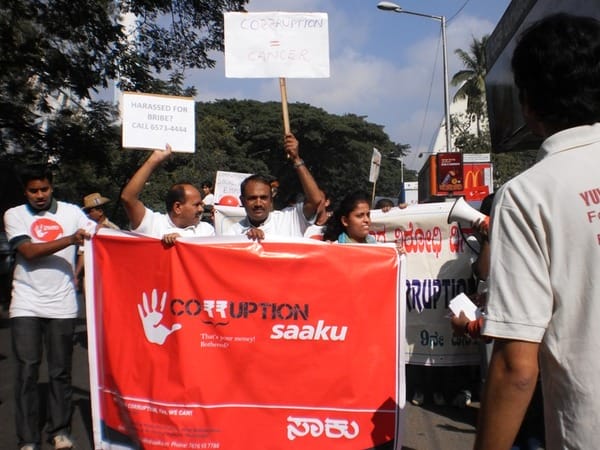
The Corruption Saaku campaign, Dec 2010
I’ve seen students from many colleges carry the Saaku baton when we did Corruption Saaku! in December 2010. I’ve witnessed literally thousands of people walk into Freedom Park and vent their anger by screaming Vande Maataram and, most recently I’ve seen thousands pour out onto the streets without any banners or leaders or brands, seeking justice for rape victims and reminding the government of their fundamental duty – safety.
All necessary, heartening and good!
However, what I haven’t seen is people’s participation in the institution of democracy. By participation, I do not mean voting and standing in elections. I mean taking an active role during the elections. Persuading real community leaders to contest elections, supporting them by volunteering in campaigns, getting more citizens out to vote based on candidate credentials, countering money and muscle power in elections by presenting the public service work and vision of good candidates, taking the message to all sections of voters and therefore helping throw out the current lot of lousy politicians.
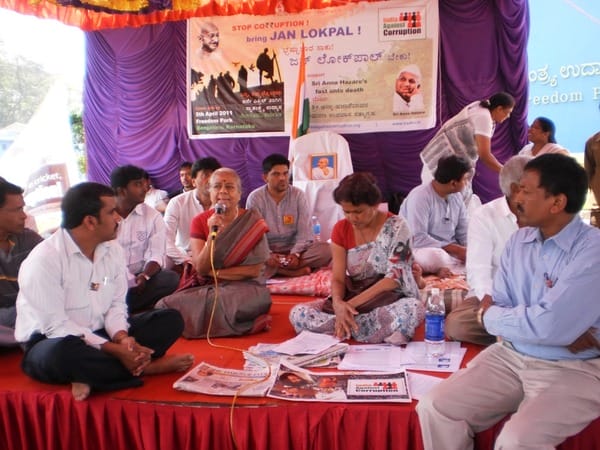
Bangaloreans fasting indefinitely at Freedom Park to support Anna Hazare’s anti-corruption crusade, April 2011. File pic.
The only vehicle of real change in a democratic society is politics. In India, politics itself is in dire need of change. Three elements in society need to converge to drive this change:
- A voter base that is frustrated with the current lot of politicians and malgovernance.
- Inspiring candidates who have an impressive public service record and the credentials to become lawmakers and represent us.
- Effective campaigns that connect the candidate with every single voter in person and change the debate from caste to resume in how the electorate casts its vote.
I was proud to be the campaign manager for NS Ramakanth in the BBMP 2010 elections and for Dr. Ashwin Mahesh in 2012 Bangalore Graduate MLC elections. And having managed election campaigns and experienced election cycles in their full glory, I can say that we often fall short in #3.
Elections in India are often referred to as the biggest Dance of Democracy. Democracy is not a spectator sport, it is a Do It Yourself kit. And if we don’t do it, it will not be done.
Come April 2013, Karnataka will host, what might well be, the dance of the decade! A state reputed for advances in technology, higher education, diversity, natural beauty, cultural glory, peace and harmony is now battered by a string of corruption scams and led by people that have elevated the looting of public wealth into a fine art. We have all kinds of jokers masquerading as leaders and unleashing billions of rupees into the election marketplace with impunity.
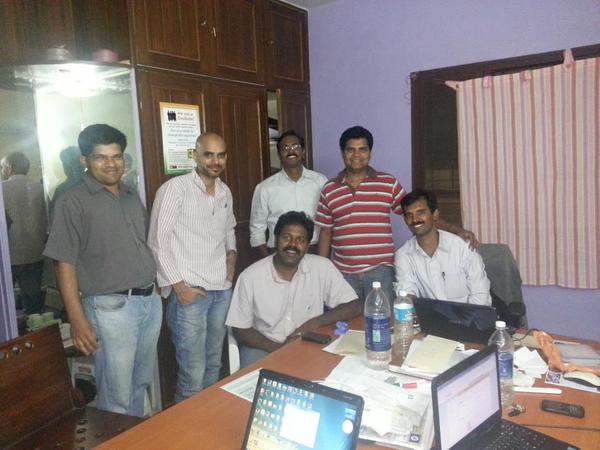
Srinivas Alavilli with his campaign team. Courtesy: Srinivas Alavilli
Today’s election campaigns have been reduced to shouting "…"Zindabad" and "Vote for…" in massive rallies, where paid people are mobilized as a show of support. The leader of the party makes generous promises, the candidate stands glittering on the dais with duly folded hands and everyone goes home smiling with a fat pocket having left behind plenty of trash and traffic.
A real election campaign in a democracy is about persuading voters by getting the core message of the candidate and the party out.
Why should you seriously consider voting for her?
What does he stand for and what experience and skill does he possess?
Does the party of the candidate align with your values?
Election campaign work includes message creation, brand building, marketing collateral preparation, grass roots activities, field work, communication via traditional as well as electronic media, raising funds in a transparent manner, co-ordinating volunteer activity, management, accounting, data gathering, data analysis, vendor relationships, geography and demographics and representing the candidate.
It is a legitimate project, with objectives, success criteria, metrics, project resourcing, skills building, management, budget and deadlines. It is not about rhetoric. It’s not about loudspeakers violating your ears. And it is certainly not about beer and biryani.
I hereby ask my fellow citizens of Bangalore and Karnataka: Are you ready to set aside the candles and come join the inspiring citizen campaigns for the 2013 Assembly elections? Are you ready to put down your placards and protests and perform the dance of democracy?
To reiterate, democracy is not a spectator sport, it is a Do It Yourself kit. If we don’t do it, it will not be done. We need you to perform this dance. Naavu ready, neevu barteera?⊕